It's one of those fun facts that seems too good to check. The humble yo-yo, the legend goes, started out as a deadly weapon, with hunters hurling heavy disks on long cords at their prey. Generations of kids repeated it on the playground. But is any of it true?
Here's the short answer: no. There's no sound historical evidence that yo-yos were ever used as weapons. The idea is believed to have been a marketing gimmick spread by demonstrators for the Duncan yo-yo company in its early years. The yo-yo's real history is long, peaceful, and a lot more charming.
An Ancient Toy, Not an Ancient Weapon
The yo-yo is one of the oldest toys around, documented as far back as 440 BC. Ancient Greeks knew them well. Yo-yos appear on Greek vase paintings, and surviving examples made of bronze and fired clay still exist, though most were probably made of wood.
The toy kept turning up over the centuries. A painting from India around 1770 shows a similar string toy. In England, yo-yos were popular near the end of the 1700s, when people called them bandalores.
A Filipino Name and a Filipino Entrepreneur
The word yo-yo probably comes from the Ilocano word yóyo, from the Philippines. And the modern yo-yo craze in America owes a lot to a Filipino immigrant named Pedro Flores.
In 1928, Flores opened the Yo-yo Manufacturing Company in Santa Barbara, California, starting with a dozen handmade toys. By late 1929, he had two more factories in Los Angeles and Hollywood, 600 workers, and an output of 300,000 yo-yos a day.
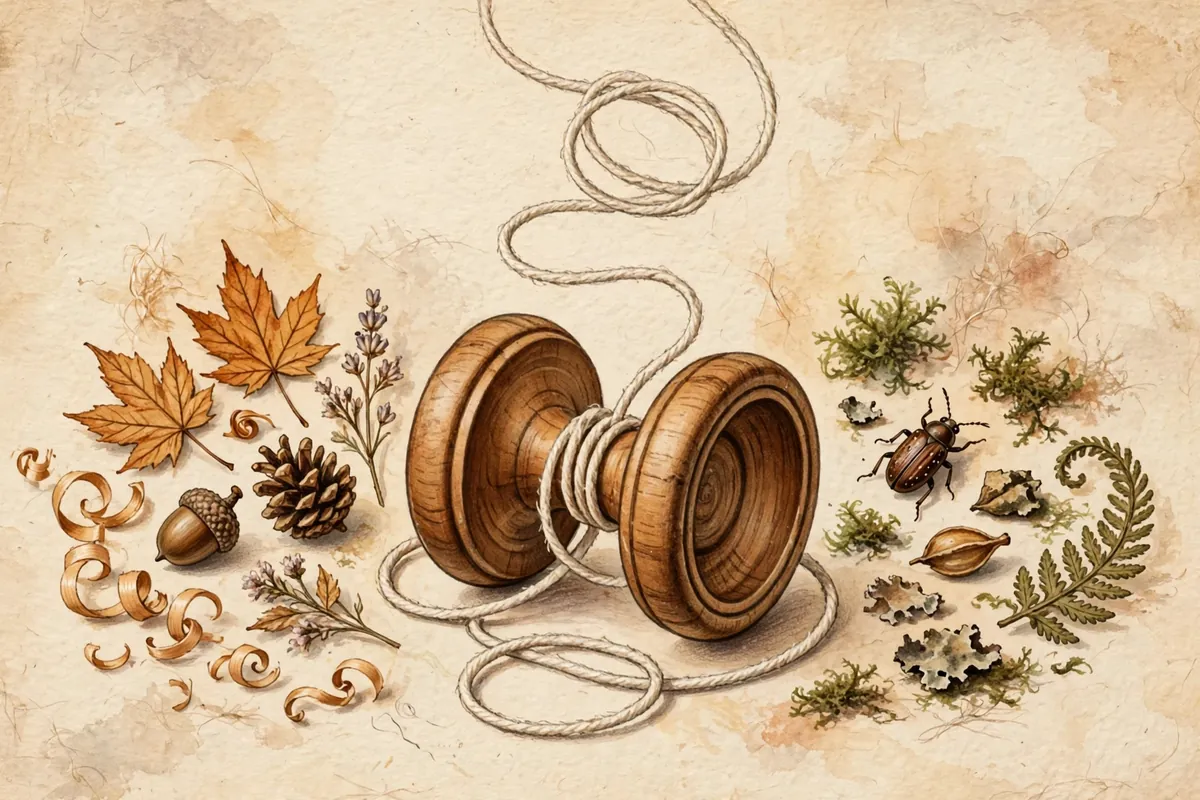
His design had a clever twist. Older yo-yos had the string knotted to the axle, so they just went up and down. Flores used a loop of string around the axle, which let the yo-yo spin freely at the end of the string. That trick, called sleeping, opened the door to all kinds of stunts.
Enter Duncan, and the Weapon Story
Around 1929, businessman Donald F. Duncan saw the potential in this new fad and bought Flores's company. Duncan's demonstrators traveled around showing off tricks, and somewhere along the way, the tale of the yo-yo as a jungle weapon became part of the sales pitch. A toy with a dangerous past was simply more exciting.
The myth stuck around long after. Yo-yo weapons show up in video games and cartoons. In the 1983 James Bond film Octopussy, a villain wields a yo-yo fitted with circular saw blades, a weapon one writer described as wholly improbable, impractical, and probably suicidal.
Yo-Yo Oddities
In 1933, yo-yos were banned in Syria because many locals superstitiously blamed them for a severe drought. In 1965, a federal court ruled that yo-yo had become an everyday word, so Duncan no longer owned exclusive rights to the name.
The toy has had plenty of comebacks, too. When sales slumped after World War II, Duncan launched a revival in 1962 with a series of television commercials. In 1979, a dentist and yo-yo celebrity named Tom Kuhn patented the first take-apart yo-yo, and later innovations like ball bearings let yo-yos spin far longer than ever before.
So the yo-yo was never a jungle weapon. It's something even better: a toy that has been making people smile for more than two thousand years. Not bad for a couple of disks and a piece of string.