Picture America in the 1930s. The Great Depression was the longest and deepest economic downturn in the nation's history. Jobs were scarce, and spending money on entertainment was out of the question for most families. It seems like the worst possible time to launch a new product.
Yet that's exactly when Monopoly took off. It's sometimes said the Depression created a whole board game boom, but that's an overstatement. What's clearer is that in 1935, during the Depression, Parker Brothers released Monopoly, and it became such a success that the company struggled to keep up with demand. Many people enjoyed it because they liked to play at being rich.
A Game About Being Rich, When Few Were
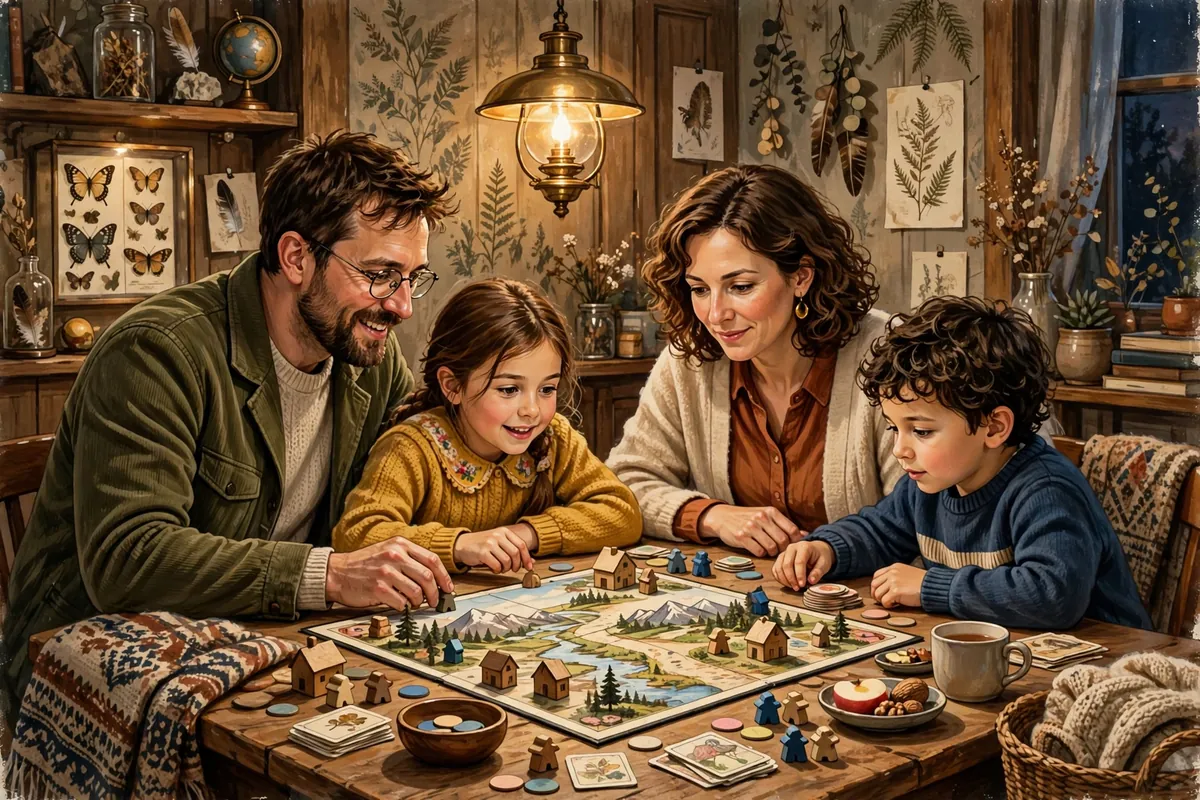
During the Depression, people looked for affordable ways to escape their troubles. Radio shows, Hollywood movies, music, and sports all helped lift spirits. Board games fit right in. Monopoly cost about $1 at the time.
Other games were popular too. Parker Brothers picked up Sorry!, a game first patented in England, in 1934.
The Woman Who Really Invented It
For years, Monopoly's story centered on Charles Darrow, a Philadelphia man who said he developed games while unemployed during the Depression. But the game's roots go back much further.
In 1903, a woman named Lizzie Magie created The Landlord's Game. She was against monopolies, and she designed the game to show the downside of letting a few people control all the land. It was meant to teach the ideas of the economist Henry George. Magie patented it in 1904 and began self-publishing it in 1906.
Her game already had the familiar square loop of spaces, with corner squares and players collecting money each time they went around.
How Darrow Got the Game
According to one account, in 1932 Darrow and his wife came to dinner at the home of friends in Philadelphia, who introduced him to The Landlord's Game. Darrow asked for a written copy of the rules. He went on to distribute the game himself as Monopoly, using a board drawn on oilcloth by an artist.
Parker Brothers originally turned the game down in 1934, then changed its mind the next year. When the company learned Darrow wasn't the only inventor, it bought the rights to Magie's patent for $500. The classic version was based on the streets of Atlantic City, New Jersey.
Not Every Game Was an Instant Hit
The Depression didn't guarantee success. In 1931, an architect in Poughkeepsie, New York, named Alfred Mosher Butts invented a word game he called Criss-Crosswords. He worked out the letter values by counting how often letters appeared in sources such as The New York Times.
Butts made a few sets himself, but he couldn't sell the game to any major manufacturer. It wasn't until 1948 that a man named James Brunot bought the rights and renamed it Scrabble. Even then, his family's first 2,400 sets in 1949 lost money. Big success came later.
A Lasting Legacy
Darrow's original oilcloth board is now part of the collection of The Strong National Museum of Play, after selling for $146,500 at Sotheby's in 2010. Parker Brothers went on to make games like Clue, Risk, and Sorry! for decades, and became part of Hasbro in 1991.
So the next time you land on Boardwalk with a pocketful of play money, think of those Depression-era families. When real money was hard to come by, a little pretend fortune around the kitchen table must have felt like a welcome break.