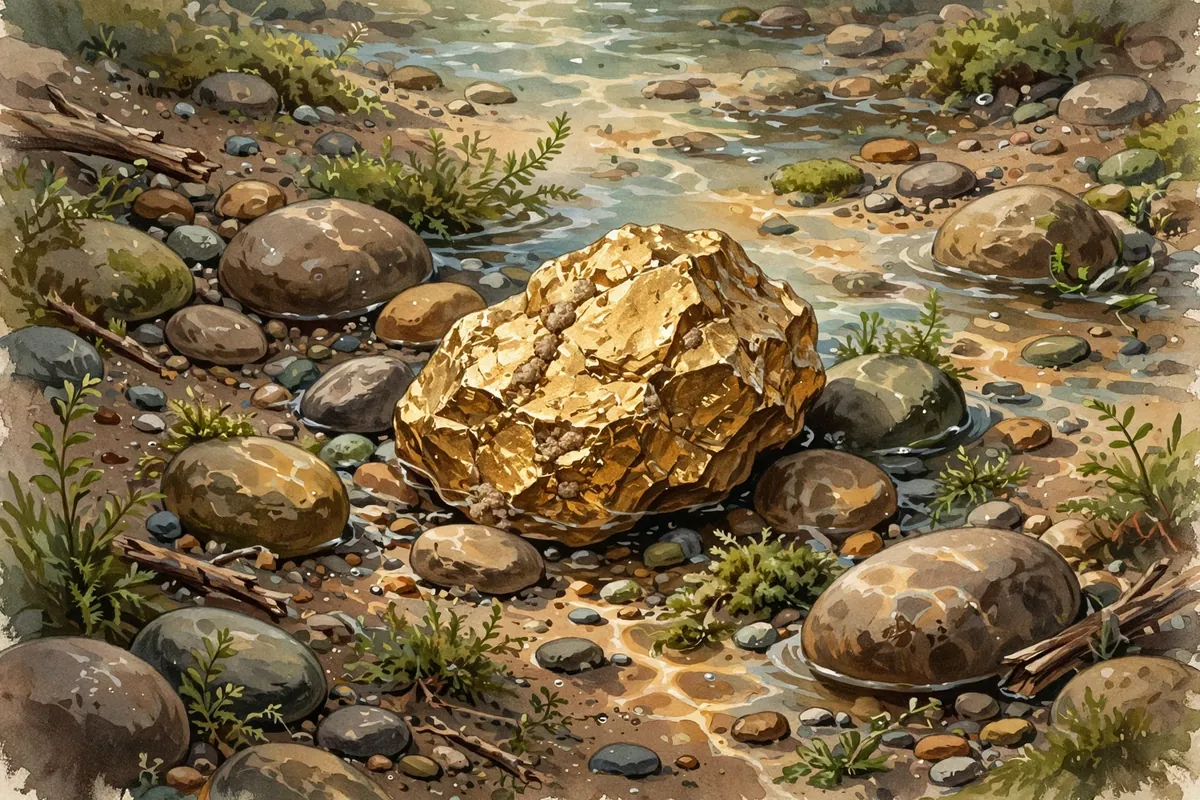
It wasn't a prospector with a pan who set off the California gold rush. It was a carpenter building a sawmill. One winter day in 1848, he looked down into a channel of running water and spotted something glinting, a find that would pull hundreds of thousands of people west.
On January 24, 1848, James W. Marshall found shiny metal in the tailrace, the channel that carries water away from a mill, of a water-powered sawmill he was building for pioneer John Sutter near Coloma, California. Tests showed it was gold. The news brought roughly 300,000 people to California and helped it become a state within a few years.
A Mill in the Foothills
John Sutter, a German-Swiss settler, had arrived in the region in 1839 and built a colony called New Helvetia, now part of Sacramento. He wanted a sawmill in the forest about 30 miles to the northeast and hired Marshall, a carpenter from New Jersey, to supervise its construction. California had been part of an independent Mexico since 1821, but U.S. forces had overrun it in 1846 during the Mexican-American War.
After Marshall brought his find to Sutter, the two tested it privately. Sutter was dismayed. He wanted to keep the discovery quiet, fearing that a gold rush would ruin his plans for an agricultural empire.
Gold! Gold! Gold!
The secret didn't last. By March 1848, San Francisco newspaper publisher and merchant Samuel Brannan had confirmed the rumors. He quickly set up a store selling prospecting supplies and walked through the streets of San Francisco holding up a vial of gold, shouting, “Gold! Gold! Gold from the American River!”
That August, The New York Herald became the first major East Coast newspaper to report the discovery, and in December, President James K. Polk confirmed it in an address to Congress. The following year, 1849, brought the peak wave of newcomers, which is why they were called forty-niners.
About half came by sea and half overland, many facing great hardship. Most were Americans, but thousands also came from Latin America, Europe, Australia, and China. The very first outsiders to arrive, in late 1848, came from Oregon, Hawaii, and Latin America. San Francisco grew from about 200 residents in 1846 to about 36,000 by 1852, and California became a state in September 1850.
Who Really Got Rich
Here's the irony: merchants made far more money than miners. Brannan, who bought up the prospecting supplies in San Francisco and resold them at a big profit, became the wealthiest man in California during the rush's early years.
The two men who started it all fared badly. Sutter's businesses were ruined when his workers left to hunt for gold, and squatters took over his land. Marshall's sawmill failed for the same reason, and prospectors soon forced him off his land, too. Today, a statue of him atop his monument points to the spot where he made his discovery.
For Native Californians, the rush was devastating. It sped up a population decline through disease, starvation, and violence, and in some cases whole tribes were displaced.
So the next time you hear about the forty-niners, remember where it all began: not in a mine, but in the ditch of an unfinished sawmill. One glance at a shiny fleck changed the course of a nation.