Ask people to name America's deadliest natural disaster, and many will guess an earthquake or a recent hurricane. The real answer is a storm from more than a century ago that many have never heard of. It struck a booming island city on the Texas coast and changed how the country thinks about hurricanes.
Here's the short answer. The 1900 Galveston hurricane killed between 6,000 and 12,000 people, with 8,000 the figure most cited in official reports. That makes it the deadliest natural disaster in U.S. history. A storm surge of 8 to 12 feet swept over the low, flat island, destroying about 7,000 buildings and leaving roughly 10,000 people homeless.
A City That Felt Safe
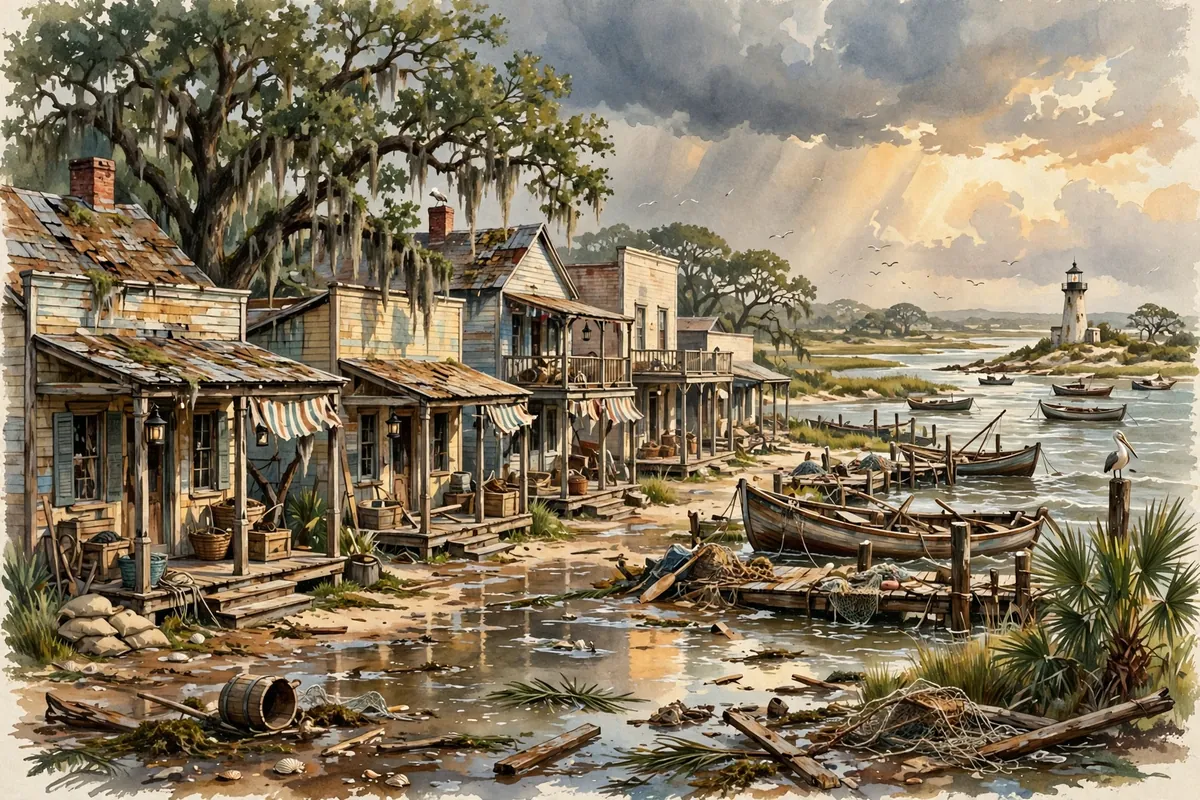
In 1900, Galveston was thriving. Its population had grown to 37,788, and it had among the highest incomes per person in the country. Its downtown business district, The Strand, was called the "Wall Street of the Southwest," and its harbor made it one of the busiest ports in the nation.
That success bred confidence. In 1891, Isaac Cline, who ran the local Weather Bureau office, wrote in the Galveston Daily News that a strong hurricane striking the island was impossible. Some residents wanted a protective seawall, but the idea was dismissed. Sand dunes along the shore were even cut down to fill low spots in town. This was despite a clear warning nearby: hurricanes in 1875 and 1886 had nearly wiped out the Texas town of Indianola.
Warnings That Didn't Get Through
The storm crossed Cuba in early September. But the U.S. Weather Bureau's director had blocked telegraph reports from Cuban meteorologists in Havana, among the most advanced forecasters in the world at the time. American forecasters expected the storm to curve toward Florida and out to sea.
Instead, it strengthened in the Gulf of Mexico into a powerful Category 4 hurricane with winds of about 145 mph. On the morning of September 8, Galveston's skies were only partly cloudy. Few people saw reason to worry, and few evacuated.
The Night of the Storm
The water came fast. Every home in the city was damaged in some way, and 25 of Galveston's 39 churches were completely destroyed. One of the most heartbreaking stories comes from St. Mary's Orphans Asylum, where 10 sisters cared for 93 children.
As the water rose, the sisters moved the children into the sturdiest building and had them sing a hymn called "Queen of the Waves" to keep them calm. When collapse seemed near, the sisters tied themselves to groups of children with clothesline. Only three of the children survived.
A City Raised From the Sea
Galveston's response was astonishing. Engineers designed a seawall about 10 miles long. Then the city did something even bolder: it raised itself. Sand dredged from the shipping channel was pumped underneath the city, lifting some areas by as much as 17 feet.
More than 2,100 buildings were raised in the process, including St. Patrick's Church, which weighed about 3,000 tons. By 1911, about 500 city blocks had been lifted. Today, the seawall and the grade raising are honored as a national civil engineering landmark.
The storm ended Galveston's golden age, as investors turned to nearby Houston. But the city's courage and ingenuity endure. Its story is a powerful reminder to take storm warnings seriously, and of how communities can rebuild stronger together.