Imagine surviving one of the most terrible events in human history, making your way home, and then facing it all over again three days later. For one Japanese engineer, that wasn't a nightmare. It was August 1945.
His name was Tsutomu Yamaguchi, a marine engineer from Nagasaki. He was in Hiroshima on business when the first atomic bomb exploded on August 6, 1945. He returned home to Nagasaki the next day and was there when the second bomb fell on August 9. At least 160 people are known to have been affected by both bombings, but Yamaguchi is the only one officially recognized by Japan's government as surviving both.
A Forgotten Stamp in Hiroshima
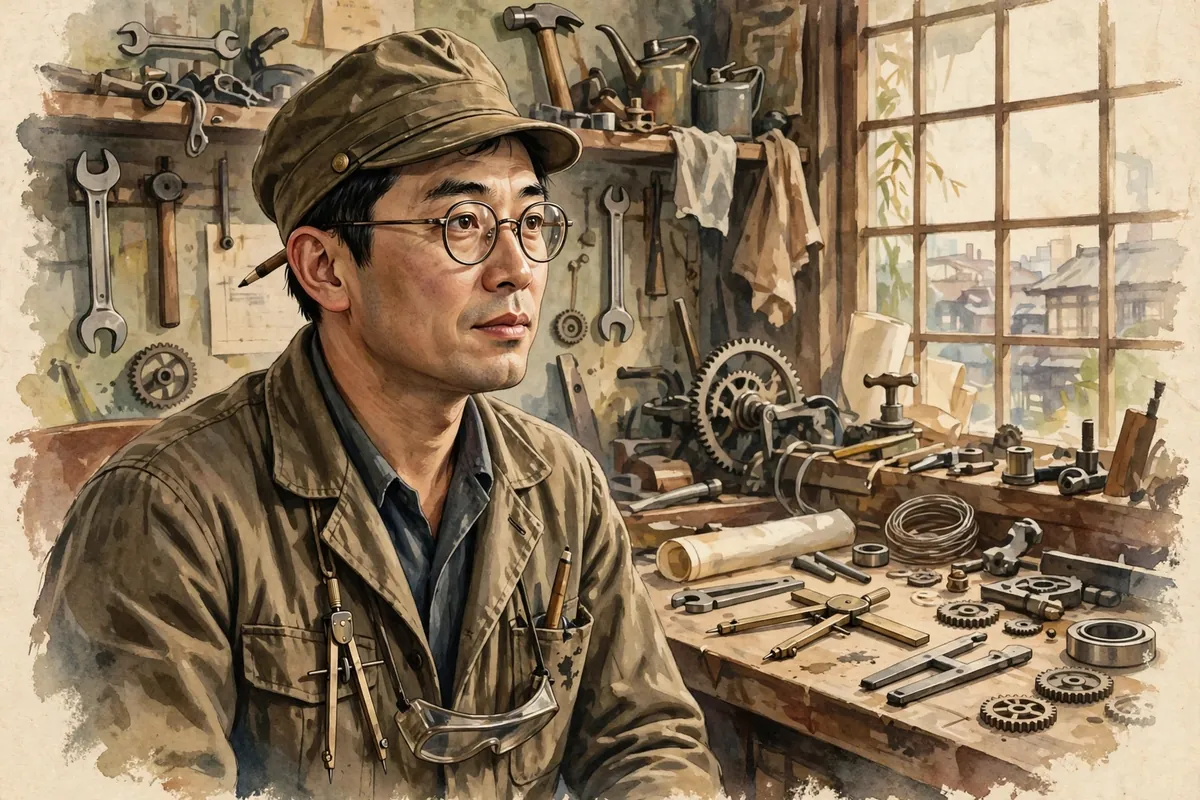
Yamaguchi worked for Mitsubishi Heavy Industries as a draftsman designing oil tankers. In the summer of 1945, he was finishing a three-month business trip in Hiroshima. On the morning of August 6, he and two colleagues were preparing to leave the city.
On the way to the train station, he realized he had forgotten his hanko, a personal stamp used in Japan for identification, and went back to get it. At 8:15 a.m., while he was walking toward the docks, the bomb exploded about 1.9 miles away. He later remembered seeing the bomber and two small parachutes before a great flash in the sky knocked him down.
The blast ruptured his eardrums, blinded him for a time, and left serious burns on the left side of his upper body. He found his two colleagues, who had also survived, and they spent the night in an air-raid shelter before catching a train back to Nagasaki.
Back at Work in Nagasaki
In Nagasaki, Yamaguchi was treated for his wounds. Heavily bandaged, he reported for work on August 9. Around 11 a.m., he was describing the Hiroshima blast to his supervisor, who reportedly called him crazy for claiming one bomb had destroyed a whole city.
At that moment, the second atomic bomb detonated over Nagasaki. Remarkably, his workplace was again about 1.9 miles from ground zero. This time he wasn't hurt by the blast itself, but his bandages were ruined, and he suffered a high fever and constant vomiting for more than a week.
A Long, Quiet Life
After the war, Yamaguchi worked as a translator for the occupation forces and later returned to Mitsubishi to design tankers again. His wife, Hisako, had also survived the Nagasaki bombing, and the couple raised a family.
When Japan began officially recognizing bomb survivors, called hibakusha, in 1957, his papers listed only Nagasaki. He was content with that and tried to put the past behind him. He lost hearing in his left ear, and later in life he faced illnesses such as cataracts and leukemia.
Speaking Up in His Later Years
As he grew older, Yamaguchi began to see his survival as a kind of destiny. In his eighties he wrote a book about his experiences, along with a book of poetry. He took part in a 2006 documentary about people who survived both bombings, which was screened at the United Nations, where he called for an end to nuclear weapons.
In 2009, he applied for recognition as a survivor of both cities, and the government accepted it that March. He said he hoped the official record would help younger generations understand the horror of the bombings even after he was gone. He died of stomach cancer in January 2010, at age 93.
Yamaguchi's story is often told as one of terrible luck. He saw it differently. He lived to 93, raised a family, and spent his final years making sure the world would remember. That may be the most remarkable part of all.