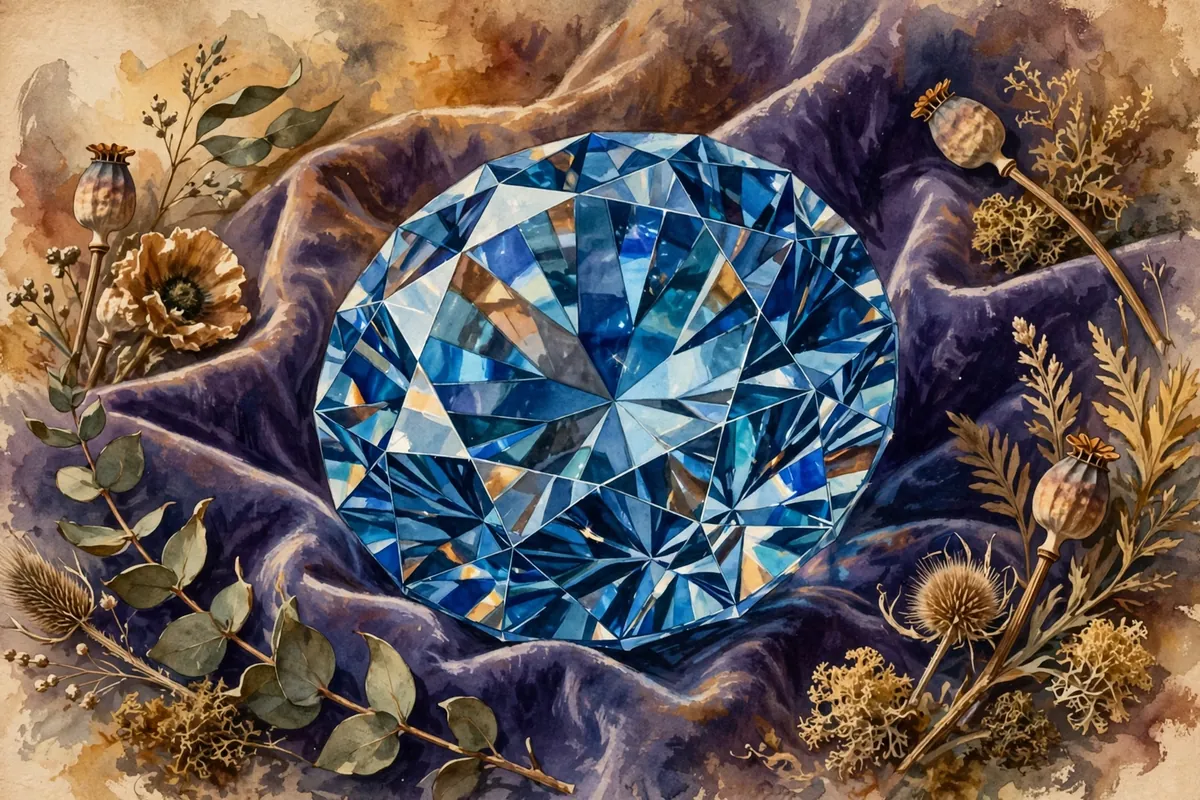
It's one of the most famous jewels on Earth: a deep blue diamond about the size of a walnut, sitting in a museum in Washington, D.C. For generations, people have said it carries a curse that brings tragedy to anyone who owns or wears it. So where did that dark reputation come from?
The short answer: most of the curse was invented. Historians believe the spooky stories were created or embellished in the late 1800s and early 1900s, largely by newspapers and possibly by dealers. A dramatic legend made the gem more mysterious, more newsworthy, and more valuable.
A Real History Fit for a King
The diamond's true story is remarkable on its own. Its recorded history begins in 1666, when French gem merchant Jean-Baptiste Tavernier bought the rough stone in India. It most likely came from the Kollur mine, in what was then the Golconda kingdom.
Tavernier sold it to King Louis XIV of France, and it became known as the French Blue. In 1792, during the French Revolution, it was stolen. It was re-cut by unknown hands and resurfaced years later in an 1839 catalog belonging to a wealthy banking family named Hope. That's where the name comes from.
How the Curse Was Born
By the early 1900s, the diamond was changing hands among dealers, and the press loved it. In 1908, The Washington Post ran an article titled "Hope Diamond Has Brought Trouble To All Who Have Owned It." In 1909, The Times of London described its history as "a long series of tragedies - murder, suicide, madness."
Many of the claims fell apart under scrutiny. One story said Tavernier was torn apart by wild dogs. Another said the stone was stolen from the eye of a Hindu statue. Historians consider that kind of legend a Victorian-era invention by Western writers, much like the "curse of Tutankhamun." Even the famous link to Marie Antoinette's execution is shaky, since the record suggests she never wore the jewel it was set in.
Newspapers made mistakes too. In 1909, it was reported that a former owner had drowned in a shipwreck. In fact, the man who drowned was someone else with the same name.
A Brilliant Sales Pitch
In 1910, jeweler Pierre Cartier tried to sell the diamond to Washington socialite Evalyn Walsh McLean. He kept it hidden under special wrapping while he told her its dramatic history, until she couldn't stand the suspense. There was speculation that Cartier embroidered the dark tales to intrigue her.
She bought it in 1911, and she added stories of her own, such as a claim that Catherine the Great had owned it, which has never been confirmed. Some have even suggested the McLeans played up the curse for publicity to boost the gem's value. McLean clearly enjoyed the stone. She reportedly let her Great Dane, Mike, wear it.
Mailed to the Smithsonian
The last private owner, jeweler Harry Winston, bought it from McLean's estate in 1949. He never believed in the curse. On November 10, 1958, he donated it to the Smithsonian, and he sent it through the U.S. Mail in a plain box wrapped in brown paper. The postage was just $2.44.
Today it sits in the National Museum of Natural History, admired by millions of visitors. Whatever you believe about curses, one thing is clear: a good story can make a beautiful stone even more priceless.