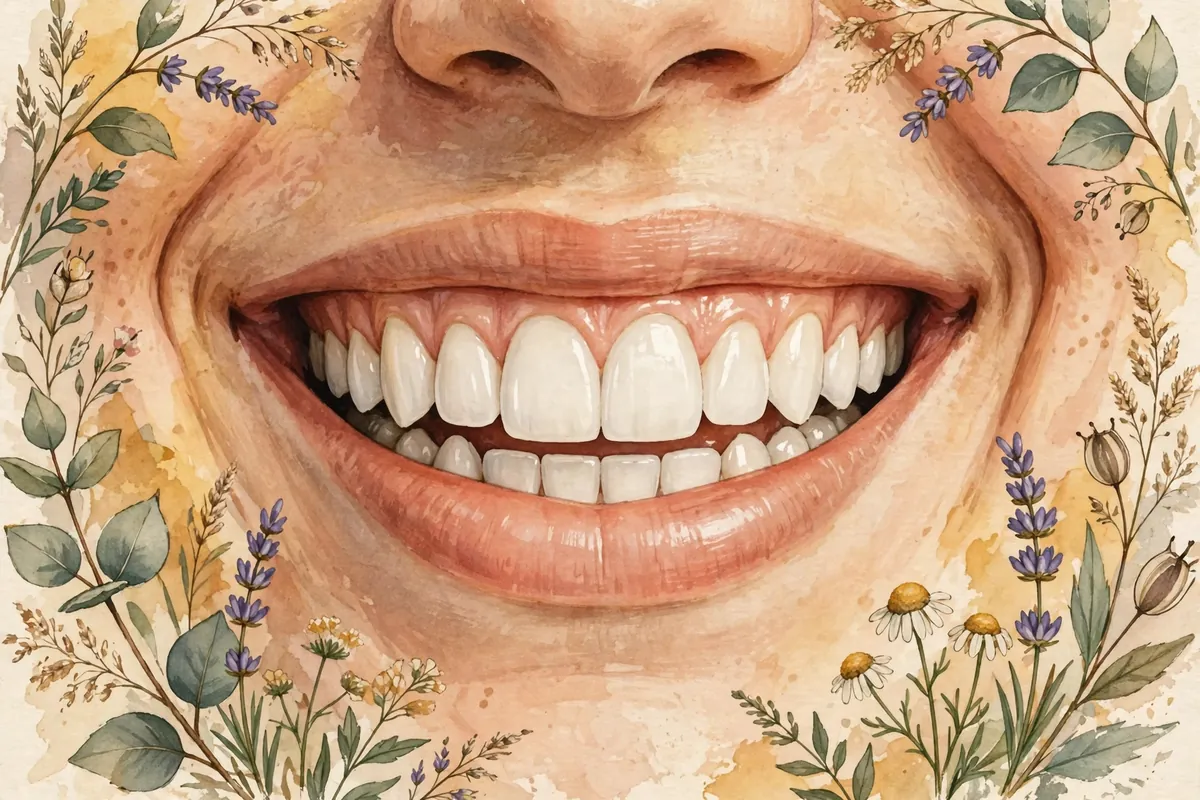
Your body is full of tough stuff. There are thigh bones that carry your weight and a skull that guards your brain. But the hardest material you own isn't in your skeleton at all. It's right there in your smile.
The short answer: the outer layer of your teeth, called enamel, is the hardest substance in the human body. It's about 96 percent mineral, the highest share of any tissue, with water and organic material making up the rest. That dense packing of mineral is what makes it so hard, which is handy for something that spends all day biting and chewing.
What Makes Enamel So Tough
The main mineral in enamel is hydroxyapatite, a crystal form of calcium phosphate. Those crystals are packed tightly into tiny columns called enamel rods, each only a few thousandths of a millimeter across. Seen in cross section, a rod is shaped a bit like a keyhole.
That organized structure gives enamel some impressive engineering. It's one of the most durable load-bearing materials found in any living thing. Researchers have found it's about three times more resistant to cracking than the same mineral in its natural rock form.
Hard Isn't the Same as Unbreakable
Here's the catch. All that mineral makes enamel strong, but it also makes it brittle, with a brittleness similar to glass. On the Mohs hardness scale, which runs from soft talc at 1 to diamond at 10, enamel ranks about 5.
So what keeps your teeth from shattering? The layer underneath, called dentin. Dentin is less mineralized and less brittle, ranking roughly 3 on the same scale. It acts as a cushioned support. When dentin is damaged by decay, the enamel above it loses that backing and can break away easily.
The Part Your Body Can't Regrow
Enamel forms while a tooth is still developing inside the jawbone, before it ever pokes through the gums. Once it's finished, it has no blood vessels, no nerves, and no living cells. Your body can repair minor damage through a process called remineralization, but beyond that, lost enamel is gone for good.
Dentin is different. It keeps forming throughout your life, which is why the two layers make such a good team.
Enamel's biggest enemy is acid. Some bacteria in the mouth feed on sugar and produce lactic acid. Once the mouth becomes acidic enough, enamel begins to lose minerals. Fluoride helps by encouraging minerals to move back into the tooth surface, and the rebuilt surface resists acid better than the original.
Decay most often gets its start in the deep grooves and pits on a tooth's chewing surface. Those spots are nearly impossible to reach with a toothbrush, so bacteria can settle in. For questions about your own teeth, talk to your dentist or doctor.
Why Teeth Aren't Snow White
Healthy enamel isn't pure white. Its natural color ranges from light yellow to grayish or bluish white. Because enamel is partly see-through, the yellowish dentin underneath shows through and strongly affects how a tooth looks. That's why the very edges of your front teeth, where there's no dentin behind the enamel, can look slightly blue or translucent.
So the next time you bite into a crisp apple, give your enamel a little credit. It's the hardest thing your body makes, built once and meant to last a lifetime, with a little help from a toothbrush.