Most of us plant a tree or two in our lifetime and feel pretty good about it. One man in India planted an entire forest. He didn't have a crew or a government grant. He simply showed up, year after year, and kept planting.
His name is Jadav "Molai" Payeng, and he's known as the Forest Man of India. Starting in 1979, he planted and tended trees on a barren sandbar in the Brahmaputra River in the state of Assam. Over several decades, it grew into a forest of about 1,360 acres, now called Molai forest in his honor.
It Started With Dead Snakes
Payeng was born in 1959 and belongs to the Mising, an Indigenous tribe of Assam. In 1979, floods washed a large number of snakes onto a treeless sandbar, where they died in the heat. With no shade, there was nowhere for them to escape the sun. He comes from Majuli, a river island that has been shrinking for a long time. Erosion from the Brahmaputra has cut it from about 500 square miles in the 1790s to roughly 340 square miles, and more than 35 villages have washed away since 1991.
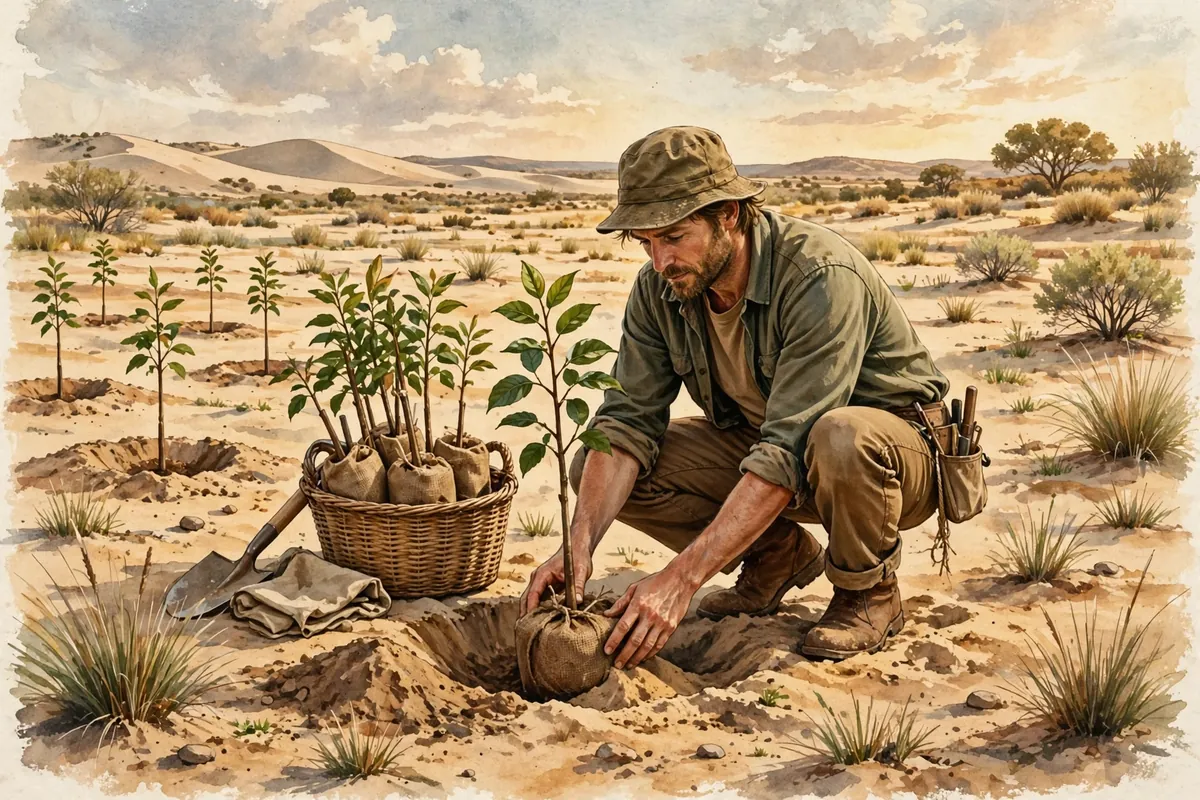
That sight moved him to act. He planted around 20 bamboo seedlings on the sandbar. Then he looked after them, and kept planting more trees on his own, slowly turning a bare strip of sand into woodland.
A Forest Nobody Knew About
For years, few officials knew what he'd done. That changed in 2008. Forest department workers went looking for a herd of 115 elephants that had retreated into the woods after damaging property in a nearby village.
They followed the elephants and were surprised to find a large, dense forest where they didn't expect one. Since then, the department has visited the site regularly.
Tigers, Rhinos and Elephants
Today, Molai forest holds several thousand trees, and bamboo alone covers more than 740 acres. It's home to Bengal tigers, Indian rhinoceroses, more than 100 deer and rabbits, monkeys and many kinds of birds, including a large number of vultures.
A herd of around 100 elephants visits every year and usually stays for about six months. Calves have even been born there. In 2013, poachers tried to kill rhinos living in the forest, but Payeng alerted officials and the attempt failed.
Living next to wildlife comes at a price. Payeng makes his living selling milk from his cattle and buffalo, and in a 2012 interview he said tigers in the forest had killed around 100 of his animals. Even so, he blamed forest destruction by people, not the tigers, for the plight of wild animals.
From Local Hero to Forest Man of India
In 2012, he was honored at Jawaharlal Nehru University, where the vice-chancellor called him the Forest Man of India, and the name stuck. In 2015, he received the Padma Shri, India's fourth-highest civilian award.
His story has been told in several documentaries. One of them, the 2013 documentary Forest Man, was funded partly through Kickstarter and won a Best Documentary prize at a showcase during the 2014 Cannes Film Festival. His life also inspired a feature film released in several Indian languages.
Payeng hopes to spread his forest to another sandbar in the Brahmaputra. It's a good reminder that some of the biggest changes in the world start with one person, a handful of seedlings and a whole lot of patience.