Love them or hate them, parking meters are part of life in almost every American downtown. You hunt for change, twist the knob, and watch the little dial. But have you ever wondered where the first one came from? It wasn't a big East Coast city.
Here's the answer. The world's first parking meters were installed in downtown Oklahoma City on July 16, 1935. They were the idea of Carl Magee, a newspaper editor who wanted to solve a traffic problem, and they were built with help from two engineering professors at what is now Oklahoma State University. The first meters charged five cents an hour.
A Problem for Downtown Shops
In the early 1930s, downtown Oklahoma City had a parking headache. Merchants complained that their sales were suffering. The parking spaces right in front of their stores were taken up by the same cars all day long, so shoppers had nowhere to stop.
Carl Magee, editor of the Oklahoma News, joined the local Chamber of Commerce traffic committee in 1933 to help tackle the congestion. He came up with a simple idea: a coin-operated timer that would keep cars moving and free up spaces for customers.
From a Crude Model to the 'Black Maria'
Magee built a rough model and applied for a patent. Then he sponsored a contest at Oklahoma Agricultural and Mechanical College, now Oklahoma State University, to develop a working device. Engineering professors Holger George Thuesen and Gerald A. Hale helped turn his model into a real, working meter.
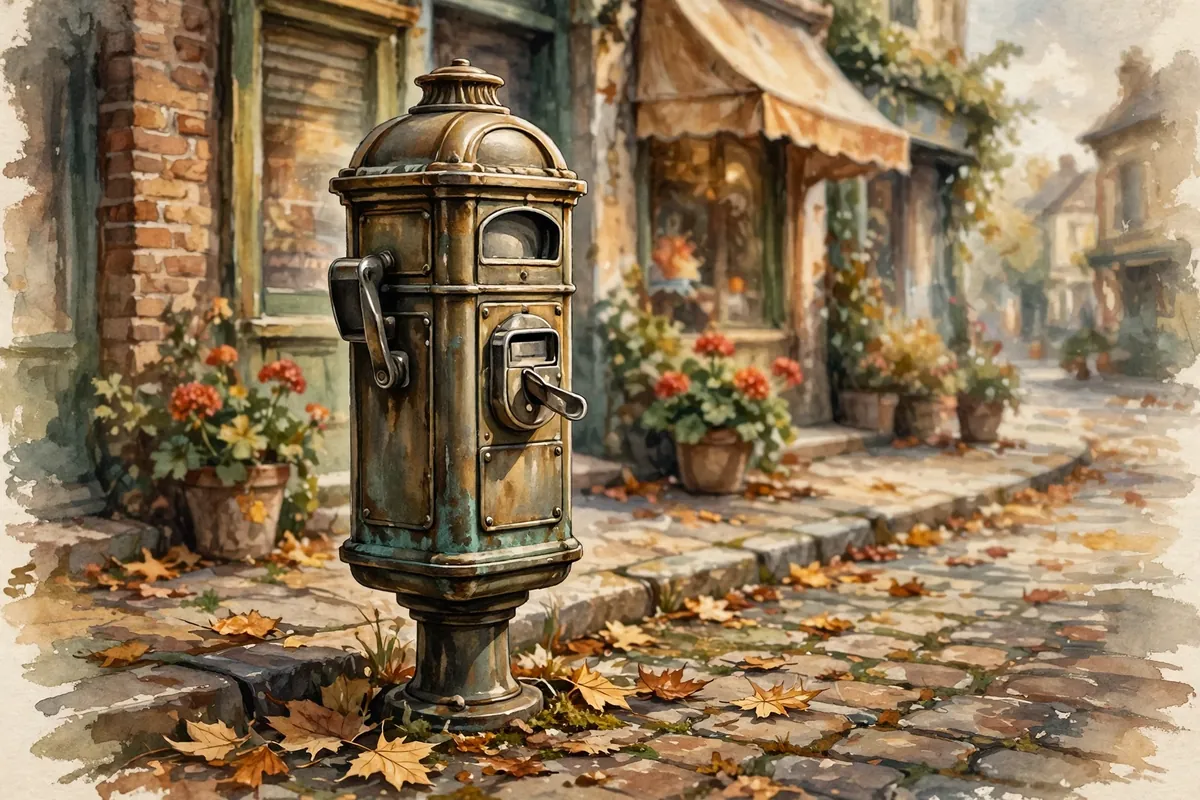
Their first working parking meter was nicknamed the Black Maria. It wasn't even the first idea for a meter. An earlier 1928 patent described a meter that would run on power from the parked car's own battery, which required connecting the car to the meter. Magee's design was far more practical.
Not Everyone Was Happy
Businesses benefited greatly once the meters went in, because parking spaces turned over and more shoppers could stop. But some residents were annoyed enough to take legal action to stop the meters. Their efforts failed, and soon other cities began installing parking meters of their own.
Magee formed a company to make the meters, and production ramped up. The first models used a coin slot, a dial to start the mechanism, and a pointer and flag to show when time had run out. That basic design lasted more than 40 years, with only minor changes. Competition arrived quickly. A rival meter installed in Miami in 1936 was wound by the driver turning a handle, while Magee's early meters needed a service worker to wind the spring now and then.
A Colorful Life
Magee had a remarkable career even before the parking meter. As a newspaper editor in New Mexico, he worked to expose corruption and played a key role in uncovering the Teapot Dome scandal, one of the biggest government scandals of the 1920s.
The parking meter business outlasted him by decades. His later company, the Magee-Hale Park-O-Meter Company, eventually passed through several owners and moved to Arkansas, where meters continued to be made.
Digital meters arrived in the mid-1980s, and today many cities let drivers pay by card or by phone. But the basic idea still traces back to that summer day in Oklahoma City in 1935. So the next time you feed a meter, you can thank, or blame, a determined newspaper editor who just wanted to help downtown shops.