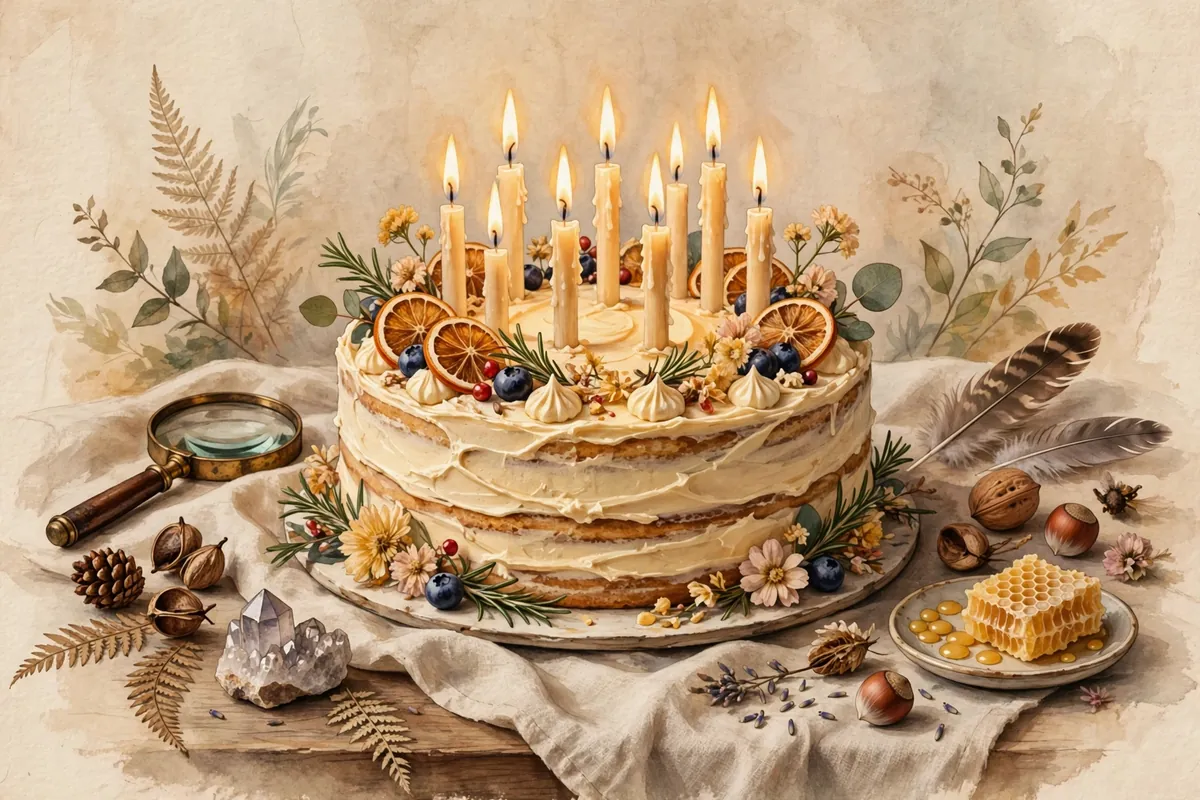
Lights dim, someone carries in a cake glowing with candles, and everyone starts to sing. It's one of the happiest rituals most of us know. But have you ever wondered how cake, of all things, became the centerpiece of a birthday?
Here's the short version. People have linked cakes and celebrations since ancient Roman times, when cakes were sometimes served at special birthdays and weddings. But the birthday cake with candles as we know it took shape in 18th-century Germany. For a long time, fancy cakes were only for the wealthy. The Industrial Revolution made ingredients and goods cheaper and easier to get, and birthday cakes became something nearly everyone could enjoy.
Roman Roots
The Romans weren't eating anything like a modern layer cake. Their celebration cakes were circles made from flour and nuts, leavened with yeast, and sweetened with honey. Still, the idea of marking a special day with something sweet was already there.
A Cake as Big as an Oven
One of the most famous early birthday cakes appeared in 1746, at a large birthday celebration for Count Ludwig von Zinzendorf near Büdingen, in what is now Germany. A witness named Andrew Frey described it in detail.
There was a cake as large as any oven could bake, he wrote, with holes made in it for each year of the count's age. Every hole had a candle stuck into it, plus one more in the middle. It sounds an awful lot like the cakes we light today.
Germany also had a children's birthday celebration called Kinderfest, which used both cakes and candles. Back then, guests didn't usually bring presents; they brought good wishes. A gift was considered a good sign for the birthday child.
Candles, Wishes, and Goethe's Melting Torte
The tradition was to put one candle on the cake for each year of life. That could get out of hand. The German writer Johann Wolfgang von Goethe described his 52nd birthday in 1801, when a prince's servants carried in a generous torte topped with about fifty colorful candles that began to melt and threatened to burn down.
Blowing out the candles has a documented history too. In 1881, researchers recorded a Swiss custom in which a birthday cake had a lit candle for each year of life, and the birthday person had to blow them out. Today, many people believe a wish comes true only if every candle goes out in one breath, and only if the wish is kept secret.
One small, funny footnote: in 2017, researchers at Clemson University found that blowing out candles increased the bacteria on the frosting by about 14 times on average. One of the researchers said it was not a big health concern.
The Song That Goes With It
The cake usually comes with a song. The melody of 'Happy Birthday to You' comes from 'Good Morning to All,' traditionally credited to sisters Patty and Mildred Hill in 1893, though that credit is disputed. Patty Hill was a kindergarten principal in Louisville, Kentucky.
The song later became the subject of a long copyright fight. For years, a music company collected fees for its use. In 2015, a federal judge ruled the copyright claim invalid, and the company agreed to pay back $14 million in fees. Today the song is in the public domain in the United States.
So the next time you blow out the candles, remember you're carrying on a tradition shaped by Roman honey cakes, a German count's giant oven, and a kindergarten song from Kentucky. Make it a good wish.