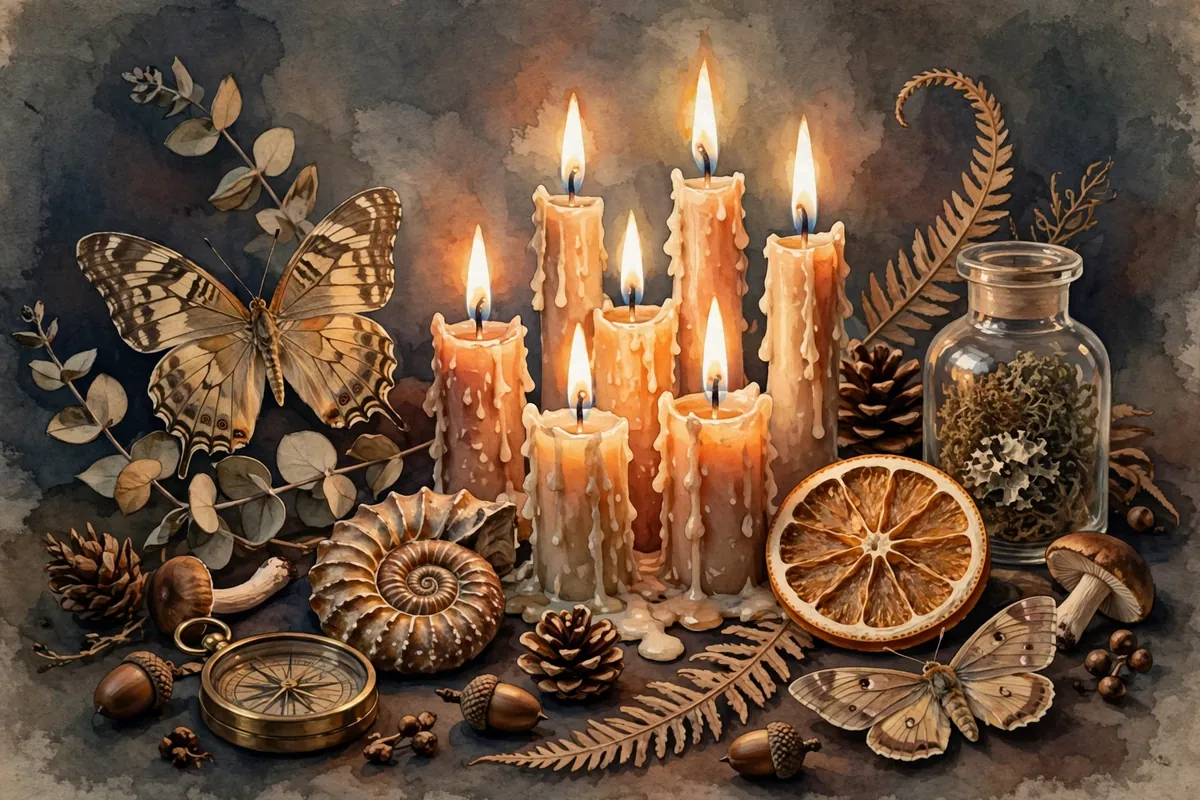
It's one of the sweetest moments of any birthday. Someone dims the lights, the cake comes out glowing, everyone sings, and the guest of honor takes a deep breath. Kids do it, grandparents do it, and almost nobody stops to wonder why we set a dessert on fire in the first place.
Here's the short answer: no one knows the exact origin of birthday candles, and there are several theories. The clearest historical trail leads to Germany in the 1700s, where people celebrated birthdays with cakes topped with candles, one for each year of life. The custom spread from there and became part of the birthday traditions many of us know today.
A Count's Giant Cake
One of the best-known early examples comes from 1746. For the birthday of Count Ludwig von Zinzendorf, a cake was reportedly made as big as an oven could bake it, with candles stuck in it marking each year of his age.
Children's birthday celebrations in Germany, called Kinderfest, also used cakes and candles. In those days, guests usually didn't bring presents. They brought good wishes instead, although a gift was taken as a good sign for the birthday child.
Goethe's Melting Torte
The famous German writer Johann Wolfgang von Goethe described the custom in 1801. On his 52nd birthday, while staying as a guest of a prince, a large torte was carried in covered with about fifty colorful flaming candles. The candles began to melt and threatened to burn the whole thing down.
Goethe also mentioned a detail we've mostly lost. At children's celebrations, there was often room left on the cake for extra candles standing for the years to come. Today, in English-speaking countries, people sometimes add just one extra candle for luck.
Older Theories
Some people trace birthday candles back to ancient Greece, where candles were used to honor the birth of the goddess Artemis on the sixth day of every lunar month. It's an appealing story, but no real link has been established between that practice and our birthday candles.
The cake itself may have even older roots. In ancient Rome, cakes were sometimes served at special birthdays and weddings. They were rings of flour and nuts, raised with yeast and sweetened with honey. So the cake came first, and the candles joined the party much later.
From Rich Folks' Treat to Everyone's Tradition
For a long time, fancy cakes with layers, icing, and decorations were treats for the very wealthy. The Industrial Revolution changed that by making ingredients and goods more widely available, so ordinary families could enjoy birthday cakes too. By the middle of the 1800s, birthday cakes were part of celebrations across Western Europe.
Today the ritual has its own little rules. The candles are lit, everyone sings, and the birthday person makes a wish before blowing them out. Tradition says the wish comes true only if every candle goes out in one breath, and many people believe the wish must be kept secret. Around the world, guests sing "Happy Birthday to You" or an equivalent song in their own language while the little flames flicker.
Some families now use number-shaped candles, sparklers, or even trick candles that keep relighting. However you do it, you're carrying on a custom that has been brightening birthdays for nearly three centuries. Make it a good wish.