Baseball fans think of the World Series as an October tradition, played under crisp autumn skies. But in 1918, with the United States fighting in World War I, almost nothing about the season was normal. The Series ended before summer was even officially over, and one moment from it still echoes at ballparks today.
Here's the story. Because of a wartime 'work or fight' order, the 1918 regular season was cut short on Labor Day, September 2. The World Series between the Boston Red Sox and the Chicago Cubs was played from September 5 to 11, the only Series ever played entirely in September. Boston won four games to two. And during Game 1, a band played 'The Star-Spangled Banner' during the seventh-inning stretch, sparking the tradition of playing the anthem at sporting events.
Work or Fight
In 1918, the government issued a mandate requiring men in non-essential jobs to enlist or take war-related work, or risk being drafted. Playing baseball didn't count as essential. The Secretary of War, Newton D. Baker, gave major league players an extension through Labor Day.
So the season simply stopped early. Teams had been scheduled to play 154 games, but each ended up playing somewhere between about 123 and 131. Baker later allowed a further extension so the World Series could go ahead.
A Song in the Seventh Inning
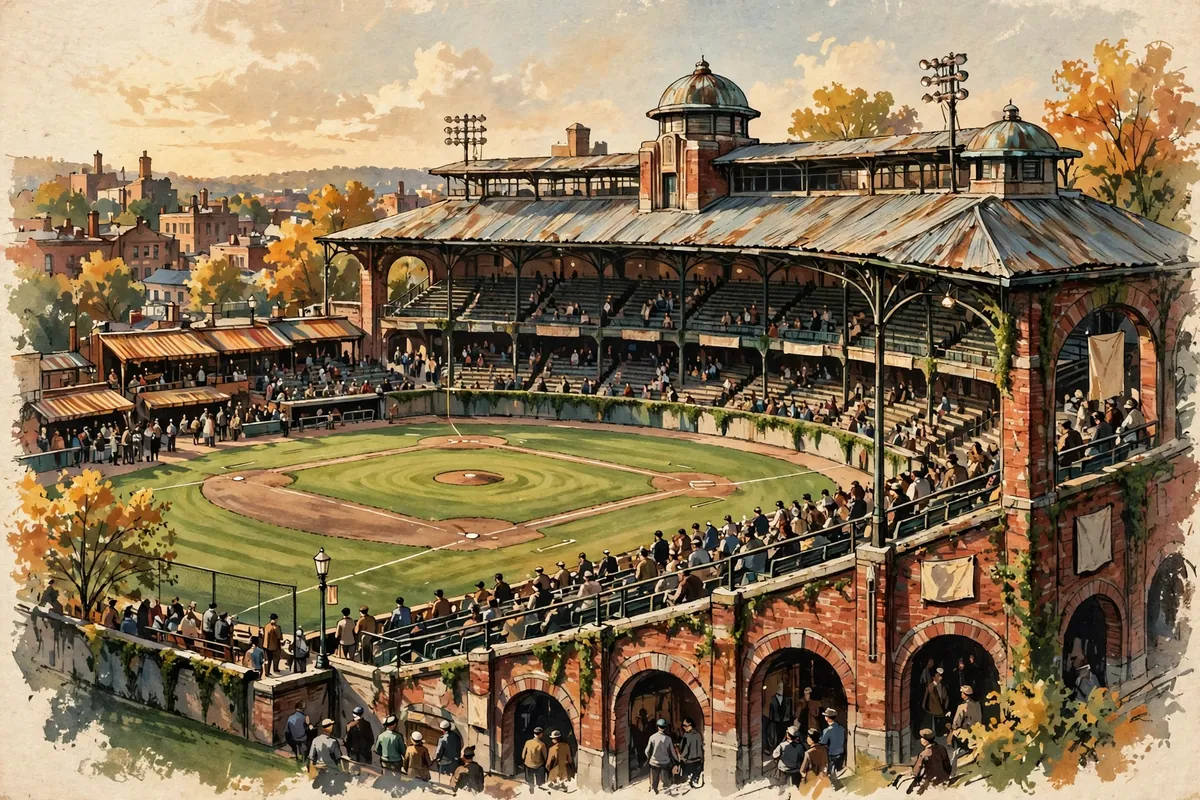
Game 1 was played in Chicago at Comiskey Park, chosen because it held more fans than the Cubs' own ballpark. During the seventh-inning stretch, a U.S. Navy band began to play 'The Star-Spangled Banner.'
Red Sox infielder Fred Thomas, who was in the Navy and had been given leave to play, turned to the flag and saluted. Other players put their hands over their hearts, and the crowd began to sing. When the song ended, the previously quiet fans erupted in applause. The song was played at every remaining game of the Series.
Other ballparks picked up the idea, and Red Sox owner Harry Frazee made it a regular part of Boston home games. 'The Star-Spangled Banner' officially became the national anthem in 1931, and after World War II, playing it before games spread across American sports.
Babe Ruth, the Pitcher
Here's a surprise for modern fans: the star of Game 1 was a pitcher named Babe Ruth. He threw a 1-0 shutout. That season, Ruth was one of Boston's starting pitchers but also played the outfield and led the American League in home runs.
The Series was low-scoring. Boston scored only nine runs in six games, the fewest ever by a winning team, and neither team hit a single home run. Players even threatened to strike over low ticket receipts.
The Long Wait That Followed
It was the Red Sox's fifth World Series title in five tries. Then, after the 1919 season, owner Harry Frazee sold Ruth to the New York Yankees. Boston wouldn't win another championship until 2004, an 86-year drought fans blamed on the 'Curse of the Bambino.'
The Cubs waited even longer. They wouldn't win again until 2016. And when the Red Sox won in 2018, they became the first team to win the World Series exactly one century apart. Two months after that 1918 Series ended, the war itself was over. But the song from that seventh inning never left the ballpark.