The night the Titanic sank in April 1912, the water of the North Atlantic was about 28°F, cold enough to kill a person within minutes. Of the hundreds of people who ended up in the sea, almost all died within 15 to 30 minutes. Yet one crew member claimed he spent around two hours in that water and came out with little more than swollen feet.
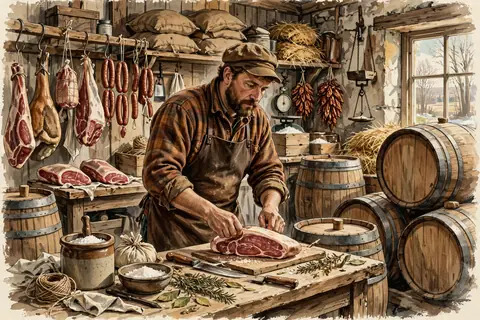
His name was Charles Joughin, the ship's chief baker. He did survive the sinking, and he told inquiries that he trod water for about two hours before being rescued, barely feeling the cold. Joughin credited the alcohol he'd had before the ship went down. His story is famous, but parts of it rest only on his own account, and his explanation doesn't hold up well against what doctors know today.
A Busy Night for the Chief Baker
Joughin was in charge of a staff of thirteen bakers. When the Titanic struck the iceberg just before midnight on April 14, he was off duty in his bunk. He felt the shock, got up, and sent his men to the lifeboats with bread, four loaves apiece.
He helped women and children into Lifeboat 10. Many were reluctant, believing they were safer aboard the giant ship. By his account, he went down to A Deck and brought women and children up, practically throwing them into the boat. He was assigned to command that lifeboat but didn't board it, since it already had a crew.
A Drink, and Fifty Deck Chairs
After Lifeboat 10 left, Joughin went to his quarters and, as he put it, "had a drop of liqueur." He later specified it was a tumbler half full. When he returned to the deck, all the lifeboats were gone. So he threw about fifty deck chairs overboard, hoping people in the water could use them to stay afloat.
As the ship tilted, Joughin climbed to the outside of the railing at the very back of the ship. When the Titanic finally went under, he said he rode it down like an elevator. His head, in his words, "may have been wetted, but no more." That made him the last survivor to leave the ship.
Rescue at Dawn
When daylight came, he spotted an overturned collapsible lifeboat with about 20 men standing on it, including Second Officer Charles Lightoller. There was no room, but a cook named Isaac Maynard recognized Joughin and held his hand while he clung to the side, legs still in the water. Later, another lifeboat came by, and Joughin swam to it. He was eventually taken aboard the rescue ship Carpathia.
Did the Alcohol Really Help?
Joughin believed the liqueur kept him warm. Modern medicine says otherwise. Alcohol intoxication is a common factor in hypothermia because it can increase the body's heat loss. Most people who died in the water that night weren't killed by hypothermia, either, but by the sudden shock of freezing water, often within minutes.
Exactly how Joughin survived remains a bit of a mystery. Lightoller himself described the icy water as feeling like a thousand knives. Whatever the reason, Joughin lived another 44 years.
He later moved to Paterson, New Jersey, served on troop transports during World War II, and shared his story for Walter Lord's famous book A Night to Remember. He died in 1956 at age 78, a baker whose luck, and whose story, has never stopped amazing people.