Space is huge, so it's easy to assume satellites never bump into each other. There's plenty of room up there, right? For decades, that's more or less how things worked. Then, on a winter day in 2009, two satellites found each other in the worst possible way.
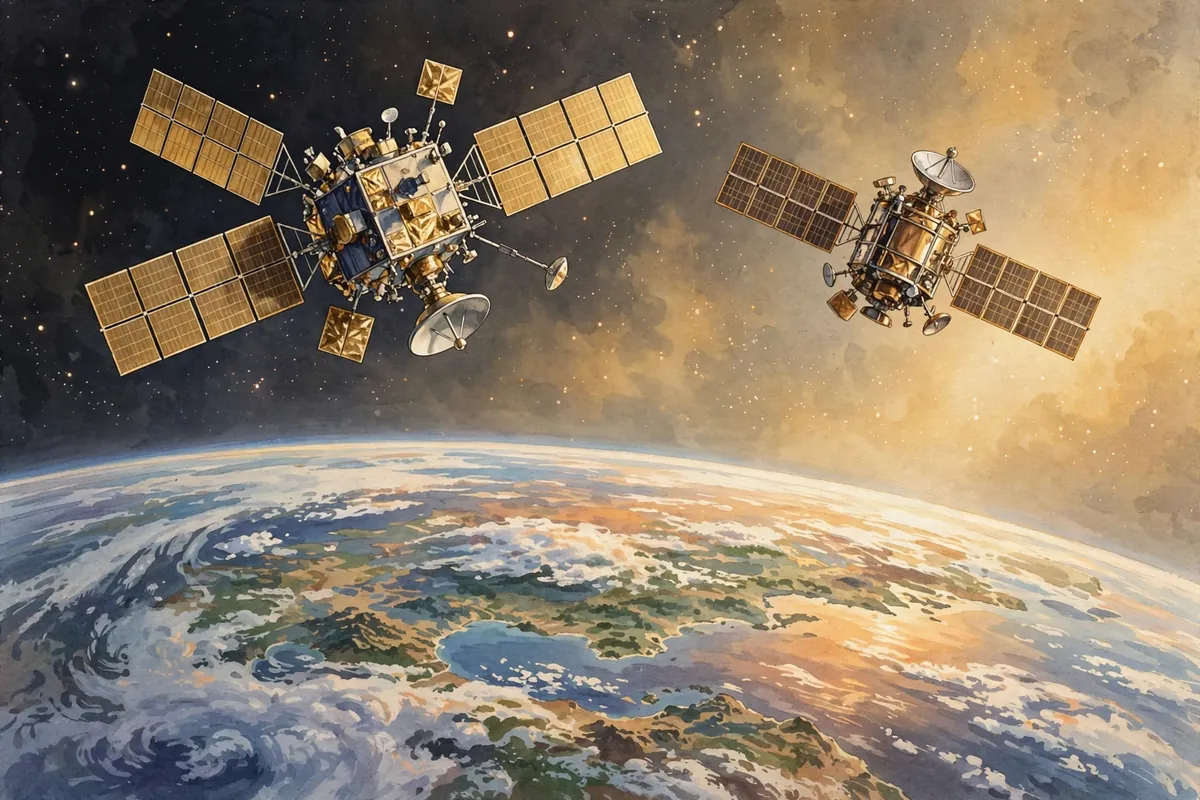
On February 10, 2009, the working American communications satellite Iridium 33 and a dead Russian military satellite called Kosmos 2251 collided about 490 miles above Siberia. They hit at roughly 26,000 miles per hour, and both were destroyed. It was the first time two whole satellites had ever smashed into each other at such high speed.
Meet the Two Satellites
Kosmos 2251 was a Russian military communications satellite weighing about 2,100 pounds. It launched in 1993, went out of service in 1995, and had no engine to steer it. For years it simply drifted along in orbit as space junk.
Iridium 33 was a 1,200-pound American-built satellite launched in 1997. It was part of the Iridium network that carries satellite phone calls around the world, and it was working normally right up until the crash.
Why Nobody Saw It Coming
Close calls in orbit happen many times a day. Satellites often pass within a few miles of each other, so operators have to decide which warnings deserve action. Moving a satellite out of the way uses precious fuel and can interrupt its work.
Before the crash, one tracking service had calculated that these two would miss each other by about 1,900 feet. Two years earlier, an Iridium official had said the company received around 400 close-approach warnings a week for its satellites, and estimated the risk for each one at about 1 in 50 million. This time, the odds ran out.
A Cloud of Debris
The impact shattered both satellites. Within days, NASA estimated there were at least 1,000 fragments bigger than 4 inches, plus many smaller bits. By 2011, more than 2,000 large pieces had been cataloged.
The International Space Station orbits about 270 miles below where the crash happened, and NASA judged the immediate risk to be low. But the debris didn't stay put. In 2011 the station had to move to avoid a piece of it. In March 2012, a fragment of Kosmos 2251 came close enough that the six crew members took shelter in their docked Soyuz spacecraft until it passed, about 390 feet away.
Fifteen years after the crash, more than a thousand cataloged pieces from the two satellites were still circling Earth.
A Warning About Space Junk
Back in 1978, NASA scientists Donald Kessler and Burton Cour-Palais described a worrying possibility. If enough objects crowd into low orbit, collisions create debris, that debris causes more collisions, and the problem keeps growing. It's now known as the Kessler syndrome.
The 2009 crash renewed calls to require old satellites to be safely removed from orbit at the end of their lives. There's still no international law requiring it, though some countries, like France, have passed their own rules. In the United States, geostationary satellites launched after March 2002 must commit to moving to a so-called graveyard orbit when they retire.
So the next time you see a satellite drift across the night sky like a slow, silent star, give it a little wave. Keeping all that traffic from bumping into each other is a bigger job than it looks.