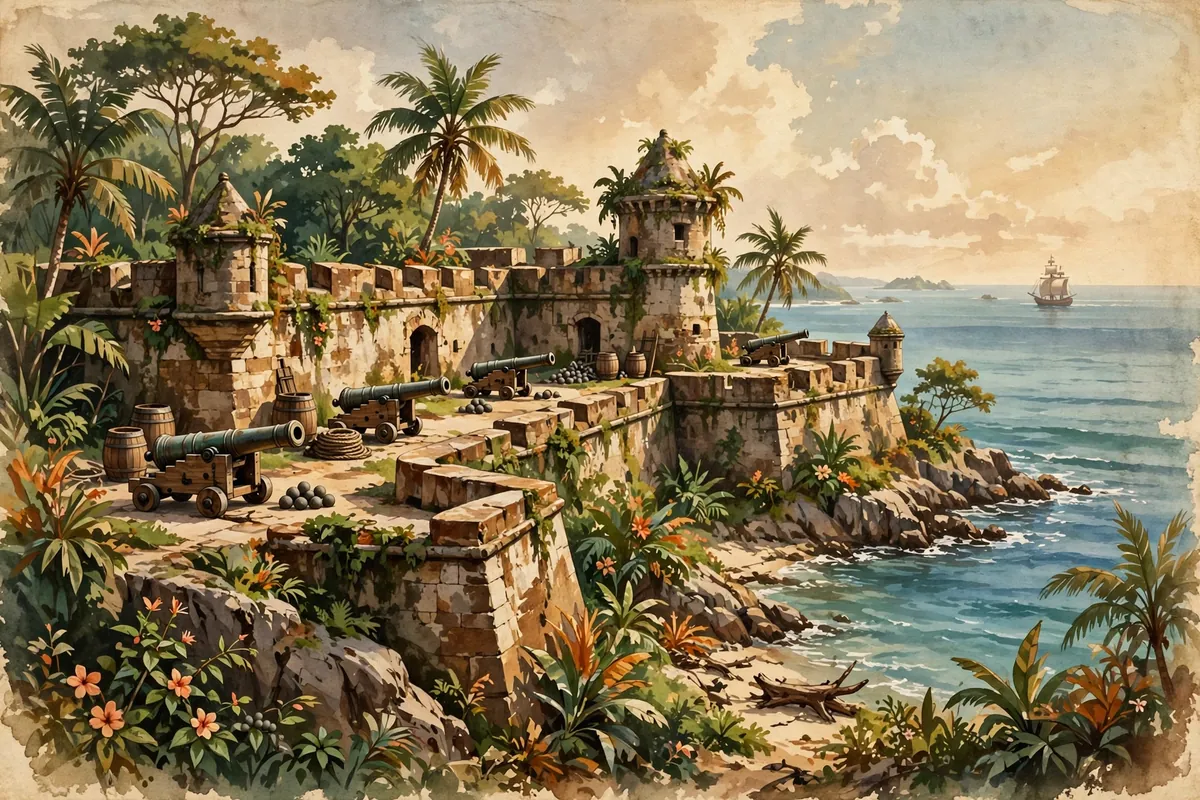
Some wars drag on for decades. The Hundred Years' War actually lasted longer than a hundred years. But one war, fought on a tropical island off the coast of East Africa, was over so fast that you could have missed it by taking a long shower.
That was the Anglo-Zanzibar War, fought between the United Kingdom and the Sultanate of Zanzibar on August 27, 1896. It lasted somewhere between 38 and 45 minutes, depending on how it's counted, making it the shortest recorded war in history.
A Sultan Dies, and a Standoff Begins
Zanzibar is an island in the Indian Ocean that is now part of Tanzania. By the 1890s, it was under a British protectorate. Under an 1890 agreement, anyone who wanted to become sultan needed permission from the British consul.
On August 25, 1896, the pro-British Sultan Hamad bin Thuwaini died suddenly. His 29-year-old nephew, Khalid bin Barghash, whom some suspected of assassinating him, moved into the palace without British approval. The British preferred a different candidate, Hamoud bin Mohammed, who was friendlier to their interests.
Britain sent Khalid an ultimatum to stand down and leave the palace. Instead, he called up his guards and barricaded himself inside.
The Morning of August 27
The deadline expired at 9:00 a.m. By then, the British had gathered two cruisers, three gunboats, 150 marines and sailors, and 900 Zanzibari troops in the harbor. Around 2,800 defenders held the palace, most of them civilians, along with artillery and machine guns aimed at the British ships.
At 9:02, the British opened fire. The shelling set the palace ablaze and knocked out the defending guns. In the harbor, the sultan's royal yacht, the HHS Glasgow, fired on a British ship and was sunk in return. Because the harbor was shallow, its masts stuck out of the water. Its crew raised a British flag to surrender and were rescued by British sailors.
The flag over the palace was shot down, and firing stopped at 9:46. The sultan's side suffered roughly 500 casualties. On the British side, only one sailor was injured. In that short time, the British fired around 500 shells and thousands of machine gun and rifle rounds.
A Getaway Through the Garden Gate
Khalid didn't stay to surrender. He and about forty followers fled to the German consulate, where the Germans refused to hand him over. In October, a German warship arrived. At high tide, one of its boats came right up to the consulate's garden gate, and Khalid stepped aboard without ever setting foot on Zanzibar soil.
He was taken to the mainland, then part of German East Africa. British forces finally captured him in 1916, during World War I. He later died in Mombasa in 1927.
What Changed After the Smoke Cleared
By that afternoon, Hamoud had been installed as sultan with greatly reduced powers. The war marked the end of Zanzibar as a sovereign state. Khalid's supporters were even made to pay reparations to cover the cost of the shells fired at them.
A few months later, under British pressure, the new sultan abolished slavery in Zanzibar. A clock tower was added to a palace building called the House of Wonders, replacing a lighthouse lost in the shelling.
It's a strange chapter in history: a war shorter than a sitcom double feature that still reshaped an island nation. Sometimes the briefest events leave the longest echoes.