World War II ended in August 1945. Soldiers went home, cities rebuilt, and the world moved on. Then, in March 1974, a Japanese officer on a Philippine island finally handed over his rifle. He had still been following orders from a war that ended almost three decades earlier.
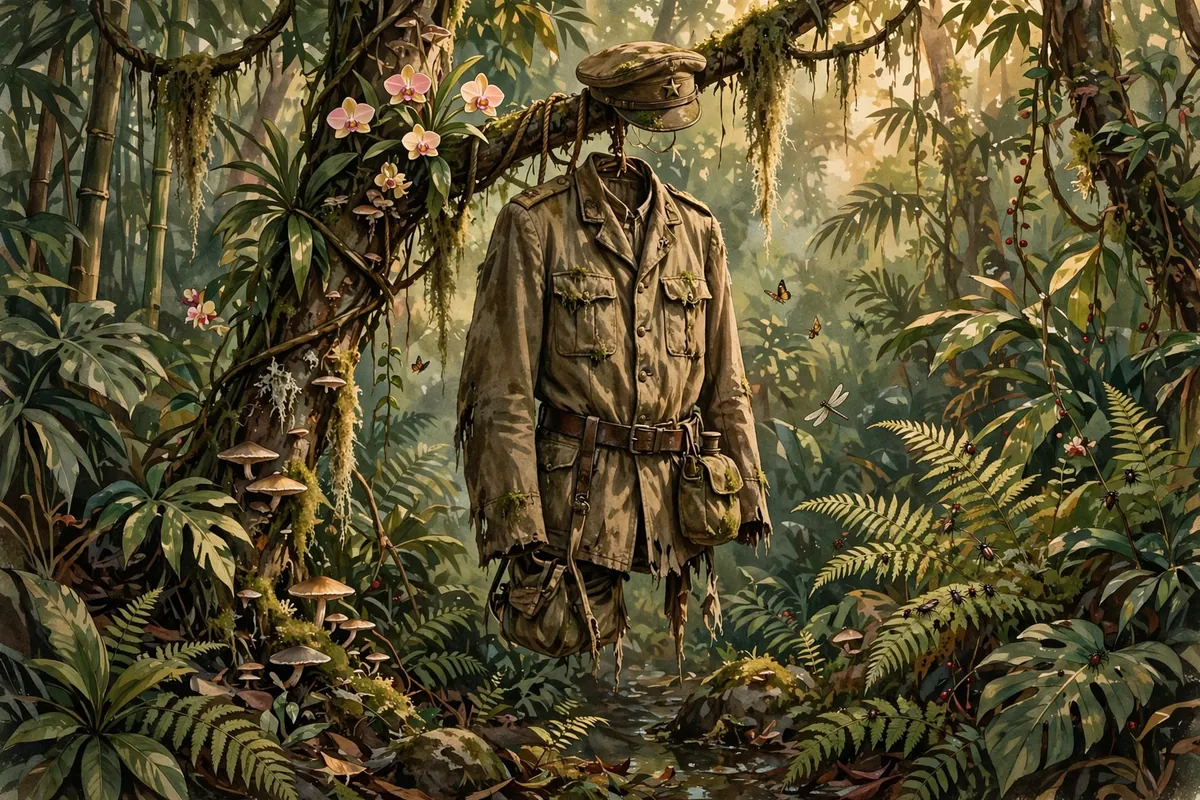
His name was Hiroo Onoda, a second lieutenant in the Imperial Japanese Army. He was one of the last Japanese holdouts of the war. For nearly 29 years after the war ended, he kept up a guerrilla campaign on Lubang Island in the Philippines, refusing to believe the war was over. He only surrendered in 1974, when his former commanding officer flew in to personally relieve him of duty.
Orders Never to Surrender
Onoda had been trained as an intelligence officer and taught guerrilla warfare. In December 1944, he was sent to Lubang with orders to destroy the island's airstrip and harbor pier ahead of an Allied invasion. His orders stated that under no circumstances was he to surrender or take his own life.
American and Philippine forces captured the island after landing in February 1945. Before long, all but Onoda and three other soldiers had died or surrendered, and Onoda led the three men into the island's mountains. One of the men surrendered in 1950. The other two were killed, one in 1954 and one in 1972, leaving Onoda alone.
Why He Didn't Believe the War Was Over
Onoda's group first saw a leaflet saying Japan had surrendered in October 1945. It read, "The war ended on 15 August. Come down from the mountains!" The men decided it was enemy propaganda. Later, leaflets with a surrender order from a Japanese general were dropped from the air, and the group studied them and concluded they were fake.
Over the years came more leaflets, letters from their families, search missions, and radio broadcasts. Onoda dismissed all of it as trickery. The men survived on bananas, coconuts, and stolen rice and cattle.
This part of the story has a dark side that's often left out. Onoda kept attacking local people on the island and is alleged to have killed as many as 30 of them. For the families of Lubang, his long war was a real and painful tragedy.
A Young Adventurer Finds Him
The breakthrough came from an unlikely source. In February 1974, a young Japanese traveler named Norio Suzuki went looking for Onoda. Suzuki had joked to friends that he was searching for "Lieutenant Onoda, a panda, and the abominable snowman, in that order." He found Onoda after four days of searching.
The two became friends, but Onoda still wouldn't give up. He said he was waiting for orders from his commanding officer, Major Yoshimi Taniguchi. Suzuki returned to Japan with photographs as proof, and the government tracked down Taniguchi, who had become a bookseller after the war.
On March 9, 1974, Taniguchi met Onoda in the jungle and formally relieved him of duty. The next day, Onoda surrendered. He handed over his sword, a working rifle, 500 rounds of ammunition, several hand grenades, and a dagger his mother had given him in 1944. Philippine President Ferdinand Marcos granted him a full pardon.
Life After the Jungle
Onoda returned to Japan to a hero's welcome and wrote an autobiography that same year. In 1975, he moved to Brazil and became a cattle rancher. After returning to Japan in 1984, he founded an educational camp for young people. He died in 2014 at age 91.
His story remains one of the strangest chapters of the war: a reminder of how powerful loyalty and belief can be, and how much harm they can do when the world has changed and nobody can convince you of it.