You've probably heard about it: a giant island of trash floating in the Pacific Ocean, supposedly so big you could stand on it. It's one of the most famous images of ocean pollution. But if you sailed out to see it, you might be surprised by what you found.
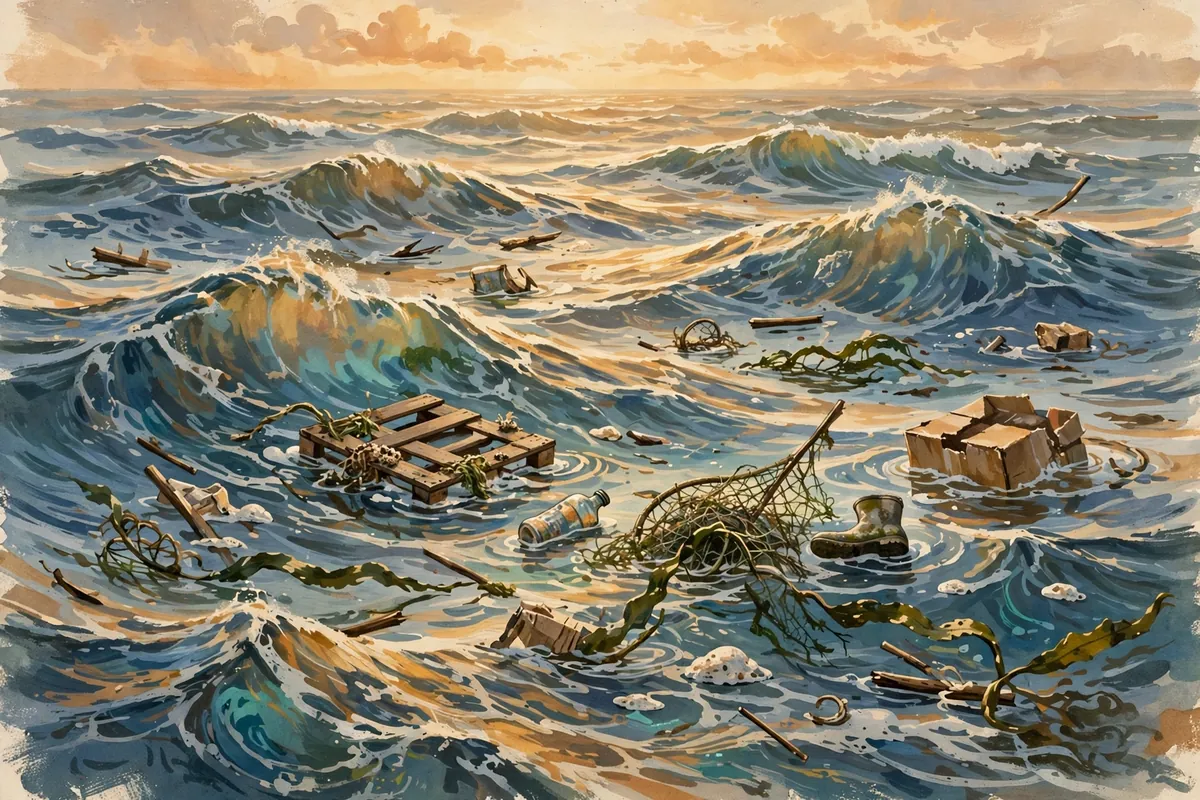
There is no solid island of trash. The Great Pacific Garbage Patch is real, but it's a huge, spread-out area of ocean where plastic debris collects, much of it in small bits called microplastics, fingernail-sized or smaller. The debris is so dispersed that it can't be picked out in satellite images, and casual boaters or divers in the area may not even notice it.
Where the Patch Is and Why It Forms
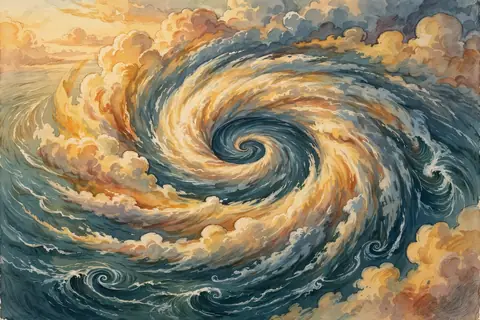
The patch lies in the central North Pacific Ocean, far out in open water. It sits inside the North Pacific Gyre, an enormous, slow, clockwise loop of ocean currents formed by four major currents. Like a giant whirlpool in slow motion, the gyre tends to pull floating material toward its calmer center.
Trash drifts in from all around the Pacific Rim, including Asia, North America, and South America. Once caught in the gyre, it can circle for years. Some of the plastic found there is more than 50 years old. Today the patch is often held up in news reports as an exceptional example of marine pollution.
More Like Confetti Than an Island
Scientists who sailed through the area in 2009 took 100 samples in a row along a path of about 1,700 miles, and every single one contained plastic. Most of it was in small, confetti-like pieces floating just beneath the surface.
That doesn't mean there are no big items. Researchers have found lighters, toothbrushes, water bottles, pens, baby bottles, cell phones, and plastic bags. In fact, while tiny pieces dominate by count, larger objects make up most of the total weight.
One surprising culprit is fishing gear. A 2018 study found that synthetic fishing nets made up nearly half the mass of the patch, and other estimates put fishing-related plastic even higher. Much of the hard plastic traced in one study came from industrial fishing nations.
How Big Is It?
Because the patch has no clear edges, its size is hard to pin down. Researchers from The Ocean Cleanup project estimated in 2018 that it covered about 620,000 square miles and held tens of thousands of tons of plastic. They later described it as growing to twice the size of Texas.
It also appears to be growing fast. By one estimate, the amount of plastic there has increased tenfold each decade since 1945. In the gyre, there are about six pounds of plastic for every pound of plankton.
How It Was Discovered
Scientists predicted the patch in a 1988 paper from the National Oceanic and Atmospheric Administration. In 1997, sailor Charles J. Moore was heading home from a yacht race when he came across a vast stretch of floating debris. He alerted an oceanographer, who nicknamed it the Eastern Garbage Patch, and the name stuck.
Cleanup efforts are underway. By the end of 2024, The Ocean Cleanup had removed more than a million pounds of trash, though that's only about half a percent of the total. The patch may not be an island, but it's a reminder that what we throw away can travel a very long way.