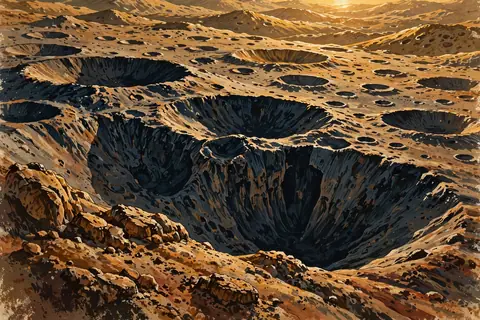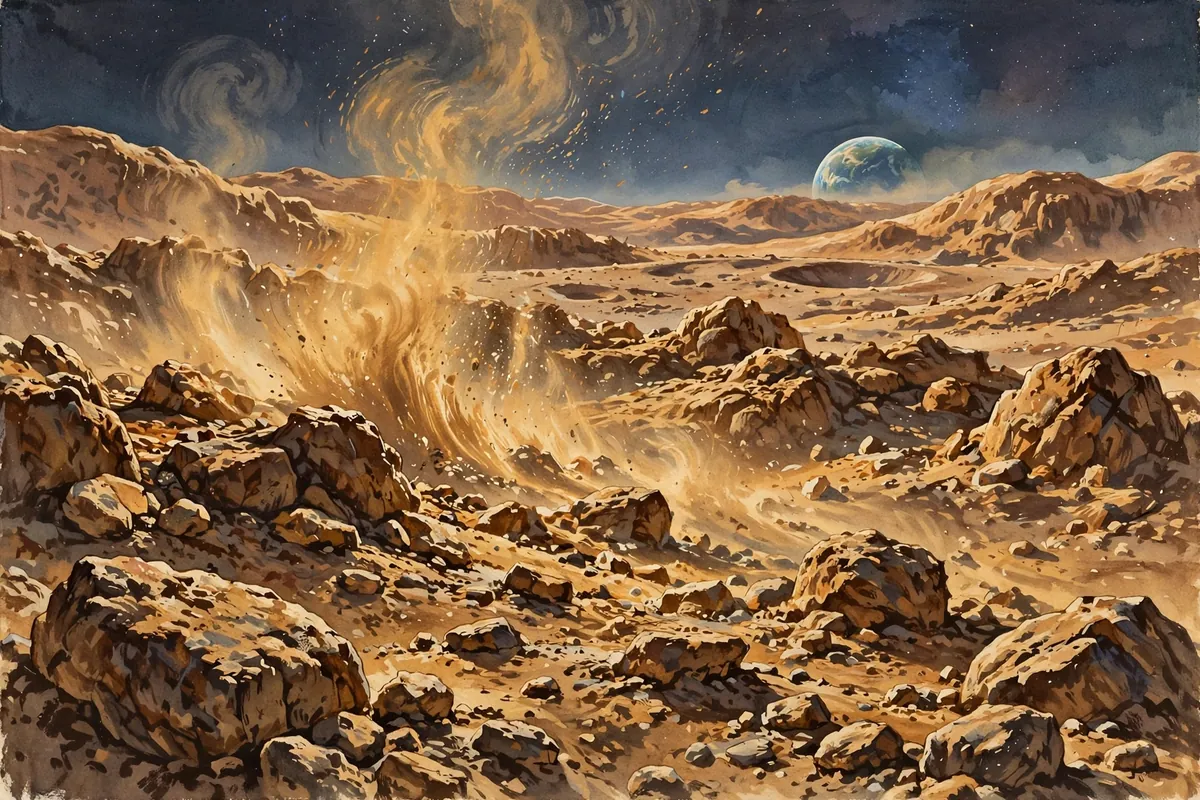
The Moon looks like the very picture of stillness: no wind, no weather, no oceans, just gray dust and craters under a black sky. It seems like the last place you'd expect the ground to shake. But it does.
The Moon has moonquakes, the lunar version of earthquakes. They were an unexpected discovery from seismometers that Apollo astronauts set up between 1969 and 1972. Moonquakes are less common and weaker than the biggest earthquakes, but some keep shaking for up to an hour.
Instruments Left Behind
Apollo crews didn't just collect rocks. They also set up science stations, including seismometers to measure movement in the Moon's crust. The instruments left by Apollo 12, 14, 15, and 16 worked perfectly until they were switched off in 1977.
They were remarkably sensitive. Even the simpler seismometer left by Apollo 11 could detect Neil Armstrong's movements while he slept inside the lander.
NASA also made a few quakes on purpose. After Apollo 12's astronauts were done with their lander, controllers crashed its empty upper stage into the Moon about 45 miles from the landing site. The seismometer registered the vibrations for more than an hour. Later missions deliberately crashed spent rocket stages into the Moon to learn about its insides.
Four Kinds of Moonquakes
Scientists have identified at least four types. Deep moonquakes happen roughly 435 miles below the surface and are probably caused by tides, as Earth's gravity squeezes and stretches the Moon over time.
Meteorite impacts shake the ground, too. And thermal moonquakes happen when the frigid crust expands as sunlight returns after the two-week lunar night.
The fourth kind, shallow moonquakes, are the strongest. They start roughly 30 to 140 miles down and can reach a magnitude of about 5.5. Between 1972 and 1977, the instruments recorded 28 of them.
The first three types tend to be mild. In fact, much of what scientists know about moonquakes still comes from the data those Apollo seismometers sent home in the 1970s, which makes those recordings especially valuable.
Why They Last So Long
Moonquakes can keep going for up to an hour, much longer than quakes on Earth. The reason is the Moon's dry, broken-up upper crust, which scatters the seismic vibrations, along with fewer things to dampen the shaking and let it die down.
That makes the Moon livelier than it looks. Cliffs called fault scarps suggest the Moon has shrunk by about 300 feet within the past billion years. Since it has no tectonic plates, it develops cracks as it slowly loses heat. Even Mare Frigoris, a basin near the north pole long assumed to be geologically dead, has cracked and shifted.
Quakes Across the Solar System
The Moon isn't the only world that shakes. NASA's InSight lander recorded more than 1,300 seismic events on Mars between early 2019 and late 2022. Many of these marsquakes resembled earthquakes, and several turned out to be meteorite impacts.
Even the Sun has sunquakes. One in 1996, set off by a solar flare, was estimated to be comparable to a magnitude 11.3 earthquake, far stronger than any earthquake ever recorded.
So the next time you look up at a quiet full Moon, picture it gently trembling. It may look frozen in time, but our nearest neighbor is still settling, cooling, and every so often, shivering.