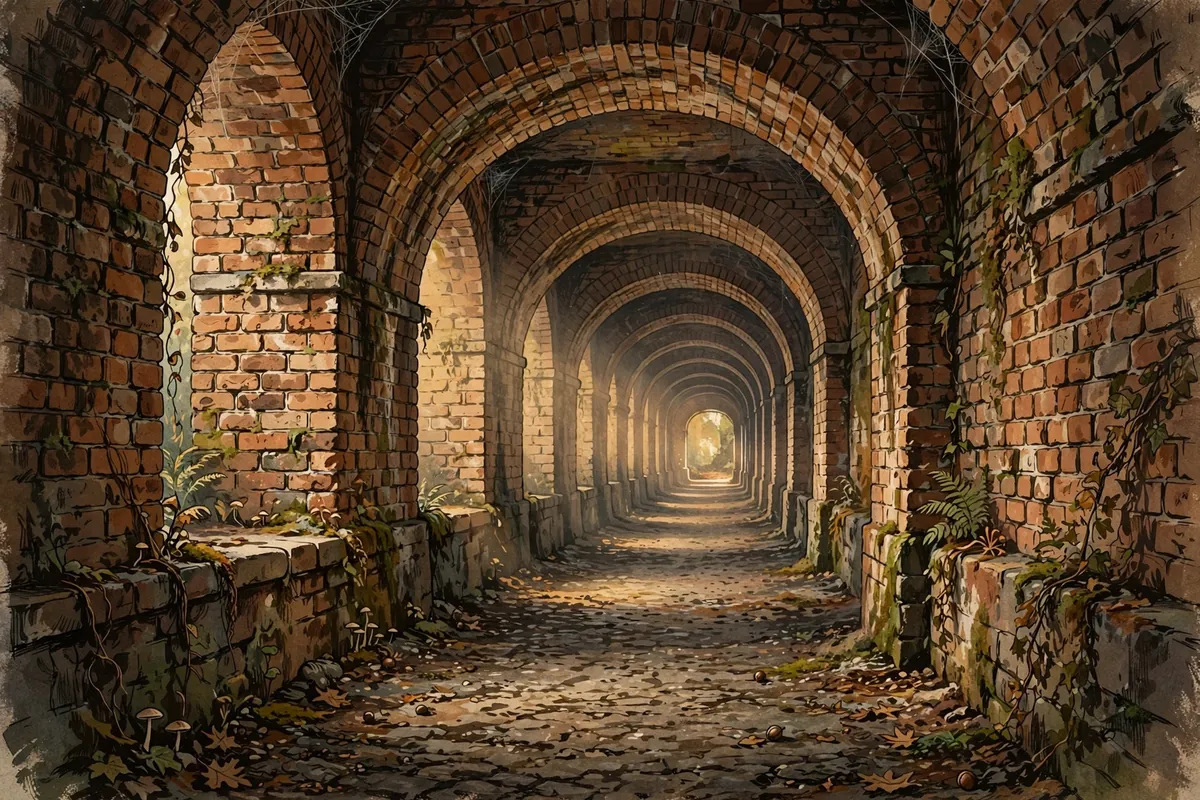
Stories about secret tunnels under Washington, D.C., have been around for ages. Picture shadowy passageways where lawmakers slip unseen from one building to another. As it turns out, there really is a network of tunnels beneath the U.S. Capitol. But the truth is less spy movie and more charming little railway.
The tunnels aren't truly secret, and they aren't sinister either. They hold the United States Capitol subway system, three small underground train lines that connect the Capitol to congressional office buildings. The first line opened in 1909. Members of the public can even ride it, usually on a tour, as long as they're escorted by a staff member with proper identification.
A Subway for Senators
The original line was built in 1909 to link the Russell Senate Office Building to the Capitol. Its first cars were electric coaches built by the Studebaker Company, the same company better known for wagons and automobiles. Electric monorail cars followed in the 1910s and served until 1961.
In 1960, a monorail was installed for the Dirksen Senate Office Building, and in 1965 a two-car line was built to connect the Rayburn House Office Building to the Capitol. The Dirksen line was extended to the Hart Senate Office Building in 1982 and replaced with an automated train in 1993.
How the System Works Today
On the Senate side, there are two lines. One is an old-fashioned crewed system with a single open-topped car on each track, running between the Russell building and the Capitol. The other is computer-controlled, with three enclosed trains running every 90 seconds between the Hart building, the Dirksen building, and the Capitol.
Those automated trains don't have their own motors. They're pushed along by a motor built into the track. The stations even have platform screen doors, much like a modern airport train.
On the House side, another crewed open-car line shuttles people between the Rayburn building and the Capitol. Two other House buildings share an underground walking tunnel, while two more have no underground link at all. The House and Senate trains end in different spots beneath the Capitol, connected by what's been described as a labyrinth of tunnels.
Rules of the Rails
The trains get busy when it's time to vote. During votes, the House subway is reserved for members of Congress, and the Russell subway is limited to senators and staff. Since the attacks of September 11, 2001, there have been extra restrictions on visitors using the Senate line between the Hart and Dirksen buildings. Otherwise, the public may ride only with an escort, and many visitors get their first look at the trains while touring the Capitol complex.
A Few Dramatic Moments
The little railway has seen some excitement. On July 12, 1947, Senator John W. Bricker was shot at as he entered the Capitol subway tunnel by a former Capitol Police officer. Fortunately, the shots missed, and Bricker survived.
In 2007, a car on the Rayburn line failed to slow down at the end of the track and crashed. The operator was taken to the hospital for observation.
So yes, there are tunnels under the Capitol, and yes, important people use them every day. They just ride through in open-topped train cars that seat 18, which is a lot friendlier than the movies would have you believe.