It's one of America's favorite bits of holiday trivia. Benjamin Franklin, inventor, diplomat, and Founding Father, supposedly lobbied hard for the wild turkey to be the national bird. The bald eagle won, and Franklin was left grumbling. It makes a great story to tell over pumpkin pie.
But it's a myth. Franklin never publicly opposed the bald eagle as a national symbol, and he never publicly proposed the turkey. The whole idea comes from a private letter he wrote to his daughter, Sarah Bache, on January 26, 1784. In it, he poked fun at the eagle and praised the turkey, but he wasn't making a serious proposal.
What the Letter Was Really About
The main subject of Franklin's letter wasn't birds at all. He was criticizing the Society of the Cincinnati, a new organization of Revolutionary War officers. Franklin felt it looked like an aristocratic order of knights, which clashed with the ideals of the new American republic.
The Society's badge featured a bald eagle, and that gave Franklin an opening for some sharp humor. Some people, he noted, complained that the eagle on the badge looked more like a turkey.
Franklin's Not-So-Kind Words About the Eagle
Franklin wrote that he wished the bald eagle had not been chosen to represent the country. He called it "a Bird of bad moral Character" that "does not get his Living honestly." He described the eagle sitting on a dead tree, too lazy to fish for itself, waiting for an osprey to catch a fish and then stealing it.
He went further, calling the eagle "a rank Coward," because the little kingbird, no bigger than a sparrow, would boldly chase it away. Franklin wasn't holding back.
His Praise for the Turkey
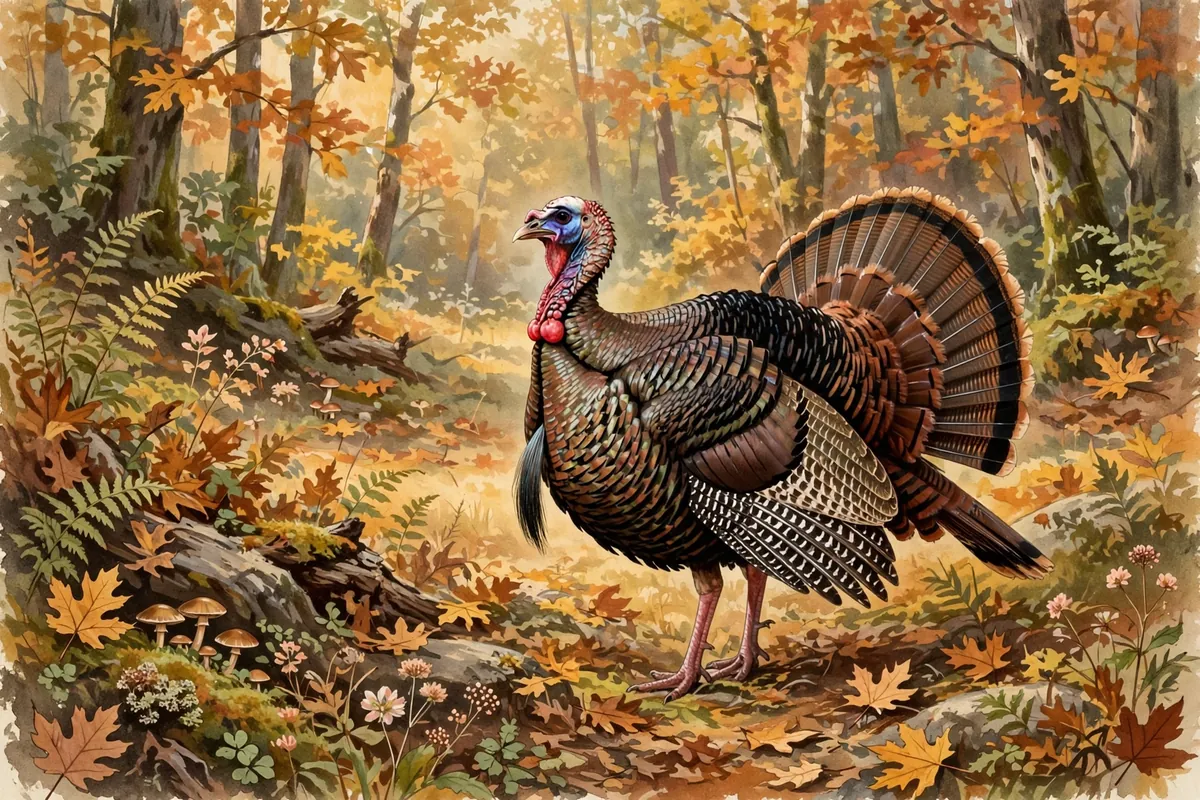
Franklin then said he wasn't too upset that the badge's bird looked like a turkey. "For in Truth the Turkey is in Comparison a much more respectable Bird," he wrote, "and withal a true original Native of America."
He added that the turkey, "though a little vain & silly," was "a Bird of Courage" that wouldn't hesitate to attack a British soldier who invaded his farmyard wearing a red coat. It's a funny, affectionate line, but it was part of a private joke at the Society's expense, not a campaign.
How the Eagle Really Won
By the time Franklin wrote his letter, the decision had already been made. On June 20, 1782, the Continental Congress adopted the design for the Great Seal of the United States, showing a bald eagle holding 13 arrows and an olive branch with 13 leaves. The founders liked comparing their new republic to ancient Rome, where eagle imagery was common.
For more than two centuries, the bald eagle was considered the national bird only unofficially. That finally changed on December 23, 2024, when a law officially named it the national bird of the United States.
The wild turkey still has plenty to be proud of. Eastern tribes ate both its eggs and its meat, sometimes drying the meat into jerky to last through the cold months. It played an important role in the cultures of many Native American tribes, from turkey feather cloaks to the Caddo tribe's turkey dance. So this Thanksgiving, you can share the real story. Franklin teased the eagle and complimented the turkey, but he never really asked to swap them.