Pigs have a reputation problem. We use their name as an insult for messy people, and we picture them happily rolling in mud with nothing on their minds but dinner. But scientists who actually study pigs tell a very different story.
Pigs are among the smartest mammals around, roughly on par with dogs. They can learn to use a joystick to move a pointer on a computer screen, understand human gestures and words, recognize individual faces, and even work out how to mislead other pigs to get the best food.
A Pig, a Joystick, and a Screen
One of the most famous findings sounds like a joke, but it's real. Pigs have been trained to use a joystick with their snouts to steer a pointer toward a target on a screen. Chimpanzees can learn the same thing. In one study, the pigs did better than dogs at hitting the target.
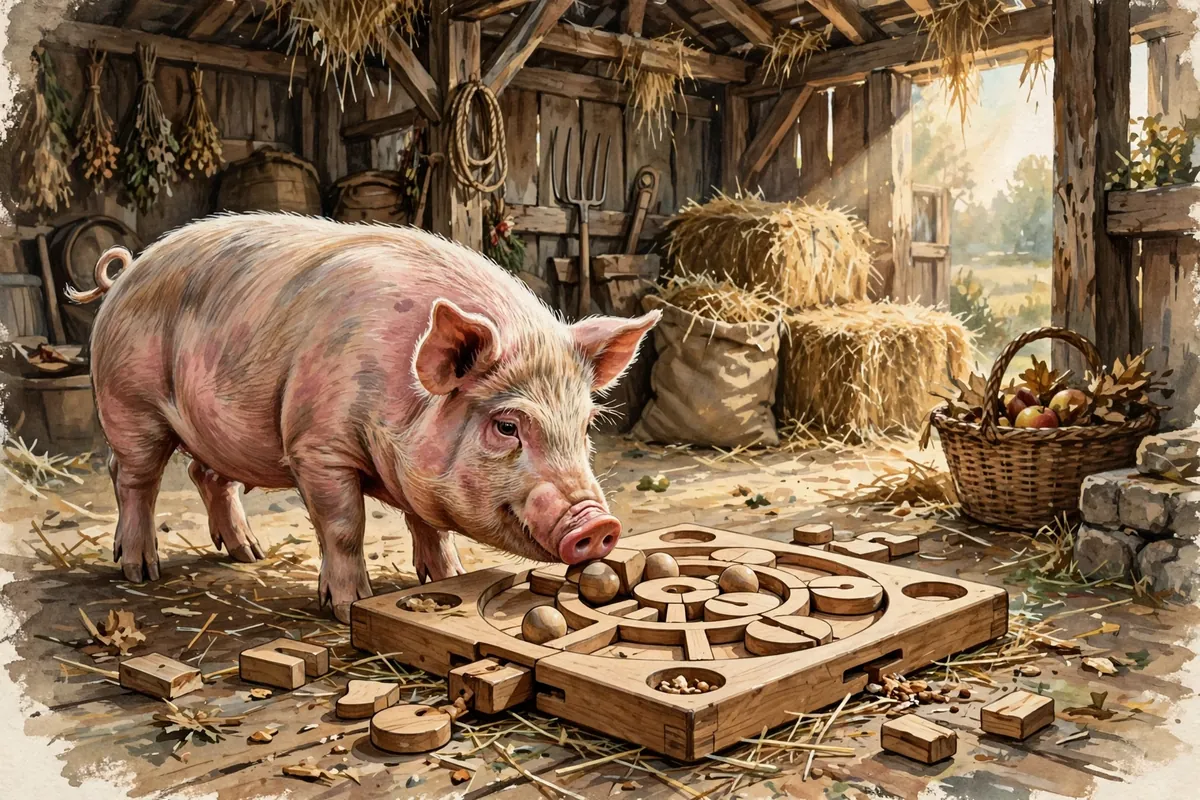
Pigs can solve mazes, too, and remember where objects are. They can learn and return to the spots that had more food, which shows they have a good memory for places and some sense of quantity. Some have even used their problem-solving skills to free other pigs from cage traps.
They Understand Us Better Than We Think
In one study, pigs learned gestures and spoken symbols for objects like a frisbee, a ball, and a dumbbell, plus actions like sit, fetch, and jump. They didn't just learn single words. They understood combinations like fetch the frisbee and carried them out.
Pigs can also tell where a person is looking and follow a pointing finger, much like dogs. That sounds simple, but it's a test that even great apes struggle with. Pigs can recognize human faces, even when people are dressed alike, and they remember which people and pigs they like.
This isn't a new discovery for farmers. In the Middle Ages, pigs were often kept together in shared pens. Each owner had a horn tuned to a different pitch, and the pigs learned to recognize their own owner's call and come home.
Feelings, Friendships, and a Little Trickery
Pigs pick up on each other's moods. Scientists call it emotional contagion, and pigs will offer social support to a pig that's having a bad time. In one experiment, pigs learned to link Bach with food and a military march with being alone, and then passed those good or bad feelings on to pigs that hadn't been trained.
They can be sneaky, too. In one study, pigs used what they knew about other pigs' points of view to lead them away from hidden food. That kind of tactical deception has also been seen in crows and primates. Pigs also have distinct personalities, with piglets showing different levels of boldness, friendliness, and curiosity.
About That Mud
So why the wallowing? It's actually smart. Pigs don't use sweat to cool off the way we do, so on warm days they roll in mud or water, and the evaporation helps them cool down. The mud may also work as sunscreen and help keep pests away.
And that snout is a powerful tool. Pigs have an excellent sense of smell, which is why trained pigs have long been used in Europe to sniff out truffles buried underground. They even use smell, more than sight, to tell other pigs apart.
So the next time you see a pig nosing around a barnyard, give it a little more credit. There's a good chance it knows exactly who you are, remembers whether you were kind, and is already working out how to get to the snacks first.