If you've ever had a bad bout of food poisoning, you know the body has a blunt emergency exit. Something goes down that shouldn't, and sooner or later it comes back up. It's unpleasant, but it works. Horses don't get that option, and it isn't because they have stronger stomachs.
Horses simply cannot vomit. The muscular ring where the food pipe meets the stomach is extremely well developed in horses, and the food pipe joins the stomach at a slanted angle. Together, those two features make the entrance to a horse's stomach work like a one-way door. Food goes in, and it doesn't come back out the top.
A One-Way Door Into the Stomach
That muscular ring is called the cardiac sphincter. People have one too, but in horses it is especially strong and well developed. Combined with the slanted angle where the food pipe enters, it makes the stomach's entrance very hard to open from the inside.
The path leading to that door is long, too. A horse's esophagus runs about four to five feet from throat to stomach. It's also the spot where horses can suffer from choke, when food gets stuck partway down the tube.
Why It Matters So Much
Because nothing can come back up, trouble in a horse's gut has only one way to go: onward. Digestive problems can quickly turn into colic, the general term for belly pain in horses. Colic is one of the leading causes of death in horses, which is why owners take even mild symptoms seriously.
Vets have a workaround when the stomach fills with fluid or gas. They can pass a tube through the nose and down into the stomach to relieve the pressure. In some cases, this is done regularly to prevent the stomach from rupturing. If you own a horse and something seems off, call your vet right away.
For an animal that typically weighs 800 to 1,200 pounds, the horse has a surprisingly small stomach. It holds only a few gallons and works best when it's partly full. It also starts emptying when it gets about two-thirds full, whether the food has been fully processed or not.
That's why horses do best eating small amounts all day long, the way wild horses grazed on prairie grasses. One or two big meals a day can overload the system. Sudden diet changes are risky too, because the microbes that ferment plant fiber in the gut need time to adjust.
That's why horses do best eating small amounts all day long, the way wild horses graze across open grassland. One or two big meals a day can overload the system. Sudden diet changes are risky too, because the microbes that ferment plant fiber in the gut need time to adjust.
More Odd Facts About a Horse's Gut
Horses also have no gallbladder, so bile flows into the gut nonstop. And they produce stomach acid almost constantly. Stomach ulcers are fairly common in horses, and infrequent feedings are one of the known risk factors.
Horses also have no gallbladder, so bile flows into the gut nonstop. And they produce stomach acid almost constantly, which helps explain why stomach ulcers are fairly common in horses kept on infrequent meals.
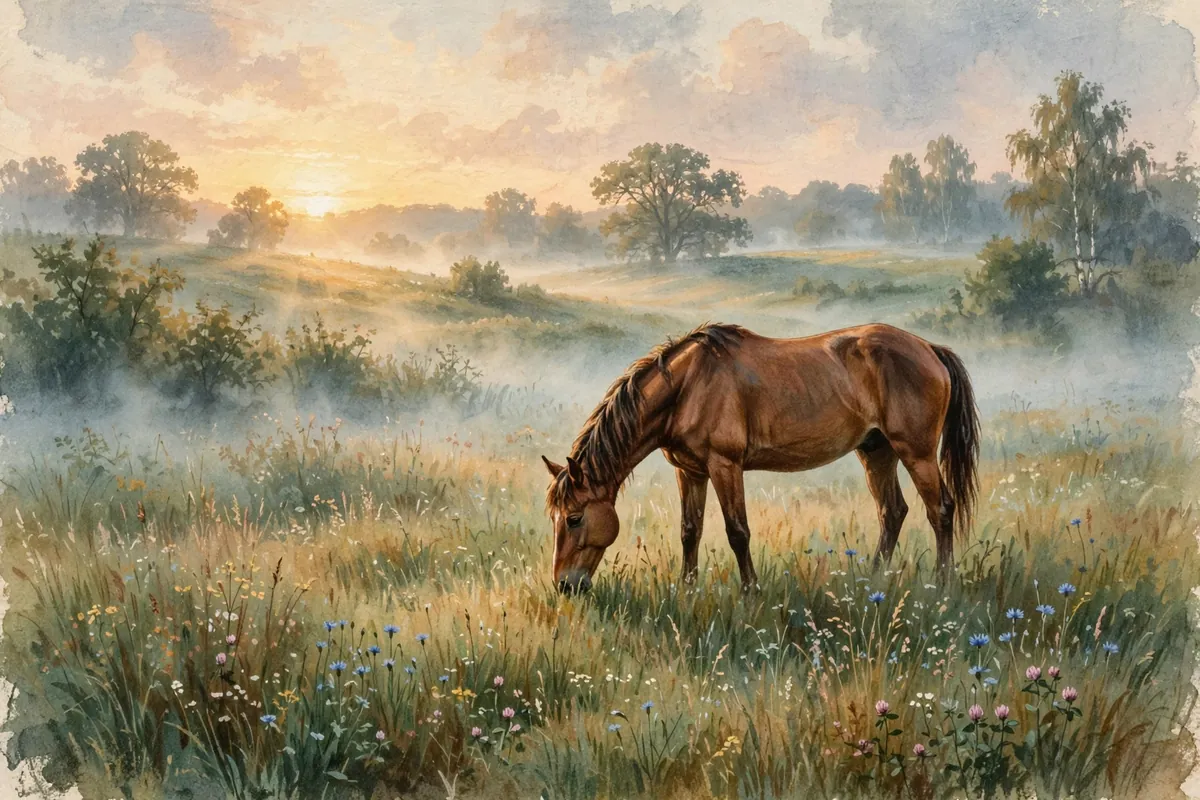
So the next time you see a horse calmly munching in a field, know that it's eating the way its body was built to: slowly, steadily, and with no going back. It's a good reminder of why horse lovers watch their animals' bellies so closely.