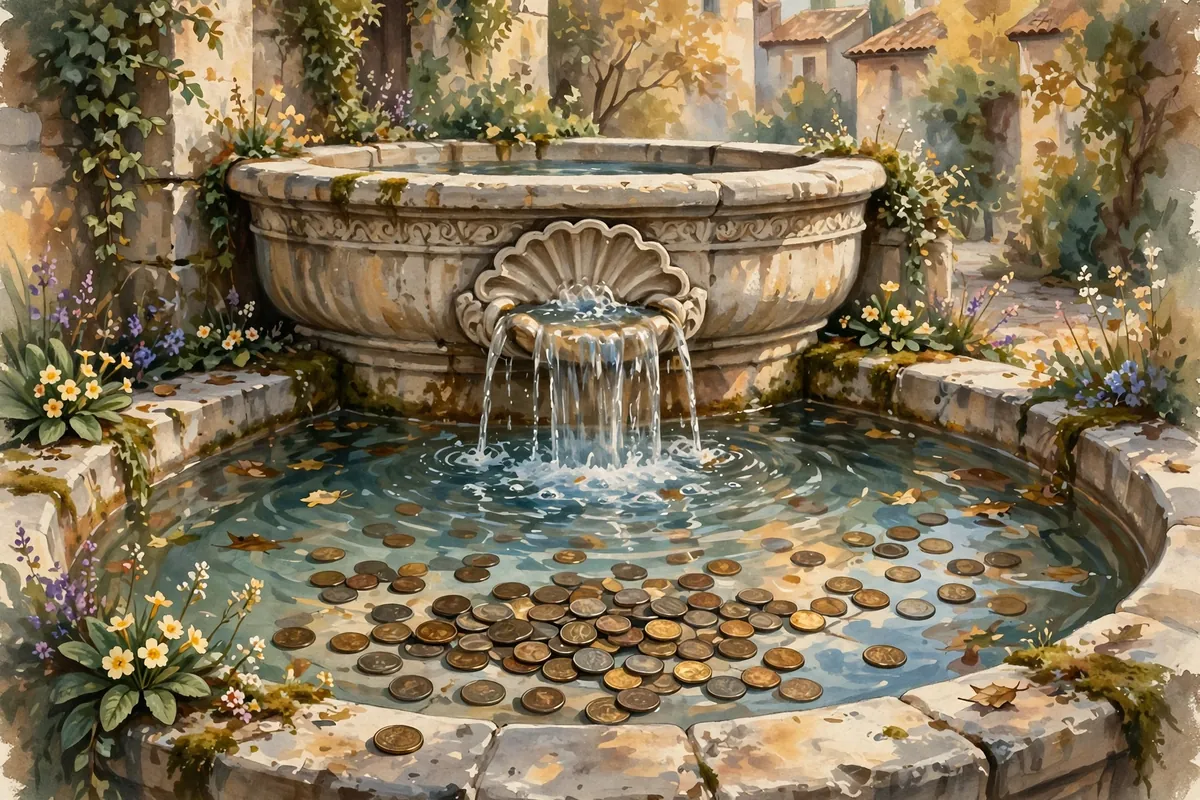
You see it at shopping malls, city parks, and famous landmarks: a fountain sparkling with coins. Kids beg for a penny, close their eyes, and toss it in with a secret wish. Grown-ups do it too, a little more quietly. But why do we feel the urge to throw money into water?
Here's the short answer. It's a very old custom. In Europe, people were placing coins in springs and wells as offerings at least as far back as Roman times. One leading theory is that the gifts were meant to please the spirits or gods believed to live in the water. Over time, the offering turned into the playful wish we make today.
Gifts for the Spirits of the Well
Water was precious and a little mysterious to ancient people. Many believed springs and wells were home to spirits, whether gods, fairies, nymphs, or saints. Offering something valuable was a way to keep those spirits happy, or to ask for a favor.
That idea fits with the popularity of holy wells, many of which are linked to a particular saint. Some scholars think many Christian holy wells were originally pagan shrines that were later adopted by the church. The custom may also tie into an old Celtic belief that wells and other waters were doorways to the Otherworld.
Not everyone agrees. Folklorist Alan Dundes argued this spirit theory doesn't explain why people who aren't superstitious still toss coins today. He offered a far odder explanation rooted in psychoanalysis, which most of us would rather not think about while making a wish.
Not Always Coins
Coins are the usual choice now, but people have tossed many things into wells over the centuries: stones, shells, beads, buttons, food, rags, needles, and nails. In Britain and Ireland, pins were especially popular, and they were often bent before being thrown in.
One practical theory suggests copper and silver coins may have helped keep well water cleaner, since some metals slow the growth of bacteria. American pioneers reportedly dropped coins into their water barrels during the long journey west for the same reason.
The phrase wishing well itself is newer than you might think. The earliest recorded use of the term dates to 1791.
Three Coins and a Fortune
The most famous coin-tossing spot is the Trevi Fountain in Rome. Tradition says that if you throw a coin over your left shoulder with your right hand, with your back to the fountain, you'll return to Rome someday. The 1954 film Three Coins in the Fountain made the custom famous worldwide. The fountain has also starred in classic films like Roman Holiday and La Dolce Vita.
The total is astonishing: an estimated 3,000 euros land in the Trevi every day. The money is collected and donated to the Catholic charity Caritas for its work helping people in need.
A Wish With a Downside
All that metal can cause problems. In a cave in New Zealand with a wishing well, studies found tossed coins raised levels of copper and nickel in the water and reduced wildlife there. The Roman Baths in England banned coin-tossing in 2022 to protect the historic site.
So the next time you flip a penny into a fountain, you're joining a tradition thousands of years old. Just check the signs first, and make it a good wish.