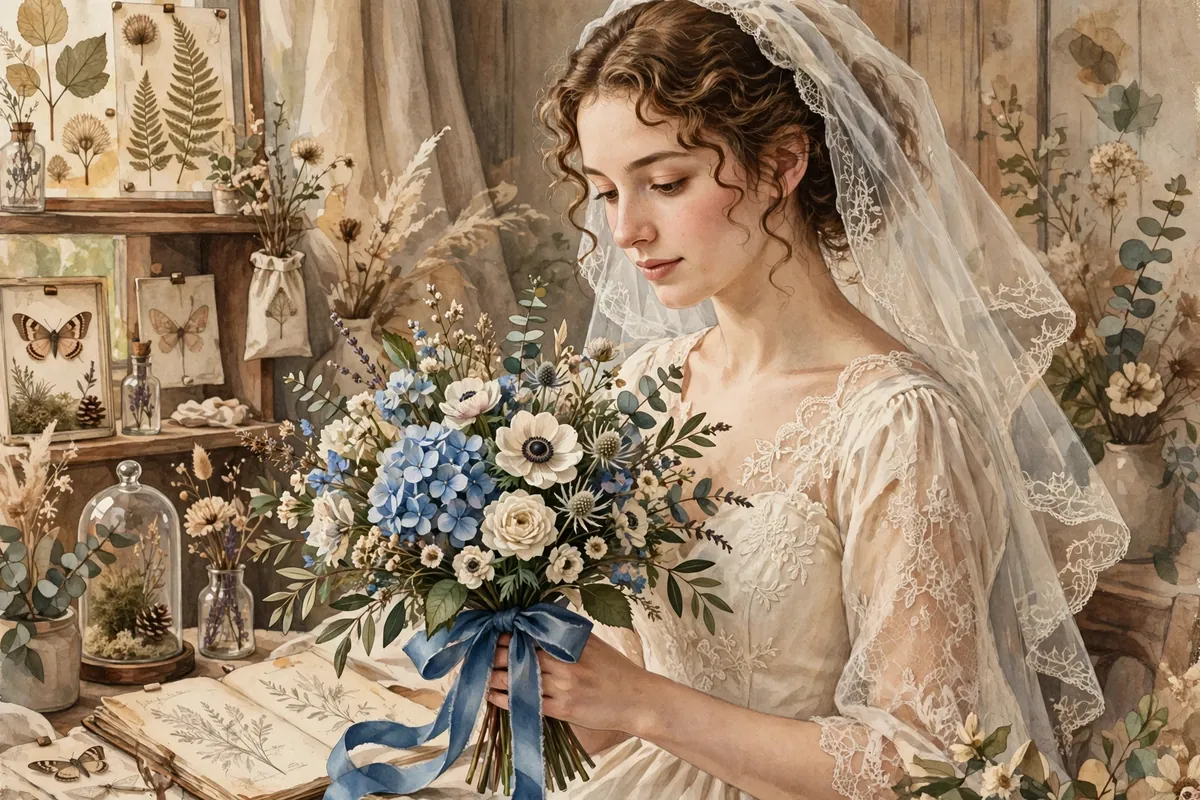
Ask almost any bride, and she can recite it: something old, something new, something borrowed, something blue. Mothers pass down lace handkerchiefs, sisters lend earrings, and somewhere there's a tiny bit of blue hidden on the dress or tied to the bouquet. But where did this sweet little ritual actually come from?
It comes from an old English folk rhyme about what a bride should wear for good luck. The blue item stands for purity and faithfulness. In older English folklore, it was also one of the charms meant to protect the bride from the Evil Eye, a curse that people feared could bring bad luck to her and her future family.
A Victorian Rhyme
The rhyme is younger than many people think. The earliest recorded version of the first lines appeared in 1871, in a magazine story where the narrator says that on her wedding day she must wear something new, something borrowed, something blue.
The full version we know today showed up in an English newspaper in 1876. It described a bride who wore, according to ancient custom, something old and something new, something borrowed and blue. This was called the Lancashire version, since other parts of England had their own variations.
Interestingly, some regional traditions actually warned against wearing blue on your wedding day. Supporters of the rhyme linked the color to phrases like true blue, meaning loyal and faithful.
What Each Item Means
Each part of the rhyme has its own job. Something old was meant to offer protection for the baby to come. Something new stands for hope and optimism about the future.
Something borrowed should ideally come from a happily married couple, so their good luck rubs off on the newlyweds. And something blue is a sign of purity and fidelity.
An 1898 collection of English folklore explained that something old and something blue were both meant to baffle the Evil Eye. In those days, people believed the Evil Eye could keep a bride from having children, so these little charms were taken quite seriously.
The Garter Connection
That same 1898 account said the something blue usually took the form of a garter. Garters have long played a part in wedding customs. In the Middle Ages, groomsmen would rush at the new bride to grab her garters as a prize, and some say taking a piece of the bride's clothing was believed to bring good luck.
Today, something blue can be almost anything: a blue bow sewn into the waistband, a ribbon hidden inside the dress, blue stitching, or even blue polish on the bride's toenails.
And a Sixpence in Her Shoe
There's a lesser-known last line, too: and a sixpence in her shoe. It was a later Victorian addition. The sixpence, a small British silver coin, was a symbol of prosperity, and it was supposed to go in the left shoe.
The Victorians gave us another bridal tradition as well. White wedding dresses became popular after Queen Victoria wore a white gown trimmed with lace when she married Prince Albert in 1840.
So if you spot a bride with a blue ribbon on her bouquet, you'll know she's carrying on a custom well over a century old. Whether or not you believe in luck, it's a lovely way to wish a couple a happy life together.