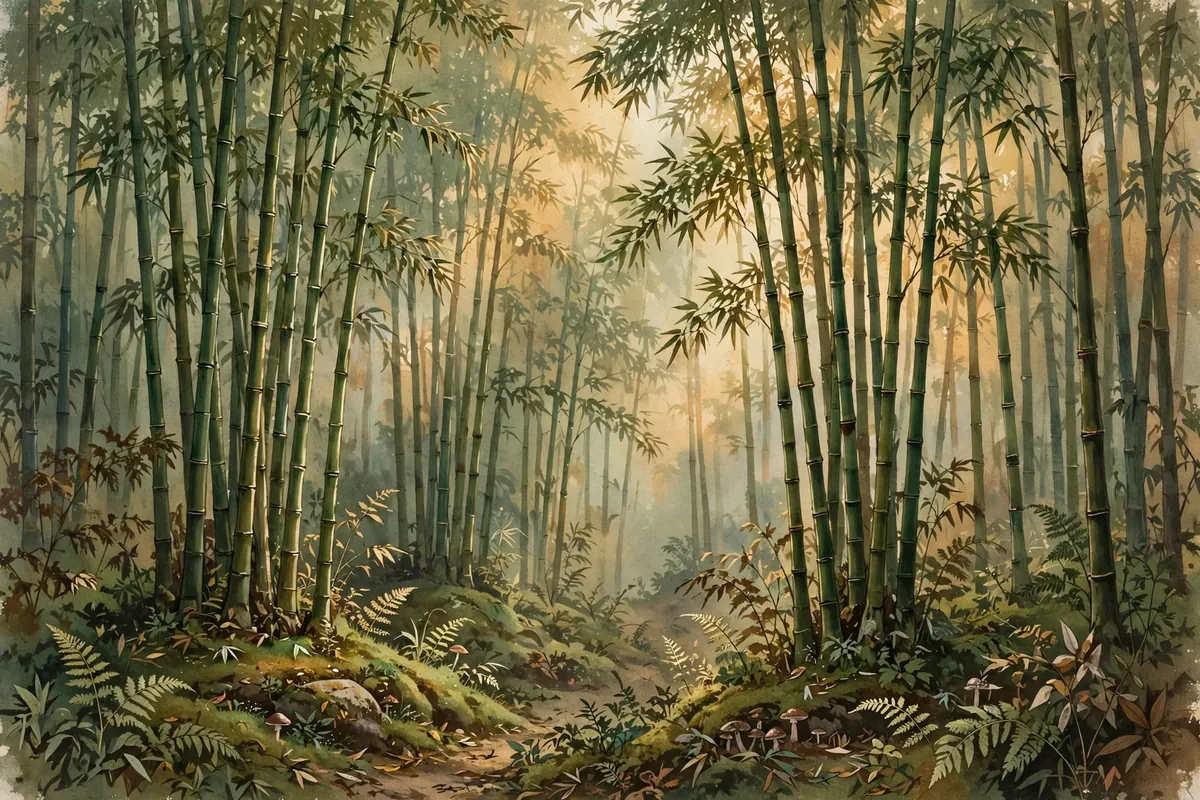
Most of us think of a tree as something that takes a lifetime to grow. Plant one as a child and it might shade your grandkids. Bamboo plays by completely different rules. Some kinds can grow so fast you could practically watch them stretch.
Certain bamboo species can grow about 36 inches in 24 hours, nearly an inch and a half every hour. One observation of Japanese giant timber bamboo recorded more than 47 inches in a single day. Scientists credit a unique growth system that depends on the rhizomes, the underground stems that connect a bamboo plant. Each new stalk rises from that established network, already as wide as it will ever be, and spends one season simply shooting upward.
It's Actually a Giant Grass
Bamboo isn't a tree at all. It belongs to the grass family, the same big family as the grass on your lawn. Giant bamboos are the largest grasses on Earth. One species can have stalks about 151 feet long and up to 14 inches across, weighing as much as 1,000 pounds.
Like other grasses, bamboo stalks, called culms, are usually hollow between their joints. They also don't make the kind of woody growth rings that let a tree get thicker each year. That's why bamboo stalks are straight columns instead of tapering like a tree trunk.
One Season to Reach Full Height
Here's the really surprising part. A bamboo stalk comes out of the ground at its full width and reaches its full height in a single growing season of about three to four months. While it's racing upward, it doesn't branch out. Only when it's nearly done do the branches and leaves appear.
After that first season, a stalk never gets any taller or wider. Over the next couple of years, its walls harden. As the whole plant and its underground network mature, though, each new year's stalks come up taller and thicker than the last, until the plant reaches its species' limit.
Growth speed depends on the species, the soil, and the climate. Many bamboos grown in cooler climates add a more modest 1 to 4 inches a day during their growing period. Still, that's fast for any plant.
Clumpers and Runners
Gardeners know that bamboo comes in two general types. Clumping bamboos have short underground rhizomes and spread slowly. Running bamboos have long rhizomes that can travel widely underground and send up new shoots far from the original plant. Some runners spread several feet or more in a year, while others stay in the same area for a long time.
That's why some running types can become a nuisance. In the United States, golden bamboo is listed as an invasive species. If you're thinking of planting bamboo, it pays to know which kind you're getting.
A Mysterious Bloom
Bamboo has one more oddity. Many species flower very rarely, some only every 65 or 120 years. When they do, all the plants of the same stock tend to flower at the same time, even in different parts of the world, and then the plants often die.
It's as if each plant carries a built-in alarm clock, and nobody fully understands how it works. Fast growth, rare blooms, and a hidden network underground make bamboo one of nature's most remarkable plants, and a good reminder that some of the best action happens out of sight.