It's one of the most mispronounced words in the kitchen. Worcestershire. People say it every which way, and many of us just point at the bottle. So where did such a tongue-twister of a name come from?
The answer is geography. The sauce was created by two pharmacists, John Wheeley Lea and William Henry Perrins, in the city of Worcester, in the English county of Worcestershire, during the first half of the 1800s. Their brand, Lea & Perrins, went on sale in 1837 and was the first sauce to carry the Worcestershire name. By the way, it's usually pronounced roughly WUUS-ter-sher, or simply WUUS-ter.
A Recipe With a Murky Past
Where the recipe came from is a bit of a mystery. The original packaging said the sauce came "from the recipe of a nobleman in the county." The company later claimed that a Lord Sandys, described as an ex-Governor of Bengal, had tasted it in India in the 1830s and asked the local pharmacists to recreate it.
There's one problem with that story. According to available records, no Lord Sandys was ever Governor of Bengal, and none of them ever visited India. So the true origin of the recipe remains unclear.
The Barrel in the Basement
Then there's the best part of the legend. According to company lore, when the recipe was first mixed, it was so strong it was considered inedible. The barrel was pushed aside and forgotten in the basement.
About 18 months later, needing to clear out storage space, the chemists decided to taste it again. The long-fermented sauce had mellowed into something delicious. In 1838, the first bottles of Lea & Perrins Worcestershire sauce went on sale to the public.
What's Actually in It
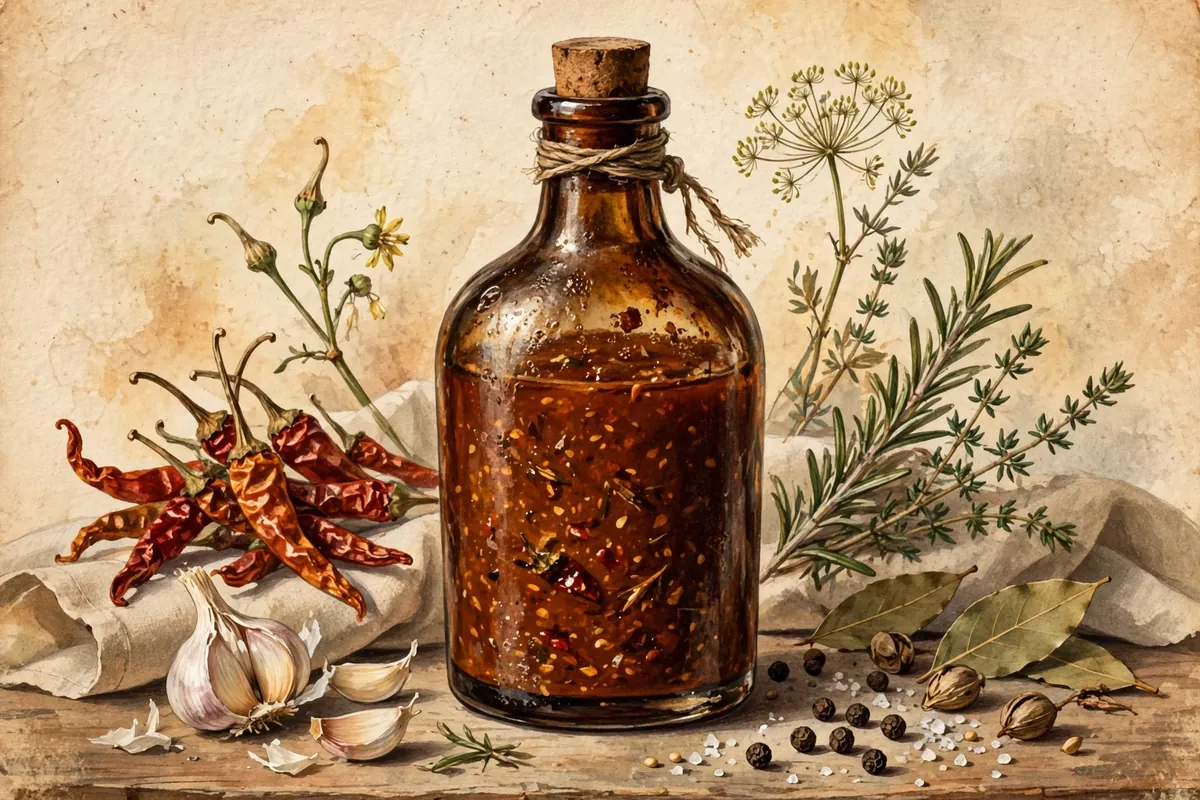
Recipes vary by brand, but Worcestershire sauce often includes vinegar, salt, sugar or molasses, garlic or onions, and fish. The U.S. version of Lea & Perrins includes anchovies, tamarind extract, cloves and chili pepper extract, among other ingredients. The British and Canadian versions use malt vinegar, while the American one swaps in distilled white vinegar.
That fishy secret has a long history. Fermented fish sauces go back to ancient times, and English sauce recipes were combining anchovies with other ingredients as early as the 1600s. Today, anchovy-free versions are available for people who avoid fish. Many Worcestershire recipes have also used soy sauce since the 1880s, but it's debated whether Lea & Perrins ever did. As of 2021, soy isn't listed in its ingredients.
Anyone Can Use the Name
If you've noticed other brands calling their sauce Worcestershire, there's a reason. In 1876, an English court ruled that Lea & Perrins didn't own a trademark on the name, so it became a generic term anyone can use.
Lea & Perrins still makes its sauce in Worcester, in a factory it moved into in 1897, though the business has changed owners several times since 1930. And if you've ever wondered why some American bottles come wrapped in paper, the company says it's a leftover from the 1800s, when bottles were shipped from England and needed protection.
So whether you splash it on a steak, stir it into a Bloody Mary or add it to a pot of beef stew, you're enjoying a sauce that was nearly thrown out. Not bad for a forgotten barrel.