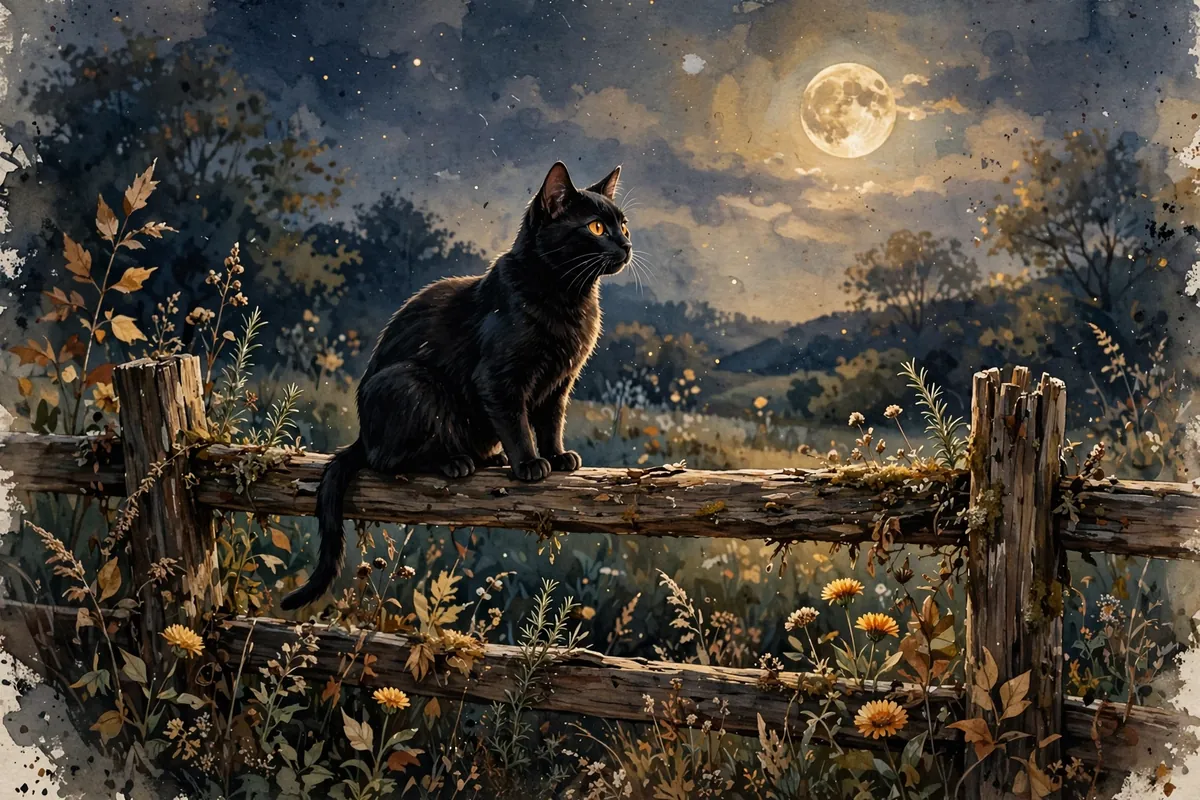
A black cat strolls across the road in front of you, and for a split second you hesitate. Even people who don't believe in superstitions sometimes feel a little twinge. Black cats are everywhere at Halloween, perched next to witches and jack-o'-lanterns. How did one of the most common cat colors end up with such a gloomy reputation?
Here's the short answer. In Europe, black cats were historically seen as bad luck, mostly because of their link to witchcraft. That connection likely traces back to a 13th-century document from Pope Gregory IX, called Vox in Rama, which described a supposed demonic ritual involving a black cat. But the belief is far from universal. In many places, black cats are considered lucky.
A Medieval Witch Hunt
The 13th century was a time of great superstition, when church officials grew increasingly suspicious of heretics. In 1233, an inquisitor named Konrad von Marburg began an investigation in the German city of Mainz.
Konrad claimed he had uncovered a secret cult that worshiped devils in the form of a pale man and a diabolical black cat. His methods were controversial, and a church official complained that he was forcing innocent people to confess under threat. But his report shaped Vox in Rama, which described the cult's rituals in vivid detail.
A Myth About the Myth
You may have heard a dramatic sequel to this story: that the Pope ordered all cats killed, cat populations crashed, rats multiplied, and the Black Death got worse. One historian made that argument in a 1999 book.
However, the text of Vox in Rama doesn't say all cats are satanic, and it contains no orders to kill cats. There's also no documentary or archaeological evidence of widespread cat-killing of that kind. Religious instructions from the same era even allowed certain religious women to keep pet cats.
Lucky Cats Around the World
In much of Britain and Ireland, black cats are good news. In England and the Celtic nations, a black cat crossing your path is considered good luck. Scottish lore says a black cat arriving at a new home brings prosperity, and Welsh lore says one brings good health.
Sailors wanted a black ship's cat for good luck, and some fishermen's wives kept black cats at home hoping to protect their husbands at sea. In Japan, black cats are associated with good fortune. In Latvia, a black cat on the farm means prosperity, and in Thailand, black cats are thought to bring prosperity to their owners.
Black Cats Today
The superstition still pops up in surprising places. In the early days of American television, many stations on channel 13 used a black cat as a mascot, poking fun at their "unlucky" number.
There's also a common belief that black cats are the least likely to be adopted from shelters. That claim is widely debated, and studies have reached conflicting results. To give them a boost, the UK charity Cats Protection named October 27 Black Cat Day. Some shelters have paused black cat adoptions around Halloween out of worry for the animals. Yet no link has been documented between those adoptions and cats being harmed, and pauses can leave more cats stuck in crowded shelters.
So if a black cat crosses your path, don't panic. Depending on where you are in the world, you may have just been handed a little good luck.