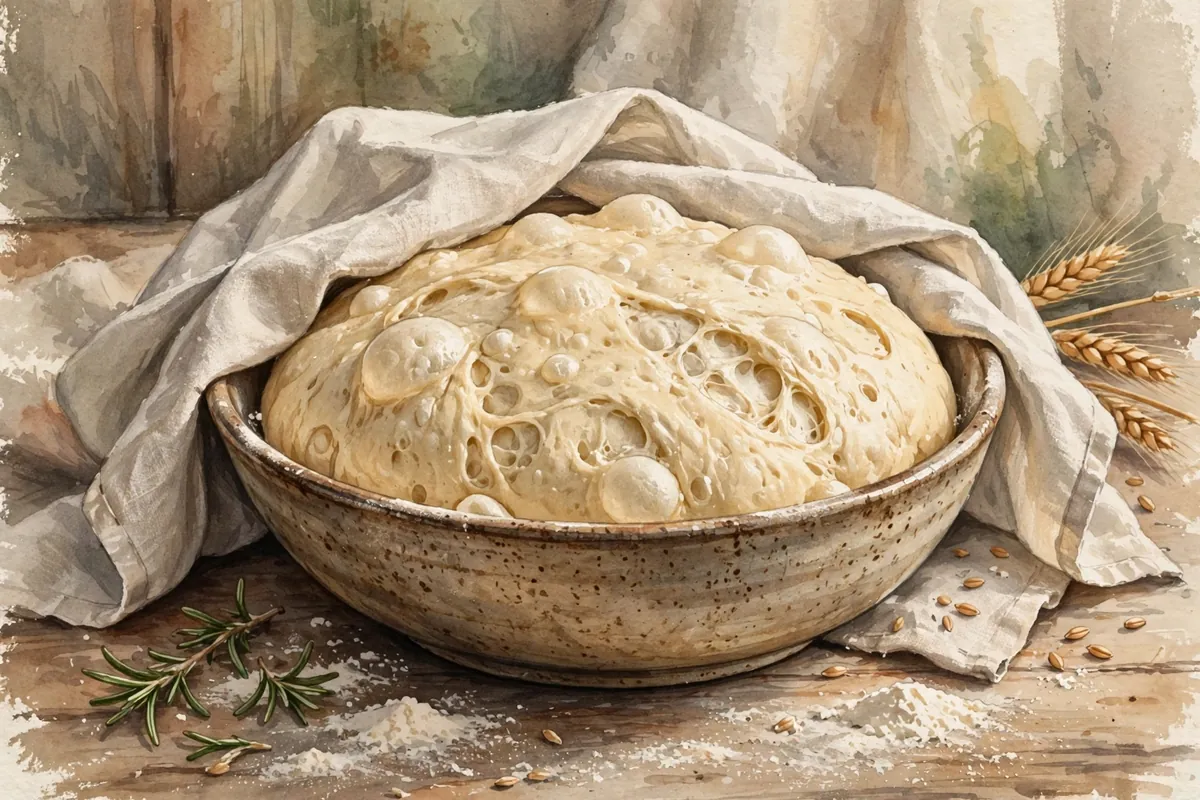
Anyone who has baked bread at home knows the little thrill of lifting the towel off the bowl. The small, dense lump you left behind has puffed up to twice its size, soft and airy. It almost seems like the dough came to life while you weren't looking.
In a way, it did. Most bread rises because of yeast, a tiny living fungus. Yeast feeds on sugars in the dough and gives off carbon dioxide gas. Stretchy gluten proteins from the wheat flour trap that gas in countless little bubbles, and the dough swells like a balloon.
Meet the Yeast
The yeast most often used in bread is called Saccharomyces cerevisiae. It's the very same species used to brew beer. When it's mixed into dough, it ferments some of the sugars and produces two main things: carbon dioxide and alcohol. Many artisan bakers keep their own yeast cultures going, and if they're cared for properly, they can raise loaves for many years.
Those gases and vapors are what create bread's air pockets. Commercial bakers usually use baker's yeast, which is grown from a pure culture so it gives fast, reliable results every time.
Gluten, the Built-In Balloon
Gas alone wouldn't do much if it just bubbled out of the dough. That's where gluten comes in. Wheat flour contains proteins that link up when you add water and knead, forming a stretchy, elastic network.
That network traps the gas, a bit like the rubber of a balloon. One protein, glutenin, makes the dough springy, so it bounces back when you press it. Another, gliadin, lets it stretch and hold a new shape. Bread wheat is rich in gluten, which is why it's the most common grain used for bread. Scientists even describe bread as a kind of foam, with gas trapped inside a solid.
When the loaf goes into the oven, the heat sets the structure. The starch in the flour firms up around the gas bubbles, locking them in place and giving bread its soft, airy crumb.
Thousands of Years of Rising Bread
People figured this out long ago. An early leavened bread was baked as far back as 6000 BC in southern Mesopotamia. The Egyptians may have learned the craft from there and went on to refine it, adding yeast to the flour.
Before packets of yeast existed, bakers got creative. Some simply left dough out in the air to catch wild yeasts. The Roman writer Pliny the Elder reported that the Gauls and Iberians used the foam skimmed off beer to make a lighter bread. The most common method was to save a piece of yesterday's dough to start the next batch, which is the idea behind sourdough.
Sourdough, Soda, and Other Tricks
A sourdough starter is a mix of flour and water left to ferment for a week or more, collecting natural yeasts and tangy, acid-forming bacteria. Bakers keep it alive by feeding it fresh flour and water. San Francisco's famous sourdough even has a bacterium named after the city.
Not every bake relies on living yeast. Quick breads, cakes, and cookies often use chemical leaveners like baking powder, which release gas when they meet moisture or heat.
So the next time you watch dough rise on the counter, give a little thanks to the tiny yeast doing all the work. They're one of the oldest kitchen helpers we have, and they never ask for a day off.