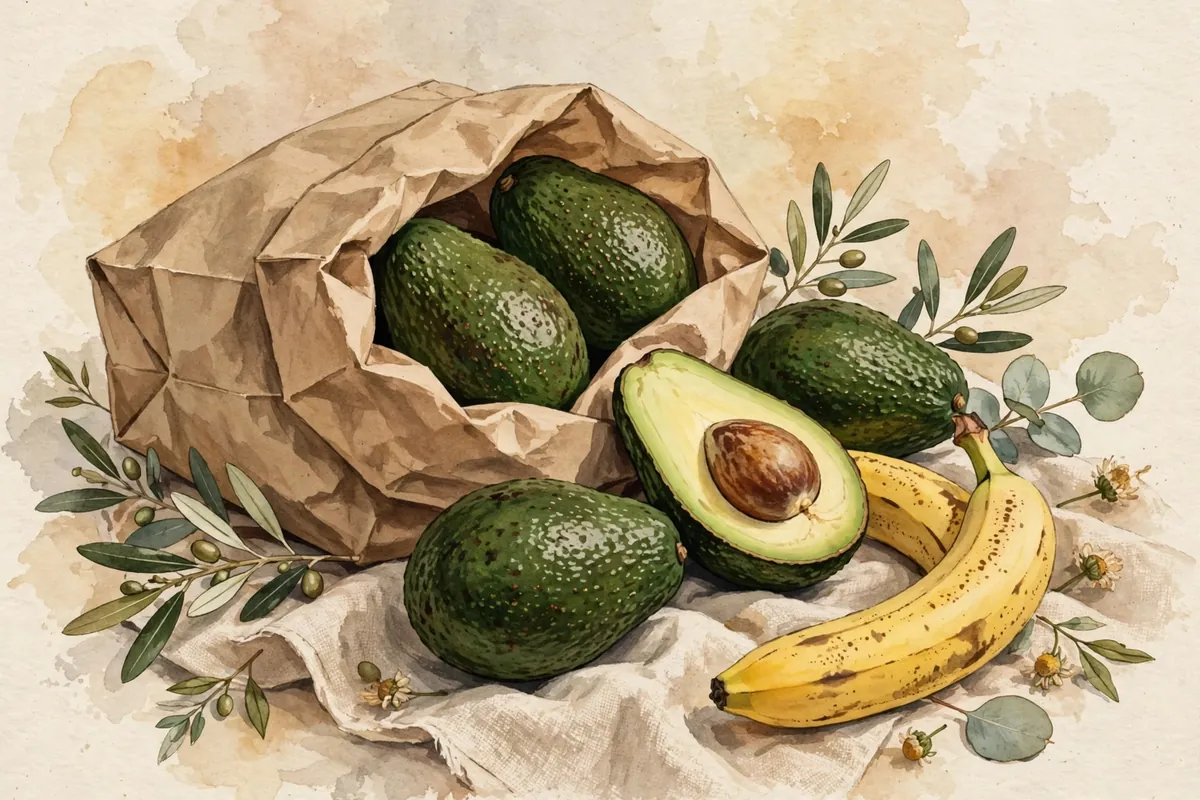
It's an old kitchen trick. Got a hard avocado or a green pear? Put it in a paper bag with a ripe banana or an apple, and it'll soften up faster. It sounds like folklore, but there's real science behind it.
The secret is ethylene, a natural gas that fruit gives off as it ripens. Ethylene is a plant hormone, and even tiny amounts tell fruit to start ripening. A ripe banana or apple releases ethylene into the air, and nearby fruit picks up the signal and speeds up. A bag simply keeps the gas from drifting away.
A Hormone That Floats in the Air
Ethylene is the simplest gas of its type and was the first gas ever found to act as a hormone. It works in very small amounts throughout a plant's life, triggering fruit to ripen, flowers to open, and leaves to fall.
It's remarkably powerful. In 1924, scientist Frank Denny found that just one part ethylene in a million parts of air could turn green lemons yellow in about six to ten days. In 1934, British biologist Richard Gane showed that ripe apples give off ethylene, and estimated that an apple might produce only about one cubic centimeter of the gas over its entire life.
Some Fruits Listen, Others Don't
Not every fruit responds the same way. Scientists divide fleshy fruits into two groups. Climacteric fruits, including apples, pears, bananas, melons, apricots, tomatoes, avocados, and most stone fruits, ripen with a burst of ethylene and keep ripening after they're picked.
Non-climacteric fruits, such as citrus, grapes, and strawberries, ripen without that ethylene burst. For the most part, they won't ripen once they're picked. So putting a sour lemon in a bag with a banana won't do much.
Avocados are a perfect example of the first group. They mature on the tree, which can hold them for months, but only ripen once they're picked or fall off. Picked avocados ripen at room temperature in one to two weeks, and faster when stored with apples or bananas because of the ethylene.
An Ancient Trick With a Modern Twist
People were using ethylene long before they knew it existed. Ancient Egyptians cut slits in figs to speed up ripening, since wounding a plant makes it produce ethylene. The ancient Chinese burned incense in closed rooms to ripen pears.
Florida farmers once ripened crops in sheds warmed by kerosene lamps and assumed the heat did the trick. Denny's 1924 work showed it was actually the ethylene given off by the lamps.
Today, commercial ripening rooms make ethylene gas on purpose. Some supermarkets sell avocados ripened this way. The idea took off in the 1980s after California farmer Gil Henry saw hidden camera footage of shoppers squeezing rock-hard avocados, putting them back, and walking away.
Too Much of a Good Thing
Ethylene can work against you, too. It shortens the shelf life of many fruits by speeding up ripening, and it makes cut flowers like roses and carnations wilt sooner. Flowers stressed during shipping release their own ethylene.
So use the trick wisely. Bag your hard avocados with a banana when you want them ready soon, and keep ripe fruit away from the bouquet on your table. Your kitchen counter is full of fruit quietly sending signals to one another all day long.