Peanuts show up in the nut aisle, the mixed-nut can, and the ballpark. They have a shell, they're crunchy, and the word nut is right there in the name. So it comes as a surprise to many people that botanists don't consider them nuts at all.
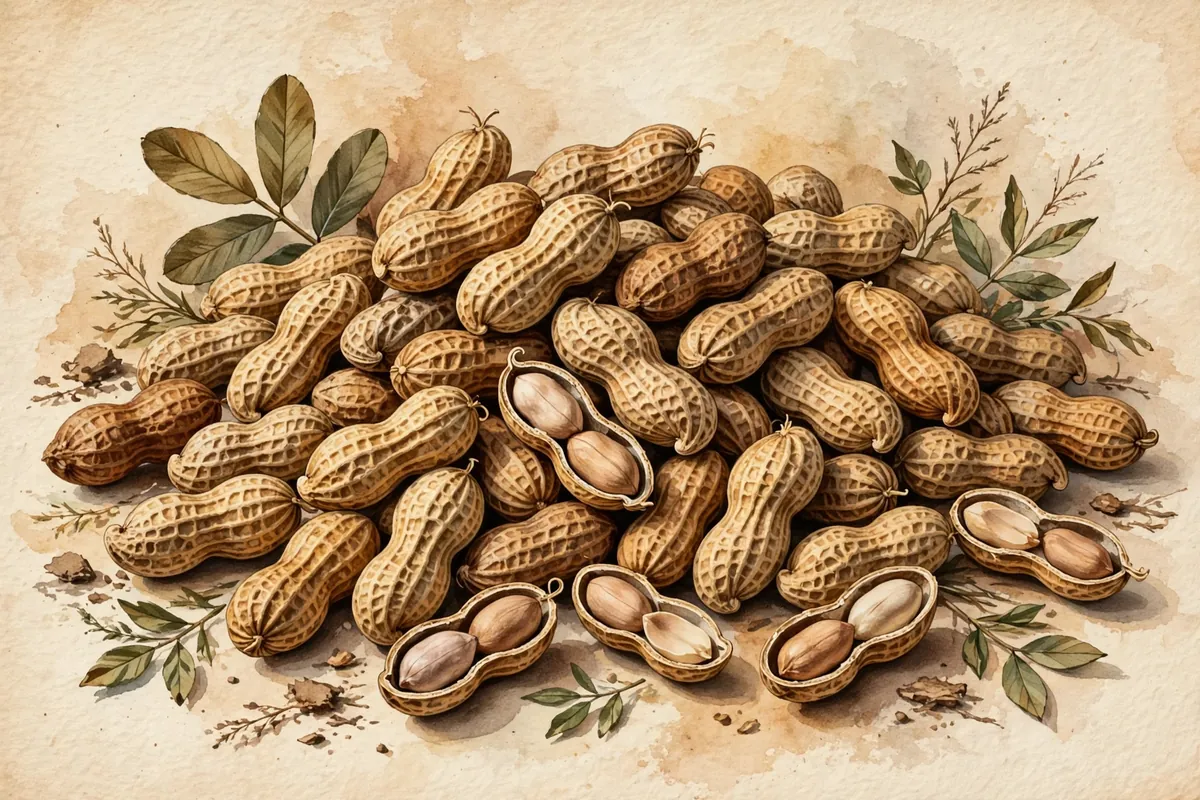
The peanut is a legume. It belongs to the pea family, the same big plant family as beans, peas, and lentils. Its shell is actually a pod, like a pea pod, and the peanuts inside are the plant's seeds. Botanically speaking, a true nut is something quite different.
What Counts as a Real Nut?
To a botanist, a nut is a specific kind of fruit: a hard or tough shell protecting a single seed, with a shell that doesn't open on its own. Hazelnuts, chestnuts, and acorns are classic true nuts. They come from a group of plants that includes oaks, beeches, and hazels. Because their shells don't open by themselves, true nuts depend on animals that eat them to help spread their seeds.
Peanuts don't fit that description. Linnaeus formally described the peanut plant back in 1753, and today it's classified firmly in the legume family. Their pods usually hold one to four seeds, and the pod is a legume, the same type of fruit as a bean pod. Even walnuts and pecans are tricky to classify. Some experts call them nuts, and others don't.
A Plant That Plants Its Own Fruit
Here's the strangest part. Most legumes grow their pods up in the air, where you can see them, like green beans dangling from a vine. Peanuts grow theirs underground.
After a peanut flower is pollinated, a thread-like stalk called a peg grows downward and pushes into the soil. The pod then develops beneath the ground. This underground fruiting is so unusual among legumes that Carl Linnaeus named the species hypogaea, from Greek words meaning under the earth.
Peanut plants have other neat tricks. Their leaves close up at night in what botanists call sleep movements. And like many legumes, they host helpful bacteria in their roots that pull nitrogen from the air and enrich the soil. That makes peanuts a valuable crop to rotate with others.
From South America to the American South
Peanuts are native to South America. They were brought to what's now the United States during the colonial period and grown as a garden crop. For a while, starting in 1870, they were mostly used to feed animals, until more people started eating them in the 1930s.
George Washington Carver championed the peanut to help farmers in the South, where soils had been worn out by growing cotton again and again. He developed hundreds of peanut-based products, from cosmetics and paints to plastics.
Today the world grows enormous amounts of peanuts. In 2023, global production reached about 54 million tonnes, led by China and India.
Why the Difference Matters
The legume-versus-nut distinction isn't just trivia. Peanut allergy and tree nut allergy are different conditions, since peanuts are legumes and tree nuts are hard-shelled nuts. Still, experts suggest that a person allergic to one should avoid the other too. If you have questions about food allergies, talk to your doctor.
For the rest of us, the peanut is simply a delicious little impostor. Pea family by birth, nut by reputation, and a favorite snack either way.