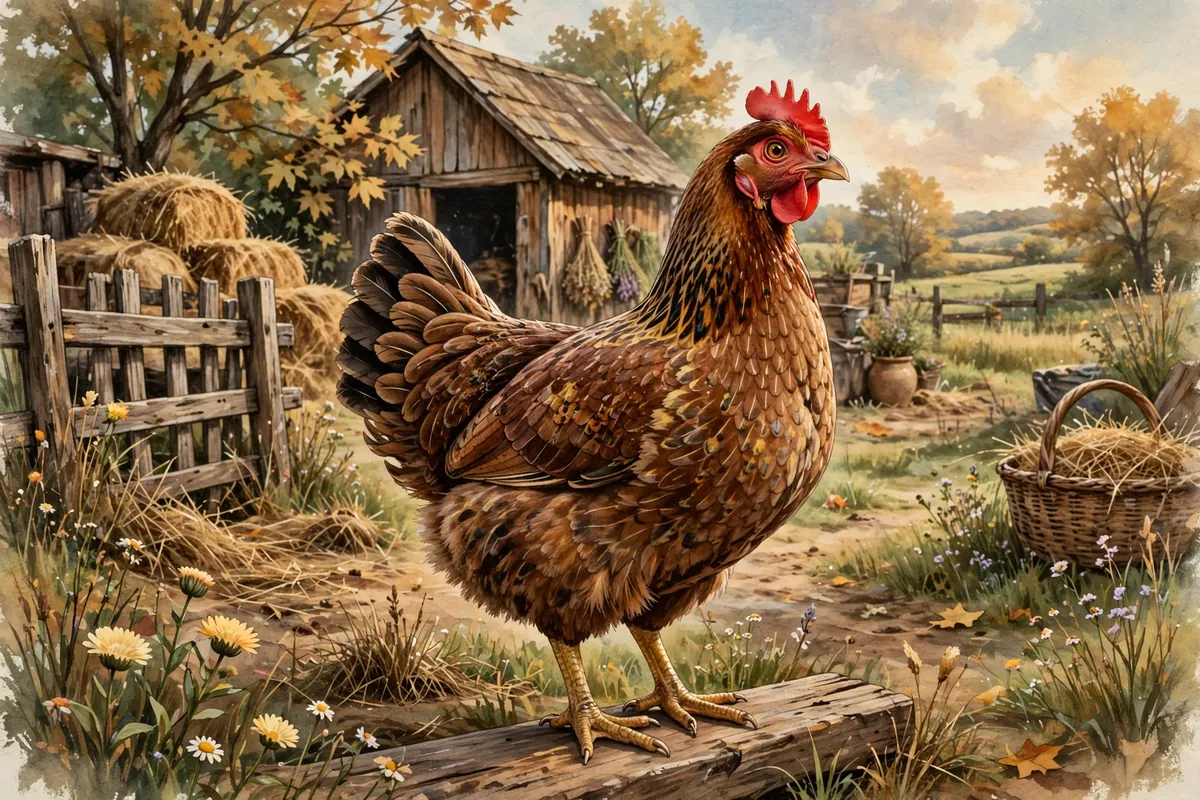
Watch a chicken strut across the yard: the beady eye, the scaly legs, the sharp, jerky head movements. If you squint, there's something a little prehistoric about it. It turns out that's not just your imagination.
Scientists now agree that birds are dinosaurs. More specifically, they're a group of theropods, the same broad family of two-legged, mostly meat-eating dinosaurs that includes Tyrannosaurus rex. Chickens didn't descend from T. rex itself, but they share a common ancestor with it. And in a 2007 study of proteins recovered from a T. rex bone, the closest match among the animals compared was the chicken.
T. rex lived in what is now western North America between about 69 and 66 million years ago. It was among the last of the non-bird dinosaurs before the great extinction that ended their reign. Birds are the branch of the dinosaur family that made it through.
Proteins From a Dinosaur Bone
Most scientists once assumed that fossilization replaced all of an animal's tissue with stone. Then researchers working with a T. rex bone reported something astonishing: traces of collagen, a protein found in bone.
In studies published in the journal Science in April 2007, a team led by researcher Asara reported that seven pieces of collagen from the T. rex bone most closely matched collagen known from chickens. Frogs and newts were the next closest among the animals they had data for. One paleontologist called the find “a milestone.”
Not everyone was convinced. In 2008, another team argued that some of the material might actually be a slimy film made by bacteria. The original researchers pushed back, and later studies have supported the idea that some original material can survive. The debate shows how carefully scientists test bold claims.
A Clue Only Birds Share
Another piece of evidence came from a T. rex nicknamed B-rex, found in Montana. Inside its thigh bone, scientists found medullary tissue, a special type of bone that female birds grow to supply calcium for making eggshells when they're about to lay eggs.
In 2016, researchers confirmed it was indeed medullary tissue. That told them B-rex was female, probably around 18 years old. Crocodiles and alligators, often considered the closest living relatives of dinosaurs apart from birds, never make this tissue. Its presence in both birds and theropod dinosaurs is more evidence of their close family ties.
Feathers, Fluff, and Family Resemblance
Some of T. rex's relatives had feathers. A small early tyrannosaur relative called Dilong had fuzzy, feather-like filaments, and a large relative named Yutyrannus was covered in feathers over much of its body. T. rex itself had scaly skin in places, and if it had any feathers, a 2017 study concluded they were limited to its back.
Scientists studying how fast T. rex could move even used chickens, along with alligators and humans, to test their mathematical model of leg muscles.
From Dinosaur to Dinner Plate
Today's chicken is the domesticated form of the red junglefowl of Southeast Asia, tamed around 8,000 years ago. There are now more than 26.5 billion chickens on Earth, making the bird one of the most widespread animals people keep.
So the next time a hen eyes you suspiciously from the coop, show a little respect. She may not roar, but she comes from one of the most impressive family trees on the planet.