Most animals curl up somewhere solid when it's time to rest. Sea otters don't have that option. They spend their lives in the chilly coastal waters of the North Pacific, floating on their backs, and the ocean never stops moving underneath them. So how does an otter take a nap without waking up somewhere else entirely?
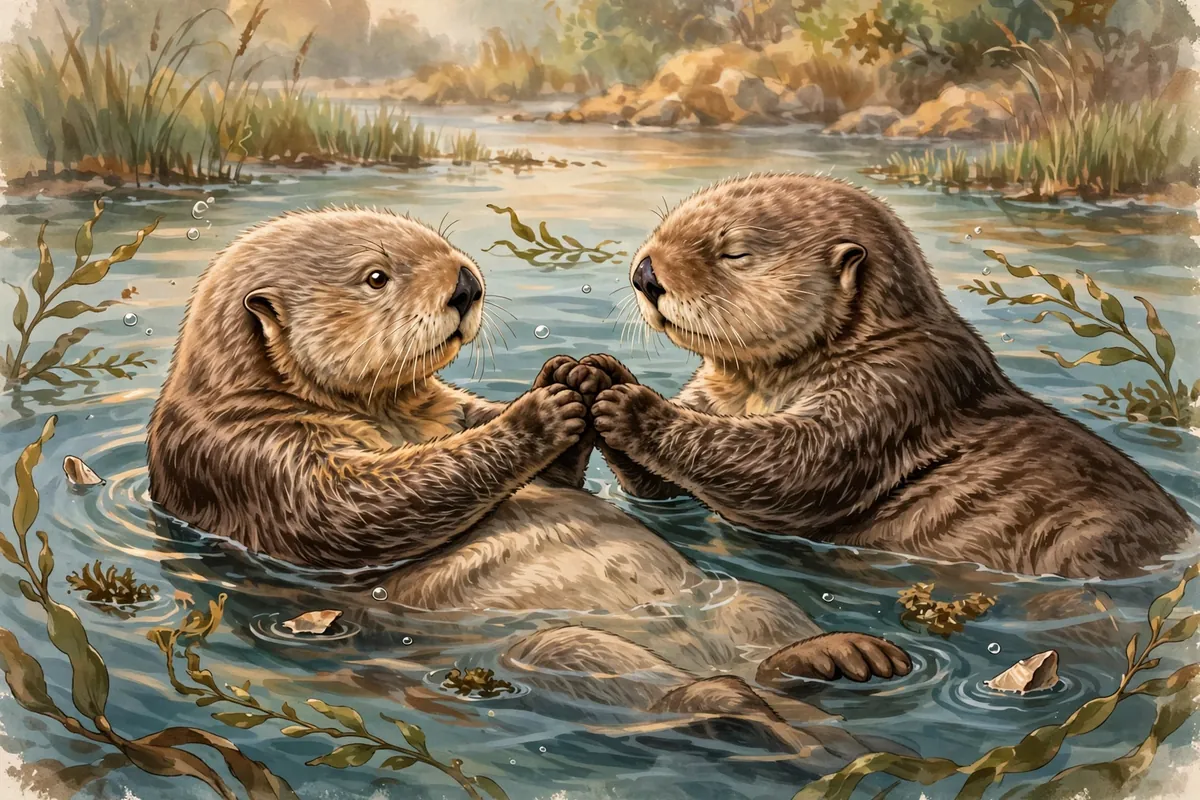
The short answer is that otters work hard not to drift. They rest together in groups, and they often wrap themselves in strands of kelp, which works like a seaweed anchor. And yes, otters have been seen holding paws while floating side by side. The popular explanation is that it keeps a pair from drifting apart, which fits neatly with everything else they do to stay in place.
The Video That Melted the Internet
Much of the world learned about otter hand-holding from a single clip. In 2007, a YouTube video of two sea otters holding paws drew 1.5 million viewers in just two weeks. It had been filmed about five years earlier at the Vancouver Aquarium in Canada, and for a while it was YouTube's most popular animal video.
The two stars had names. The lighter-colored otter was Nyac, a survivor of the 1989 Exxon Valdez oil spill. The darker one was Milo. By July 2022, their quiet moment together had passed 22 million views. Nyac died in 2008 at the age of 20, and Milo died in 2012, but the clip still gets passed around today.
Kelp: The Original Seat Belt
Hand-holding gets all the attention, but kelp is the otter's everyday tool. To keep from drifting out to sea while resting and eating, sea otters may wrap themselves in the long, ropy seaweed that grows in thick forests along rocky coasts.
Mothers use the same trick for their babies. When a mother dives for food, she leaves her pup floating at the surface, sometimes wrapped in kelp so it won't float away. If the pup isn't asleep, it cries loudly until she comes back. A newborn pup's fluffy fur holds so much air that it bobs like a cork and can't even dive.
Safety in Numbers
Otters hunt alone, but they like company when it's time to rest. They gather in groups called rafts, usually made up of all males or all females. A typical raft has somewhere between 10 and 100 otters, and the largest one ever seen had more than 2,000.
Researchers once assumed these rafts were random crowds. Long-term tracking of tagged otters in California's Monterey Bay suggests otherwise. There seem to be distinct clusters within the big groups, and some otters, including mated pairs, stick together over many years.
Built for a Life Afloat
Floating comes easy to a sea otter. Its lungs hold about two and a half times more air than those of similar-sized land animals, and its fur traps a layer of air too. At rest, an otter can fold all four limbs onto its belly to save heat. On hot days, it may dip its hind feet in the water to cool off.
That fur is the real marvel. Unlike whales and seals, sea otters have no blubber. Instead, they have the densest fur of any animal, with up to 150,000 hairs packed into each square centimeter. Keeping it clean and fluffy is so important that otters spend much of their day grooming.
So whether an otter is tangled in kelp, tucked into a raft, or holding a friend's paw, the goal is the same: wake up right where it fell asleep. It's a practical habit that also happens to be one of the sweetest sights in nature.