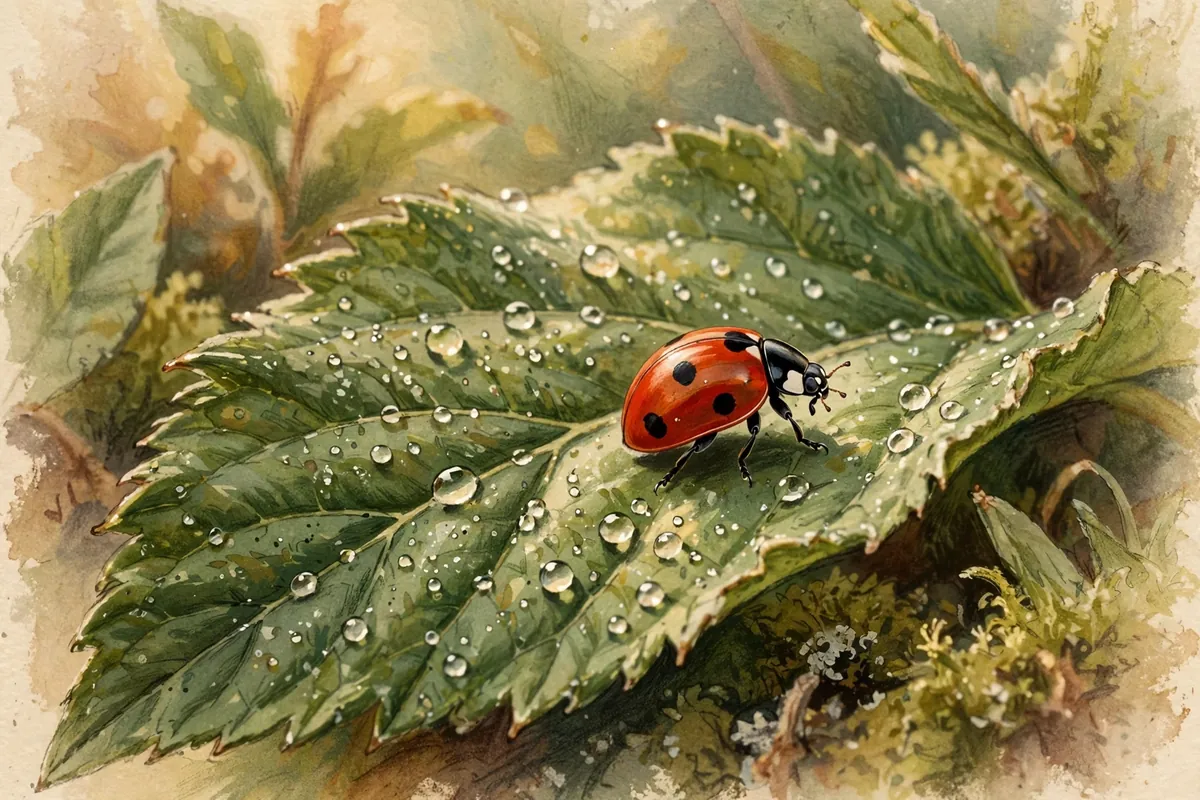
Few insects get a warmer welcome than the ladybug. Kids let them crawl across their fingers, gardeners cheer when they show up, and that shiny red shell with black polka dots looks almost like it was designed to be cute. So why the spots?
The short answer: they're a warning. Many ladybugs wear bright, high-contrast colors like red with black spots to tell predators they taste bad. Scientists call this warning coloration, and in ladybugs it's an honest signal, because their bodies really do contain bitter, toxic chemicals.
A Billboard That Says Don't Eat Me
Ladybugs aren't fast and they can't sting, so they rely on chemistry. Their blood contains toxic compounds called alkaloids, along with foul-smelling substances. Ladybugs can produce at least 50 types of alkaloids.
A 2015 study of five ladybug species found that their colors truly matched their toxicity. Species that stood out more sharply against their background tended to be more toxic. In other words, the louder the outfit, the worse the meal.
And if a predator ignores the warning, ladybugs have a backup plan called reflex bleeding. When disturbed, they release drops of fluid from their knee joints, giving the attacker a taste of that bitter body fluid. Most predators only need one sample.
Where the Colors Come From
The pattern is built from two kinds of pigment. Carotene creates the lighter colors such as red, orange, and yellow, while melanins create the darker spots. Not every ladybug is red with black dots, either. Some are dark with light spots, and some have stripes or checkered patterns.
Warning is the main job, but not the only one. Depending on the species, color patterns can also help with camouflage, attracting mates, or even regulating heat. Some species can even change color between seasons.
Why Seven Spots Is So Famous
The ladybug many of us picture is the seven-spot ladybird. It has three black spots on each wing cover plus one more where the two meet, for a total of seven. Its scientific name, Coccinella septempunctata, simply means a scarlet beetle with seven spots.
Counting spots won't tell you a ladybug's age, though. The number and shape of spots varies from species to species, which is why some carry names like the 22-spot ladybird. There are more than 6,000 described species around the world.
Those seven spots also gave the insect its name. In Britain, people called them Our Lady's birds, after Mary, who was often painted wearing a red cloak. The seven spots were said to represent her seven joys and seven sorrows. Americans later adapted the name to ladybug.
A Gardener's Best Friend
There's a good reason gardeners love them. Most ladybugs are predators that eat insects like aphids and scale insects, which damage plants. Many species even lay their eggs near colonies of prey so their young have food waiting.
The seven-spot ladybird is so good at it that it was brought to North America as a way to fight aphid infestations. When aphids run short, it can get by on pollen and nectar, but it can't reproduce until the aphids return.
Lucky Charm and Living Warning
Ladybugs have long been linked to luck, love, and prophecy in folklore. In one European tradition, a ladybug crawls onto a woman and then flies off toward her true love. People also said they could predict the weather and the harvest.
So next time one lands on your sleeve, enjoy the visit. Just know that those cheerful polka dots aren't really meant for you. They're a tiny, honest sign hung out for every hungry bird in the neighborhood.