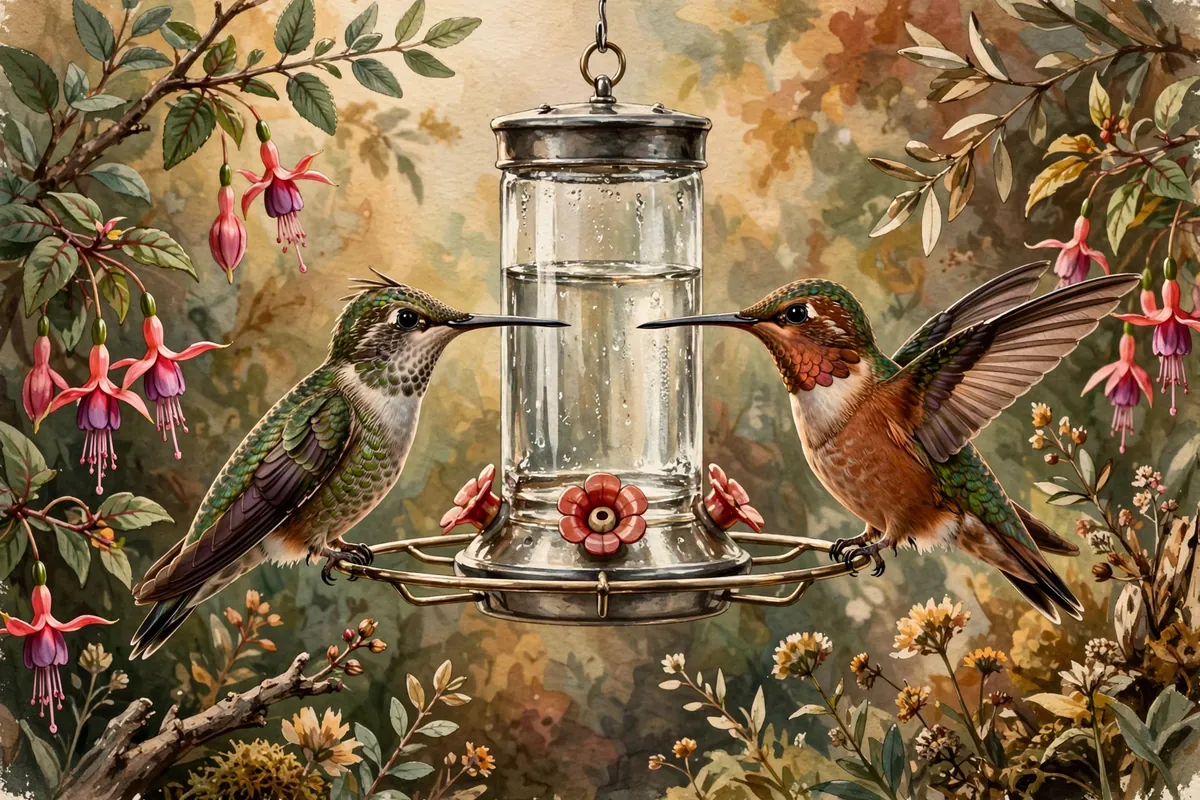
Anyone who has hung a hummingbird feeder knows the scene. A shimmering little bird zips in for a sip, and before it can settle, another one dive-bombs it, chirping furiously. Some birds seem to spend more time guarding the feeder than drinking from it.
The reason comes down to fuel. Hummingbirds have the highest metabolism of any animal with a backbone, so they're always at risk of running out of energy. Because they're so vulnerable to starvation, many species, including many in North America, are territorial and try to guard food sources, such as a feeder, from other hummingbirds to make sure they'll have a future food supply.
Living Life in the Fast Lane
A hummingbird's body is an engine that never idles. When flying and hovering, its flight muscles use about 10 times as much oxygen per gram as the muscles of elite human athletes. One blue-throated hummingbird was measured with a heart rate of 1,260 beats per minute. And these are tiny birds. Most hummingbirds are only 3 to 5 inches long, yet some have been clocked at top speeds of more than 34 miles per hour.
That kind of power burns through fuel quickly. Hummingbirds rely on fresh sugars from nectar to fuel their flight and save their limited fat for the long night ahead. With needs like that, a reliable source of sugar water is worth defending.
Mapping the Best Flowers
Hummingbirds are surprisingly smart about food. They have an enlarged hippocampus, a part of the brain that helps with spatial memory. It lets them remember a map of the flowers they've already visited. They may even see colors we can't. A study of broad-tailed hummingbirds found a fourth type of color-sensing cone that detects ultraviolet light, which may help with spotting flowers and with defending territory.
Knowing exactly where the good food is makes it even more worthwhile to keep rivals away. To a hummingbird, your feeder is a gold mine, and nobody wants to share a gold mine.
Fierce Little Fighters
Ruby-throated hummingbirds are solitary birds. Males and females of any age are aggressive toward other hummingbirds and will attack and chase intruders out of a feeding territory. Their rapid, squeaky chirps are used mostly as threats. Males arrive at their breeding grounds in spring and stake out territories before the females show up.
In rufous hummingbirds, both males and females are territorial, but males fight hardest for areas packed with flowers, pushing females into sparser spots. Males have shorter wings, which costs more energy to hover but lets them beat their wings faster to chase rivals. Because their territory supplies plenty of food, they don't waste energy searching for it. Migrating rufous hummingbirds often take over and defend feeding spots along their route, too.
Saving Energy Overnight
At night, hummingbirds can slip into a deep, energy-saving sleep called torpor, where their heart rate and body temperature drop dramatically. Interestingly, the birds that hold territories tend to spend less time in torpor than subordinate birds without territories. Birds with more fat stored up are also less likely to need it.
So the next time you see a tiny bully guarding your feeder, try not to judge too harshly. For a creature that burns energy that fast, protecting a good meal isn't rudeness. It's survival.