At almost every wedding reception, there's a moment when everyone gathers around. The couple picks up a knife, cuts the first slice together, and the cameras start clicking. But why cake? And how did this sweet tradition become such a big part of the day?
The short answer is that wedding cakes go back thousands of years, and they were traditionally meant to bring good luck to the couple and their guests. The first wedding cakes were probably made in ancient Greece, and Roman brides and grooms appear to have shared a wedding cake too. Over the centuries, the tradition changed shape many times before becoming the tall white cake we know today.
The Bride's Pie
In the 1500s and 1600s, many weddings featured a bride's pie instead of a sweet cake. It was savory, with a pastry crust. One recipe from 1685, by Robert May, called for oysters, pine nuts, and other rich fillings. That recipe even included a compartment holding live birds or a snake to entertain guests when the pie was cut.
Guests were expected to eat a piece out of politeness. Refusing was considered very rude and bad luck. Sometimes a glass ring was hidden inside, and the young woman who found it was said to be the next to marry, a bit like catching the bouquet today.
Kissing Over a Tower of Sweets
In medieval England, cakes or sweet rolls were stacked as high as possible, and the bride and groom tried to kiss over the pile. A successful kiss was believed to promise a prosperous life together.
According to one legend, a visiting French pastry chef saw this tradition and went home to build a tower of pastries. That's said to be how the croquembouche was born, a towering French dessert of cream puffs still popular at weddings in France.
Why the Cake Turned White
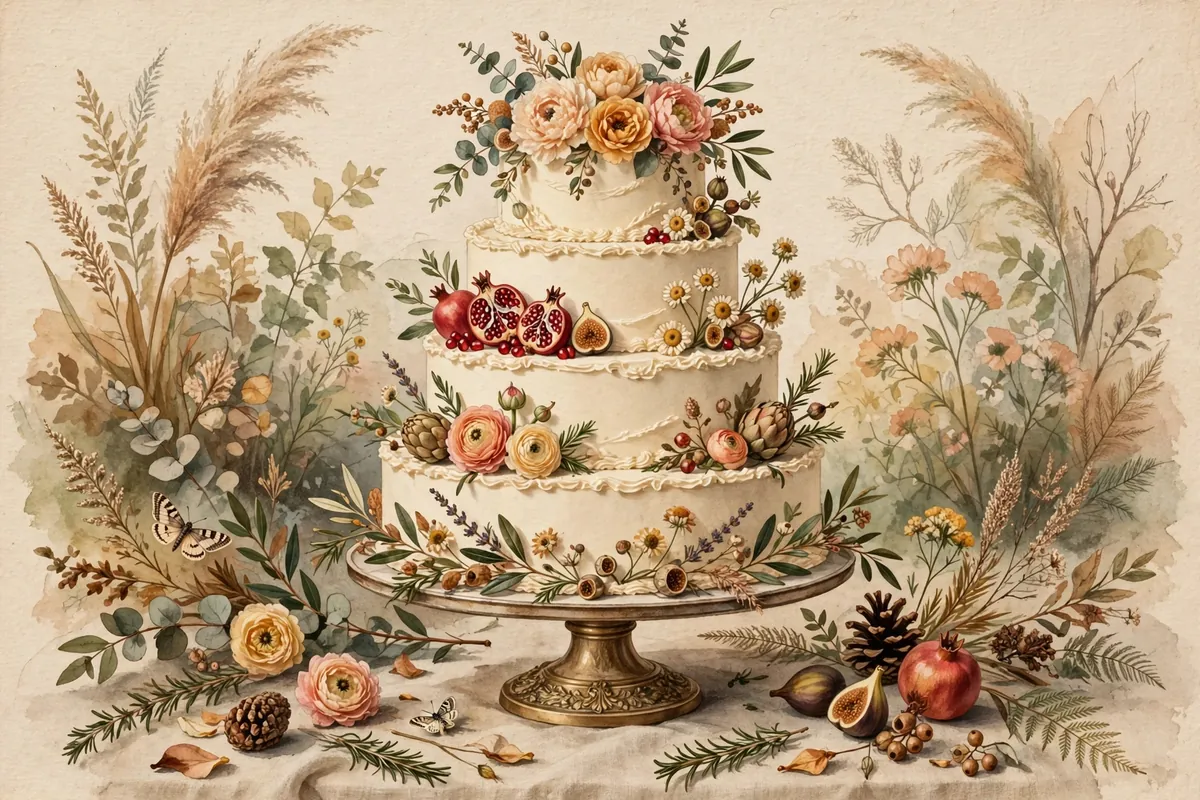
In the 1600s, there were often two cakes: a pale bride's cake and a darker, richer groom's cake. Over time, the bride's cake took center stage. In England and early America, wedding cakes were traditionally fruit cakes, often tiered and topped with marzipan and icing.
White icing became a status symbol. Refined white sugar was expensive, so only wealthy families could afford pure white frosting. When Queen Victoria used white icing on her wedding cake, it earned the name royal icing. Her choice of a white lace wedding dress in 1840 also helped make white the color of weddings.
The modern tiered cake took shape at the 1882 wedding of Prince Leopold, Duke of Albany. His was the first wedding cake that was completely edible. It was made in separate layers with very dense icing, which hardened enough to let the tiers be stacked, a groundbreaking idea at the time.
Sweet Superstitions
Wedding cakes still come with plenty of folklore. In one old American tradition, unmarried women pulled ribbons attached to the bottom tier, and the one whose ribbon held a charm or ring would be next to marry. In some countries, a wedding cake is broken over the bride's head for good fortune.
Many couples today save the top tier and freeze it for their first anniversary. That custom grew from an older one: fruit cake kept well, so the top was once saved to celebrate the couple's first child. So whether you love the frosting or just the first-slice photo, you're part of a very sweet, very old tradition.