You might never sing in front of a crowd, but turn on the shower and suddenly you're a star. Your voice sounds fuller, smoother, and somehow more impressive. Then you try the same song in the kitchen, and the magic is gone. What is it about the bathroom?
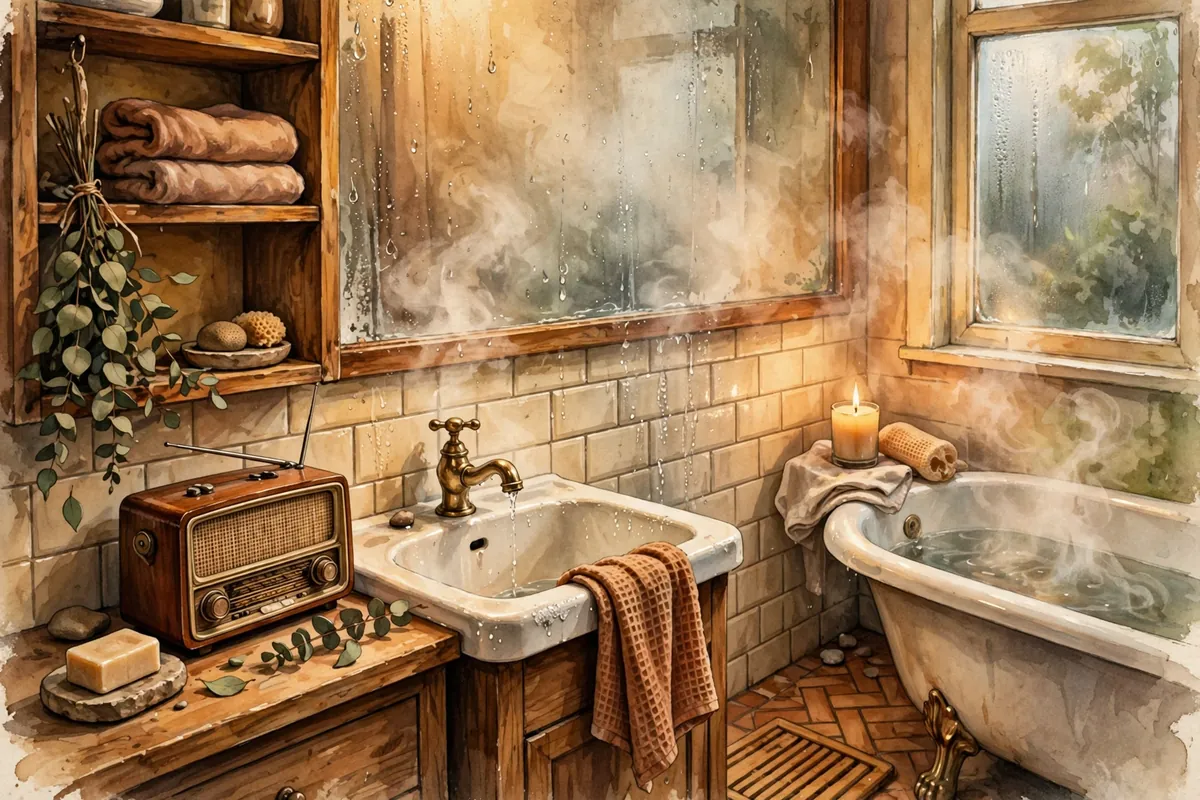
It comes down to acoustics. Bathrooms are usually small rooms with hard surfaces like tile, glass, and porcelain, and few soft things to soak up sound. Your voice bounces off the walls again and again, and those reflections blend together. The result is a richer, fuller sound with a touch of echo, a bit like a free recording studio effect.
Hard Walls, Happy Voices
In a living room, couches, curtains, carpets, and cushions absorb much of the sound you make. In a bathroom, there's very little to soak it up. Hard tiles and wooden panels reflect your voice instead.
Those many reflections enrich the sound. The small size and hard surfaces of a typical bathroom create standing waves, reverberation, and echoes. One physics book described the effect as giving the voice fullness and depth.
The Magic of Reverb
The key ingredient is reverberation, or reverb. It's what happens when sound keeps going after you've made it, as reflections build up and then slowly fade. Unlike a distinct echo, where you hear a repeat, reverb reflections arrive so quickly, within about a twentieth of a second, that they blend into one smooth sound.
Reverb adds a natural sense of space. That's why it's so popular in music. Composers of medieval and Renaissance church music relied on the rich echoes of churches and cathedrals, and later architects designed concert halls to reflect and project sound from the stage. Reverb isn't only an indoor thing, either. It happens in forests and other outdoor places where sound has something to bounce off.
Rooms also have resonances, called room modes, where certain notes build up and get louder because of the room's size and shape. In a small, hard-walled bathroom, these effects help some notes ring out more strongly.
Famous Bathroom Singers
Musicians have known this for a long time. Paul Simon once said he liked to play guitar in the bathroom as a young man because the tiles made it a slight echo chamber. He'd turn on the faucet, enjoy the sound of running water, and play in the dark. He connected that habit to the famous opening line of The Sound of Silence: Hello darkness, my old friend.
Jon Anderson of the band Yes even had tiles installed in a recording studio to copy that bathroom echo. And Weird Al Yankovic recorded his first single, My Bologna, in 1979 in a bathroom near the college radio station where he worked as a DJ.
Recording studios have long built special echo chambers, hollow rooms with very reflective surfaces, to add reverb on purpose. The famous echo chambers at Capitol Studios are still in use today.
An Old Habit
Singing in the bath is nothing new. Centuries ago, the scholar Ibn Khaldun wrote that people enjoying a hot bath often felt joyful and started singing, since singing comes from gladness.
So go ahead and belt out your favorite tune the next time you're in the shower. The acoustics are on your side, and nobody is grading the performance.