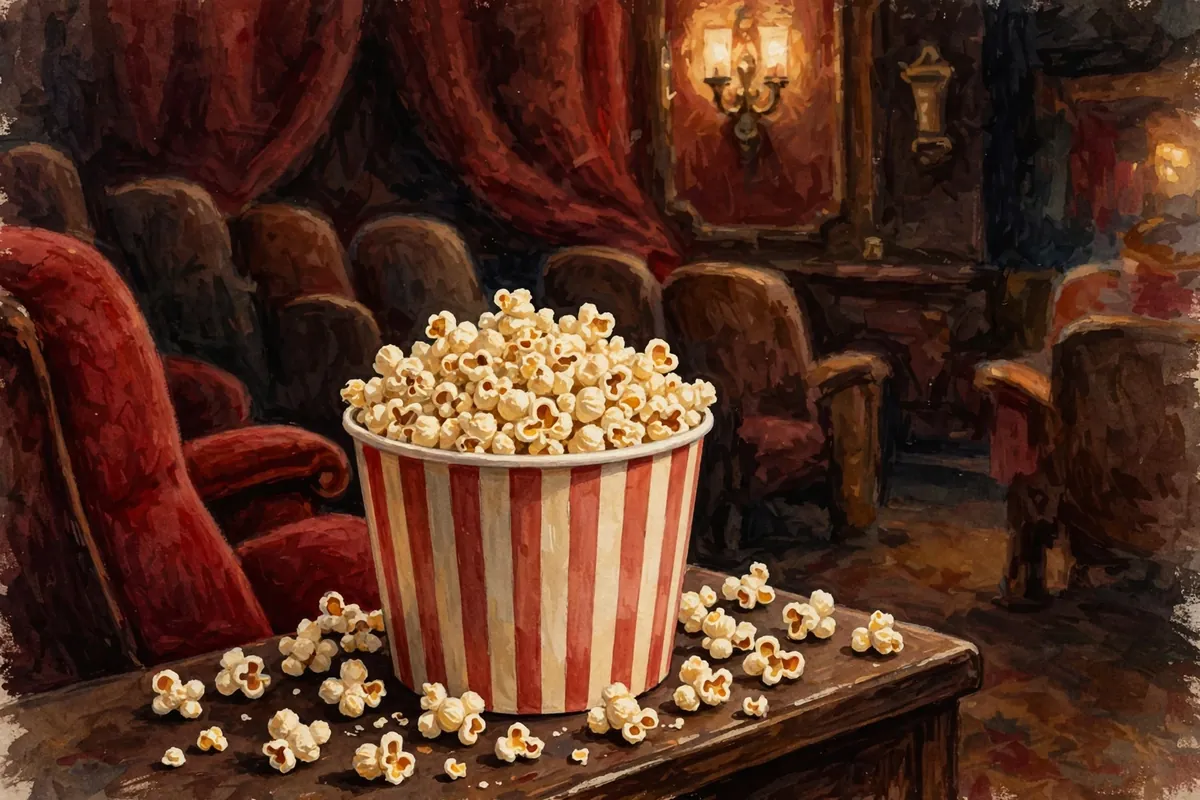
The lights go down, the previews start, and you reach into a warm bucket of popcorn. For most of us, the two go together like peanut butter and jelly. But the pairing wasn't always a love match. For a time, many movie theater owners didn't want popcorn anywhere near their screens.
Here's how it happened. Popcorn became popular during the Great Depression because it was cheap, about 5 to 10 cents a bag. Struggling theaters added concession stands to bring in extra money, and they discovered popcorn was more profitable than the tickets. Then World War II sugar rationing made candy scarce, and popcorn took over for good.
A Machine on Wheels
Popcorn itself is ancient. Archaeologists have found cobs of popping corn on the northern coast of Peru dating back to around 4700 BC, and people there were popping corn more than 1,000 years ago. But it became an easy, everyday treat in the 1890s, when Chicago candy store owner Charles Cretors adapted his steam-powered nut roasters to pop corn.
By around 1900, Cretors had street carts with steam-powered popcorn makers rolling around town. Suddenly popcorn could be made fresh, right in front of customers, almost anywhere. During the hard years that followed, the popcorn business thrived even as other businesses failed.
Theaters Weren't Fans at First
Movie theaters started out hostile to food. Many owners thought popcorn distracted audiences from the films. They wanted their grand movie palaces to feel elegant, not like a fairground.
The Great Depression changed their minds. As money grew tight, theaters added concession stands to boost income. By the 1930s, concession stands were a main fixture in many theaters. A Philadelphia entrepreneur named Jacob Beresin is credited with pioneering the modern movie concession stand.
In 1938, a Midwestern theater owner named Glen W. Dickinson Sr. put popcorn machines in the lobbies of his theaters. He found popcorn made more money than ticket sales. He even bought popcorn farms, which let him keep ticket prices low. The idea worked, and popcorn spread to theaters everywhere.
The War That Sealed the Deal
During World War II, sugar rationing cut candy production. Americans made up for it by eating three times as much popcorn as before. With candy hard to find at the concession stand, popcorn became the go-to treat.
There was one bump in the road. When television arrived in the 1940s, fewer people went to the movies, and popcorn sales dropped. A trade group called the Popcorn Institute responded by promoting popcorn at home, helping bring sales back up.
Why Theaters Still Love It
Popcorn is a business dream. When heated, the moisture inside each kernel turns to steam until the hull bursts, and the kernel puffs up to 20 to 50 times its original size. Theaters buy popcorn by weight but sell it by volume, so kernels that puff up bigger mean bigger profits.
That markup is famous. One film historian, Stuart Hanson, recalled an industry joke comparing popcorn's profits to those of illegal drugs. Many theaters pop their corn in coconut oil and top it with butter or margarine, which is part of what gives it that irresistible smell in the lobby.
So the next time you settle in with a tub of popcorn, give a little nod to history. That humble snack helped keep theaters afloat through some of America's hardest years.