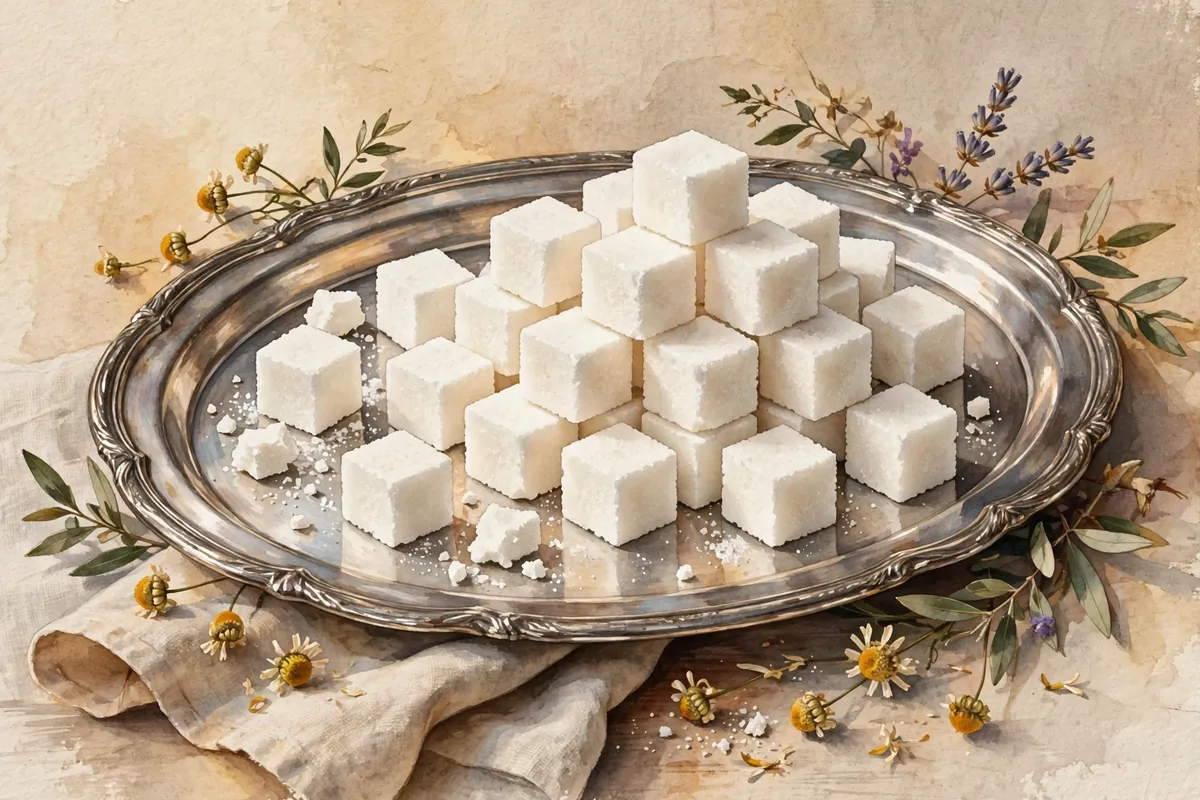
It's hard to imagine sugar as anything special. It comes in cheap paper bags, fills the cookie jar, and hides in almost everything on the grocery shelf. But for most of human history, sugar was rare, costly, and treasured.
That's why sugar has been nicknamed white gold. In Europe, it remained a luxury until the early 1800s. It was valuable enough to drive the building of huge plantations across the Caribbean and the Americas, and its story is tied to enormous wealth and to the forced labor of enslaved people. The nickname even appears in the title of a film about sugar, slavery, and settlement in the Caribbean.
A Sweet Spice From Faraway Lands
Sugarcane was first domesticated in New Guinea and in parts of southern China and Taiwan. At first, people there mostly used it to feed pigs. Traders slowly carried the plant west to China and India.
Around 350 AD, people in India figured out how to turn sugarcane juice into granulated crystals that were much easier to store and ship. Sugar was then treated as a sweet spice, and Indian traders began selling it abroad. By the sixth century, sugar making had reached Persia.
Europe got a taste later. Crusaders brought sugar home after their campaigns in the Holy Land, where they had encountered caravans carrying what they called sweet salt. Until then, honey had been Europe's only available sweetener. By the 1400s, Venice was the main center for refining and distributing sugar in Europe.
Sugar Comes to the Americas
In 1493, on his second voyage, Christopher Columbus carried sugarcane seedlings to the island of Hispaniola. The first sugar harvest there came in 1501. Mills soon spread to Cuba, Jamaica, and Brazil, and thousands of small sugar mills were built in the New World before 1550.
The industry was so large it helped push technology forward. The mills needed cast iron gears, levers, and axles, and new trades in mold-making and iron casting grew up in Europe to supply them.
The Bitter Side of Sugar
Sugar was difficult and time-consuming to grow and process. It demanded even more labor, money, and skill than tobacco or cotton. That led directly to slavery. Enslaved Africans became the main labor force on sugar plantations, brought across the ocean through the transatlantic slave trade.
The United States was part of this story too. In Louisiana, sugar producers relied on enslaved Black laborers, and by 1853 the state produced almost a quarter of the world's exportable sugar. Just before the Civil War, the industry was valued at more than $200 million, and more than half of that figure represented the value placed on enslaved human beings.
From Luxury to Pantry Staple
As Caribbean plantations expanded, sugar prices in Europe fell. By the 18th century, people at all levels of British society were using it, at first mostly in tea and later in candy, chocolate, and jam. Shops often sold it as a solid cone called a sugarloaf, and people needed special tools called sugar nips to break off a piece.
Then came sugar beets. In 1747, a German chemist discovered sugar in beets, and the world's first beet sugar factory opened in 1801. Over time, sugar became the everyday ingredient we know. The next time you stir a spoonful into your coffee, it's worth remembering how much history, and how much human cost, those little crystals carry.