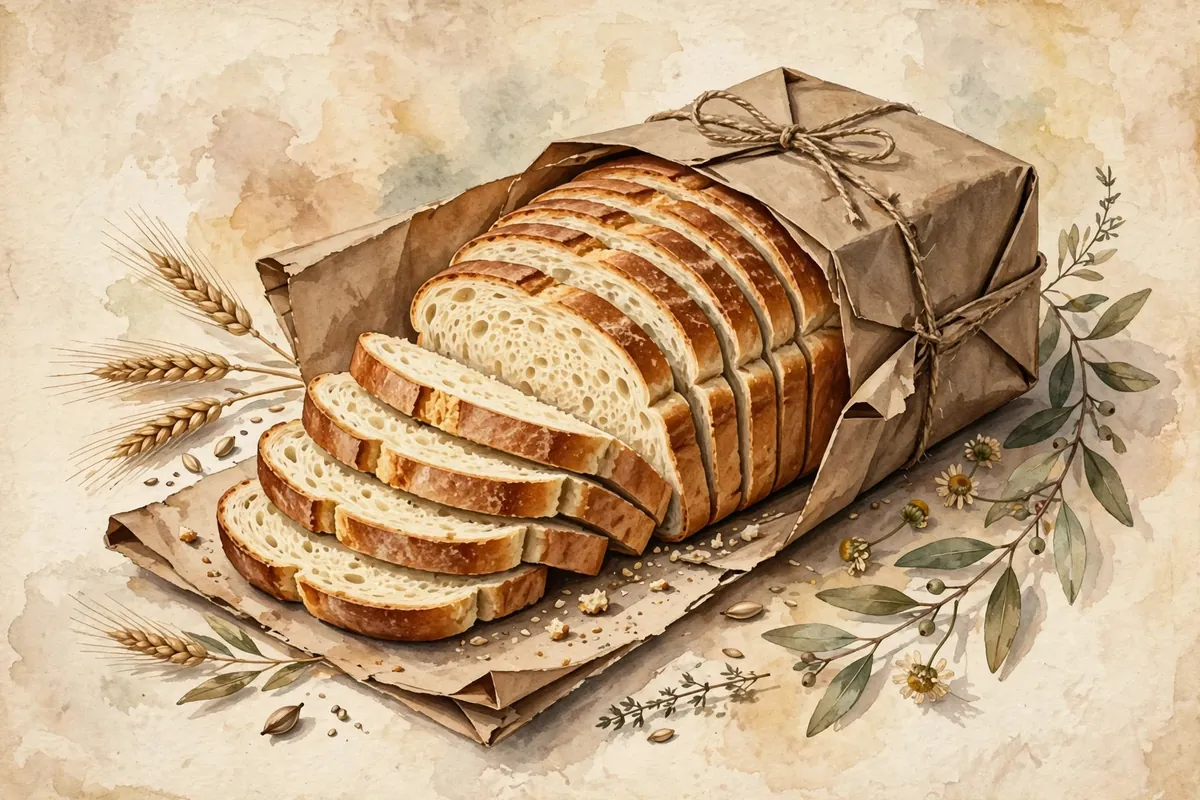
We use it to describe anything truly great: the best thing since sliced bread. But think about that for a second. Of all the inventions in history, why did a loaf of pre-cut bread become the gold standard?
Because when it arrived, it changed American kitchens fast. Sliced bread first went on sale on July 7, 1928, in Chillicothe, Missouri. It was advertised as “the greatest forward step in the baking industry since bread was wrapped,” and by 1933, around 80 percent of bread sold in the US was pre-sliced. That runaway success gave us the famous saying.
A Jeweler With a Big Idea
The machine came from Otto Frederick Rohwedder, born in Iowa in 1880. He trained as a jeweler, studied optics, and eventually owned three jewelry stores in St. Joseph, Missouri. His work with watches and jewelry helped him invent new machines.
Convinced he could build a bread slicer, he sold his jewelry stores to pay for it. Then disaster struck: a fire destroyed his prototype and blueprints, and he lost years raising money all over again.
By the late 1920s, he had a working machine. He sold the first one to a friend, baker Frank Bench, who installed it at the Chillicothe Baking Company. Their Kleen Maid Sliced Bread went on sale on Rohwedder's 48th birthday, and it was a hit.
Keeping the Slices Together
There was a practical problem: once a loaf was sliced, how do you keep it neat long enough to wrap? St. Louis baker Gustav Papendick bought Rohwedder's second machine to solve that. After failed experiments with rubber bands and metal pins, he settled on a cardboard tray that lined up the slices so machines could wrap them.
Big bakeries soon jumped in. In 1930, Wonder Bread started marketing sliced bread nationwide. Uniform slices also boosted sales of the pop-up toaster, invented in 1926, and in 1933 American bakeries produced more sliced loaves than unsliced ones for the first time.
We Started Eating More Bread
Pre-sliced bread changed how people ate. Because the slices were uniform and a bit thinner, people ate more of them at a time, and they ate bread more often, since grabbing another piece was so easy. That meant more bread sold, and more jam and other spreads, too. Britain caught on later: by the 1950s, around 80 percent of bread sold there was pre-sliced, too.
The Great Sliced Bread Ban of 1943
America's devotion was put to the test during World War II. On January 18, 1943, Secretary of Agriculture Claude Wickard banned sliced bread as a wartime conservation measure. Officials said sliced loaves needed heavier wrapping to keep from drying out. It was also meant to counter a rise in bread prices after flour prices were allowed to climb ten percent.
People were not pleased. One distraught housewife wrote to The New York Times that she had to cut 22 slices by hand in a hurry for her husband, four children, and herself. On March 8, 1943, after less than two months, the ban was lifted. Public outcry usually gets the credit, though Wickard said the savings had been smaller than expected.
So the next time you pull a perfect slice from the bag, tip your hat to a determined jeweler from Iowa. His invention earned a permanent place in the language, and it's still the yardstick for every great idea since.