Today nobody thinks twice about a man opening an umbrella in the rain. It's just common sense. But there was a time in England when a man carrying one might get laughed at, shouted at, or told to go hire a coach like a proper gentleman.
So were umbrellas once only for women? Not exactly. In 18th-century England, they were mostly seen as a women's accessory, and men who used them faced ridicule. But in other times and places, from ancient Egypt to imperial China, umbrellas were symbols of rank, carried for important men, including emperors.
An Ancient Status Symbol
Umbrellas are very old. The earliest known examples in Egyptian art date to around 2450 BC, often looking like big fans of palm leaves or feathers on long handles. In Egypt, a parasol could be a mark of distinction, and some temple paintings show one held over a god carried in procession. For much of history, umbrellas were really sunshades, and using them to keep off the rain came later.
In China, tradition credits the invention to the wife of a famous craftsman named Lu Ban. Umbrellas there were often linked to high rank and became a way to show a person's social class. On at least one occasion, 24 umbrellas were carried before the emperor when he went hunting. The Chinese also learned to waterproof paper umbrellas with wax and lacquer.
Where the Ladies-Only Idea Came From
In ancient Rome, umbrellas seem to have been used mostly by women, and maidservants held them over their mistresses. That link carried into England many centuries later. A 1708 English dictionary described the umbrella as a screen commonly used by women to keep off rain, and London women had been using them since around 1705.
For men, it was a different story. In 1752, the future General James Wolfe wrote from Paris wondering why English people didn't use umbrellas for sun and rain the way the French did. A man who carried one in London risked jeers, and some people saw it as a foreign habit.
The Man Who Braved the Hecklers
Enter Jonas Hanway, a London merchant, writer, and philanthropist. He's said to have been the first man in London to carry an umbrella regularly, starting around 1750, and he kept it up for about 30 years. London's hackney coachmen reportedly tried to hoot and hustle him off the streets, but he outlasted them all.
Others got the same treatment. A man named John Macdonald recalled that in 1770, people would shout, Frenchman, Frenchman, why don't you call a coach, whenever he walked out with his umbrella. But attitudes were changing. By 1788, a London newspaper was advertising improved pocket umbrellas on steel frames.
Lighter, Stronger, and for Everyone
Early umbrellas were heavy and clumsy. Victorian versions had frames of wood or whalebone, which were expensive and hard to fold when wet. Lighter fabrics like silk and gingham helped, and Samuel Fox is credited with inventing the steel-ribbed umbrella in 1852, though metal ribs had appeared earlier.
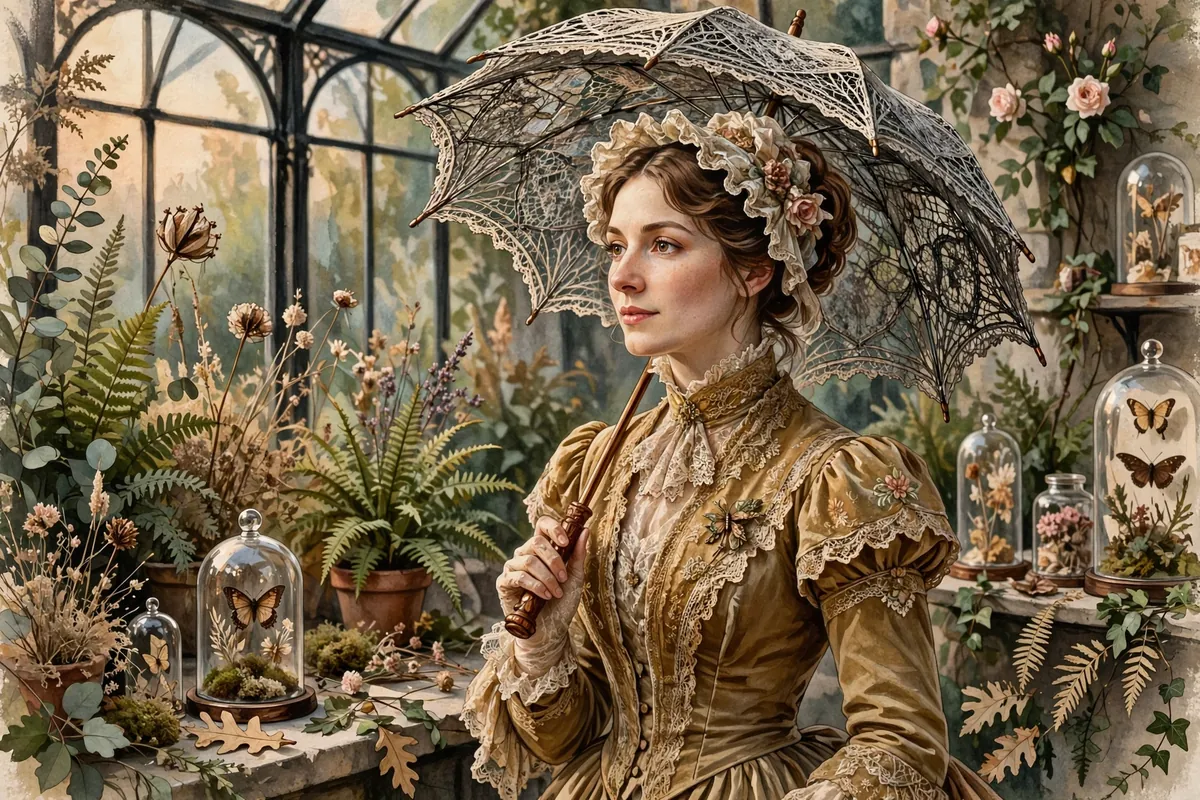
Lace parasols remained a fashionable part of a Victorian lady's outfit. But the sturdy black rain umbrella became standard gear for gentlemen, too. So the next time you pop one open in a downpour, tip your hat to Jonas Hanway, who took a lot of teasing so the rest of us could stay dry.