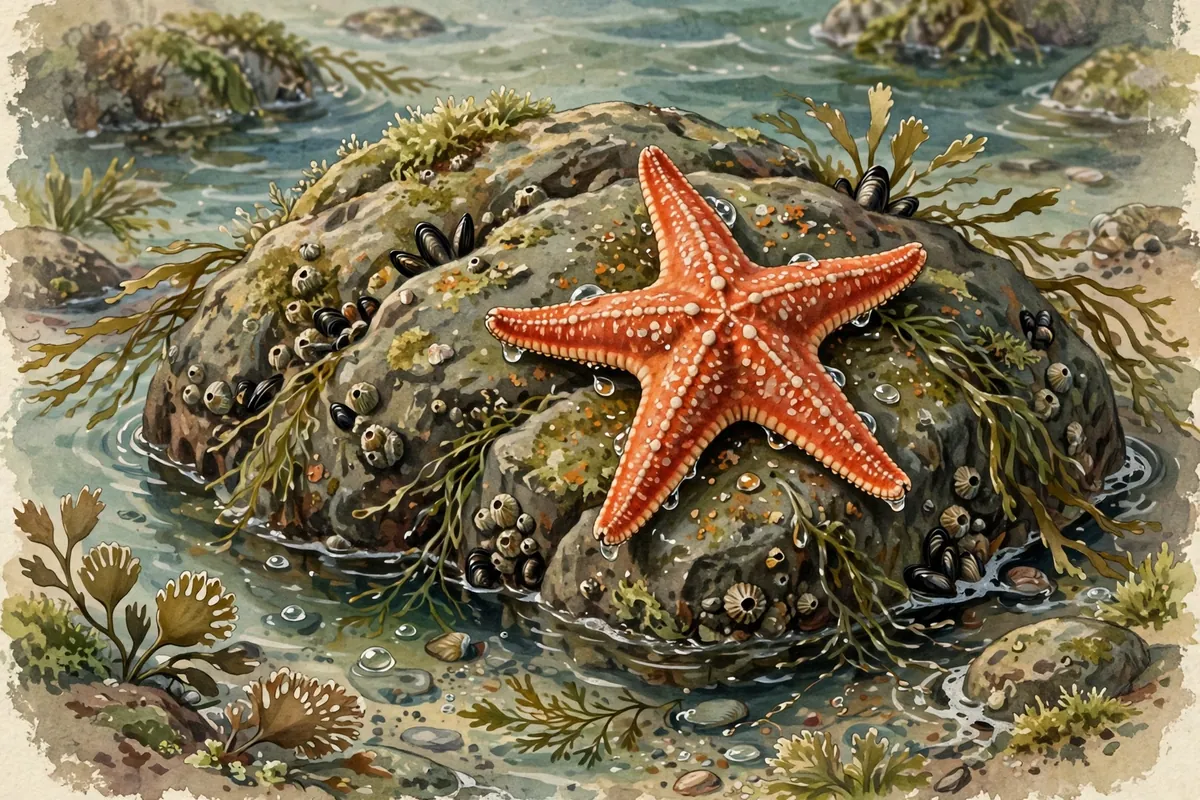
Peek into a tide pool and you might spot a starfish with one arm noticeably shorter than the others. It isn't a birth defect. That little stub is most likely a brand-new arm, slowly growing in to replace one that was lost. So how does an animal regrow a whole limb?
The short answer is that most starfish can regenerate damaged parts and lost arms. They can even drop an arm on purpose to escape a predator. Afterward, the body heals the wound and gradually rebuilds the missing arm, a process that can take several months. A few species go even further and can regrow an entire new body, central disc and all, from a single arm.
Letting Go on Purpose
Dropping a body part on purpose has a name: autotomy. For a starfish, it's an emergency exit. If a predator grabs an arm, the starfish can release it and move away, leaving the attacker with a consolation prize.
The secret is a special tissue found in most echinoderms, the animal group that includes starfish, sea urchins, and sand dollars. It's called catch connective tissue, and it can soften very quickly when the starfish's nerves send the signal. Scientists have even identified a substance that, when injected into another starfish, makes it shed its arms rapidly.
Growing It Back
Once the arm is gone, the starfish gets to work replacing it. Some species can grow an entire new limb given enough time, though the regrowth can take several months. It's a risky stretch for the animal, since starfish are vulnerable to infections in the early stages after losing an arm.
In some species, the lost arm doesn't just die off. A few kinds of starfish can grow a complete new disc from a single arm, turning one detached limb into a whole new animal. Others need at least part of the central disc still attached to the arm for that to work. A lone arm in the middle of regrowing a full body is called a comet form, because the long arm with a tiny new star at one end looks a bit like a comet with its tail.
Splitting Into Two
Some starfish use this talent to make more starfish. Certain species reproduce without a partner by splitting their central disc in two, or by deliberately shedding arms that grow into new individuals. Even the larvae of some species can do it, budding off parts of themselves that grow up separately. They do this more often when food is plentiful, letting one larva become several adults.
Scientists are interested in all this for a reason closer to home. Adult human stem cells have limited ability to turn into different kinds of cells. Learning how starfish regrow and repair their bodies may one day have implications for human medicine.
Other Starfish Surprises
Starfish have eyes, of a sort. At the tip of each arm sits an eyespot made of 80 to 200 simple light-sensing units. Some starfish curl up the tips of their arms as they move to give those eyespots a better view.
They also walk on hundreds of tiny tube feet powered by water pressure. The tube feet look like suction cups, but they actually grip using sticky chemicals. And when it's dinnertime, some starfish can push part of their stomach out of their bodies to begin digesting food.
So the next time you see a lopsided starfish clinging to a rock, give it a little respect. That short arm is a work in progress, and a sign that the starfish lived to tell the tale.