Come March 17, the world turns green. Green shirts, green hats, green ties, even famous landmarks lit up in green. It's such a strong tradition that it's easy to assume it's always been that way. But why green, of all colors?
The short answer is that green has been linked to Ireland for centuries, through legend, the shamrock and politics. People have worn green ribbons and shamrocks on Saint Patrick's Day since at least the 1680s. The color became a powerful symbol of Irish identity in the late 1700s, and it has been tied to the holiday ever since.
The Shamrock Connection
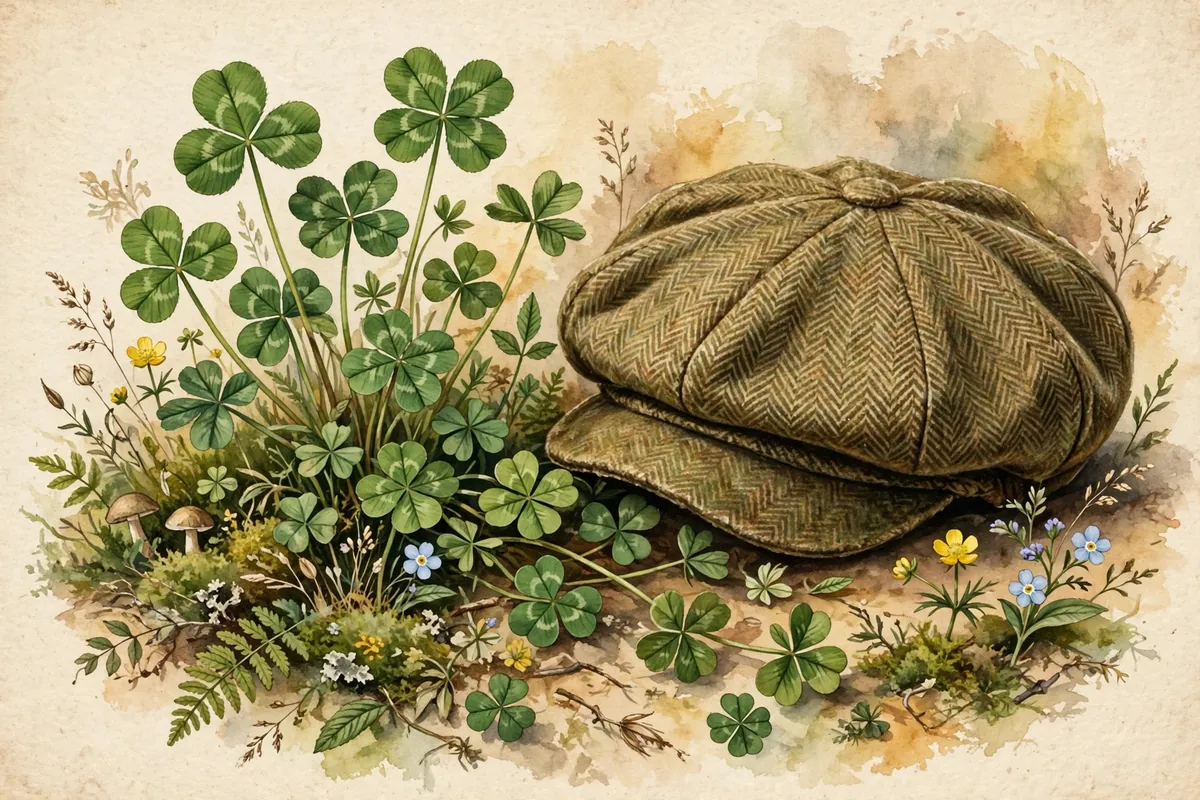
The shamrock is at the heart of the tradition. According to a popular story, Saint Patrick used the three-leaved plant to explain the Christian idea of the Holy Trinity to the Irish. That story first appears in writing in 1726, though it may be older.
In pagan Ireland, the number three was significant, and the Irish had many triple deities, which may have helped Saint Patrick get his message across. Scholars don't all agree on the shamrock's earlier meaning, though. One says there's no evidence it was sacred to the pagan Irish.
Icons of Saint Patrick often show him with a cross in one hand and a sprig of shamrocks in the other. Wearing shamrocks, or simply wearing the color green, became a way of honoring him on his feast day.
A Green Legend From Long Ago
Green's link to Ireland goes back even further, to an 11th-century book of legends called the Book of the Taking of Ireland. It tells of Goídel Glas, meaning Goídel the green, the legendary ancestor of the Gaels.
In the tale, he's bitten by a venomous snake and saved by Moses, but left with a green mark. Later, one of his descendants spots a beautiful green island in the distance and is captivated. That island was Ireland.
When Saint Patrick's Color Was Blue
Here's a surprise. Green wasn't always the only choice. An Irish fraternity called the Friendly Brothers of St Patrick, founded around 1750, did choose green. When the Order of St Patrick, an Anglo-Irish order of knights, was founded in 1783, it chose blue as its color. That led to blue being associated with Saint Patrick for a time.
Green won out thanks to politics. In the 1640s, a green harp flag was used by the Irish Catholic Confederation. Then, in the 1790s, the United Irishmen adopted green. This group launched a rebellion against British rule in 1798, and the song "The Wearing of the Green" is about members being persecuted for wearing the color.
The Emerald Isle
The nickname for Ireland came from the same era. It was first called the Emerald Isle in a 1795 poem by William Drennan, a co-founder of the United Irishmen. Green kept its place in Irish history, appearing on flags of the 1916 Easter Rising.
When the Irish Free State was founded in 1922, the government even ordered all mailboxes painted green, and in 1924 it introduced a green Irish passport. And since 2010, more than 300 landmarks in fifty countries, starting with the Sydney Opera House, have been lit up green for the holiday. So when you reach for that green sweater next March, you're carrying on a tradition that's centuries old.