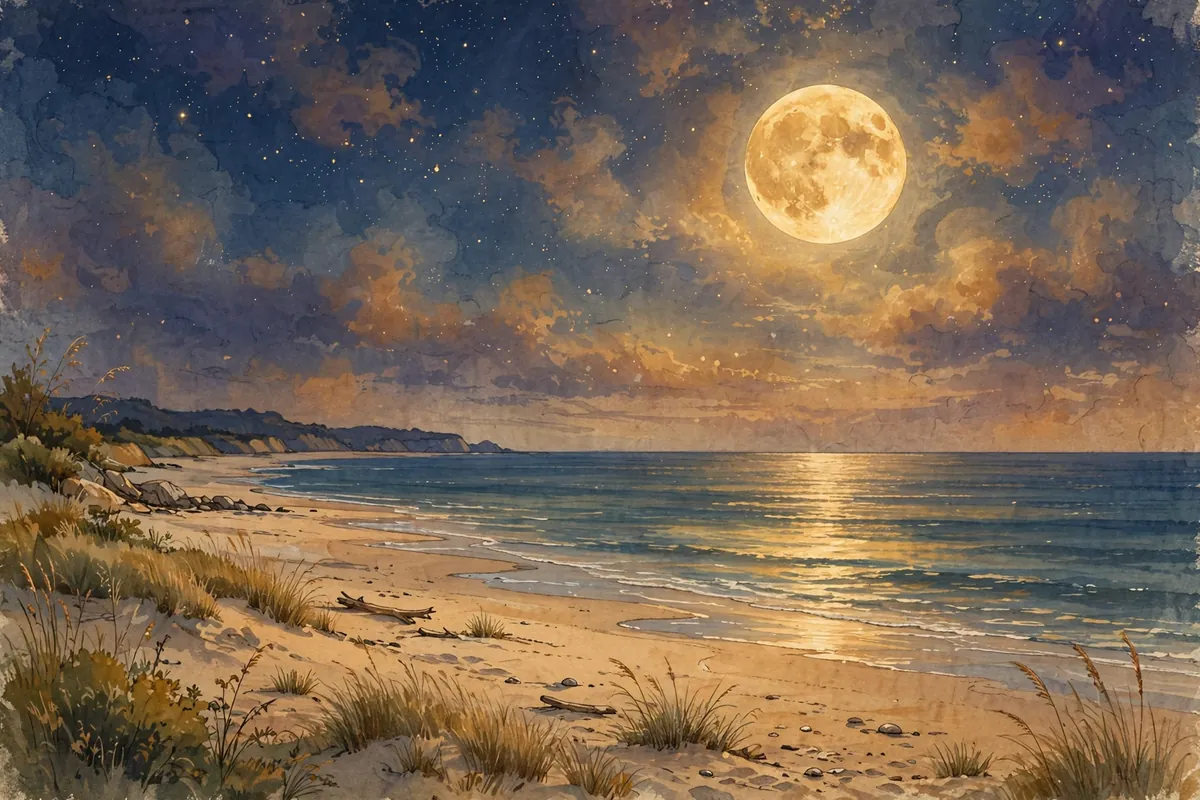
Say the word honeymoon and you probably picture a beach, a sunset, and two newlyweds without a care in the world. It's one of the sweetest words in the language. But why honey, and why the moon?
The word is much older than the vacation. Since at least 1546, honeymoon has meant the happy period right after a wedding. Honey stood for the sweetness of that time. The moon may have been a gentle joke: like the moon, newlywed love was thought to be full at first and then begin to wane. The trip itself came much later, starting in early 19th-century Britain.
A Sweet Word With a Sly Wink
Early writers weren't shy about the double meaning. In 1552, Richard Huloet described the “hony mone” as a term for newlyweds who love each other exceedingly at first, until that love seems to ease off with time.
The Oxford English Dictionary explains that the word compared newlyweds' affection to the changing moon, which is no sooner full than it begins to wane. Samuel Johnson defined it more kindly, as the first month after marriage, when there is nothing but tenderness and pleasure.
Many languages share the same picture. In French, a honeymoon is a lune de miel, a moon of honey, and Persian has a similar phrase meaning month of honey or moon of honey.
What About the Mead?
You may have heard a different story: that couples long ago drank mead, a drink made with honey, for a full month after the wedding. That idea comes from a 19th-century theory about a custom among the Teutones, an ancient Germanic people. But the theory has been challenged, and it isn't the accepted explanation for the word.
Some sources point to an even older and darker root, describing the honeymoon as a relic of marriage by capture, when a husband would go into hiding with his new wife to avoid reprisals from her relatives.
From Bridal Tour to Beach Vacation
The trip came later. In early 19th-century Britain, upper-class couples took a bridal tour, sometimes with friends or family along, to visit relatives who hadn't been able to attend the wedding. The custom spread to the rest of Europe, where the French called it a voyage in the English fashion.
The first recorded use of honeymoon for the after-wedding trip came in 1791, in a translation of German folk stories, and the first native English use followed in 1804. Honeymoons as a getaway just for the couple became widespread in the late 1800s, one of the first examples of modern mass tourism.
Today, honeymoons are a $12 billion a year industry in the United States, and the average American couple spends about $4,500. Beach resorts are a favorite, and Niagara Falls was a popular choice for American honeymooners in the 1980s. Around the world, honeymoons are most popular in Europe, while fewer than half of couples in India take one. For couples in arranged marriages, the trip can be a time to get to know each other; for others, it's mostly about relaxing and making shared memories.
So the honeymoon began as a sweet, slightly teasing word for the first glow of marriage. Happily, one 2015 study found that couples who took a honeymoon had a somewhat lower risk of divorce, no matter how much they spent on the trip. Maybe the moon doesn't have to wane after all.