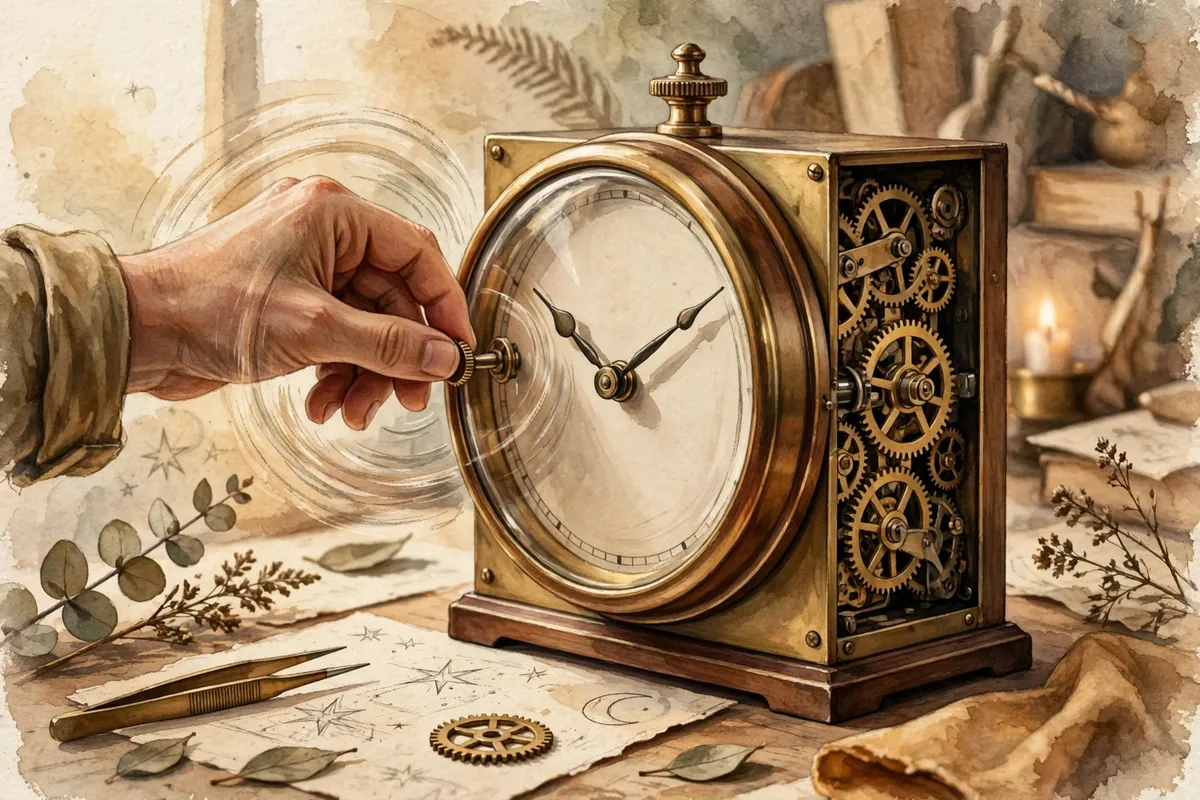
Twice a year, we go around the house resetting the microwave, the oven, and the clock in the car. "Spring forward, fall back." We lose an hour of sleep in March and get it back in November. But why do we do this at all?
The short answer: to make better use of summer daylight and, originally, to save fuel. Daylight saving time moves the clock forward an hour so evenings have more daylight and mornings have less. Germany started it during World War I to conserve fuel, and the U.S. followed in 1918. And despite a popular belief, it wasn't for farmers. Farmers have been among its strongest opponents.
The Farmer Myth
It's a common myth in the United States that daylight saving time was created to help farmers. In reality, farm schedules follow the sun, not the clock. Cows are ready to be milked when they're ready, and the morning dew dries when it dries. Changing the clock just makes things harder.
When the U.S. first tried it in 1918, farmers disliked it because it gave them less time in the morning to get milk and crops to market. That resistance helped get the national program repealed after the war.
A Bug Collector and a Golfer
You may have heard that Benjamin Franklin invented the idea. Not quite. In a joking 1784 letter to a Paris newspaper, Franklin suggested Parisians could save candles by getting up earlier, even proposing church bells and cannons at sunrise. But he never proposed changing the clocks.
The first real proposal came in 1895 from George Hudson, a New Zealand insect collector who wanted more daylight after work to hunt for bugs. In 1907, an English builder named William Willett came up with the idea on his own during an early morning horseback ride, when he noticed how many Londoners slept through summer mornings. Willett was also an avid golfer who hated cutting his game short at dusk.
Wars Made It Happen
Germany began daylight saving time on May 1, 1916, to conserve fuel during World War I, and much of Europe soon followed. The U.S. adopted it in March 1918. After the war, Congress repealed it, overriding President Woodrow Wilson's veto. A few cities, including New York, kept it anyway.
During World War II, President Franklin Roosevelt brought it back year-round in 1942 as "War Time," lasting until September 1945. The Uniform Time Act of 1966 finally set common national rules for states that chose to observe it.
Still Debated Today
Not everyone joined in. Arizona exempted itself in 1967, though the Navajo Nation there still observes it, and Hawaii doesn't use it either. Since 2007, most of the country springs forward on the second Sunday in March and falls back on the first Sunday in November.
Does it save energy? A 2008 Department of Energy report found that the 2007 extension saved about 0.03 percent of the nation's electricity, a pretty modest result. Many people would like to stop switching altogether. The U.S. Senate passed a bill for permanent daylight saving time in 2022, and the House passed a new version in 2026, but as of now it hasn't become law.
So next March, when you're yawning over your coffee, you can blame a bug collector, a golfer, and two world wars. Just don't blame the farmers. They never wanted it in the first place.