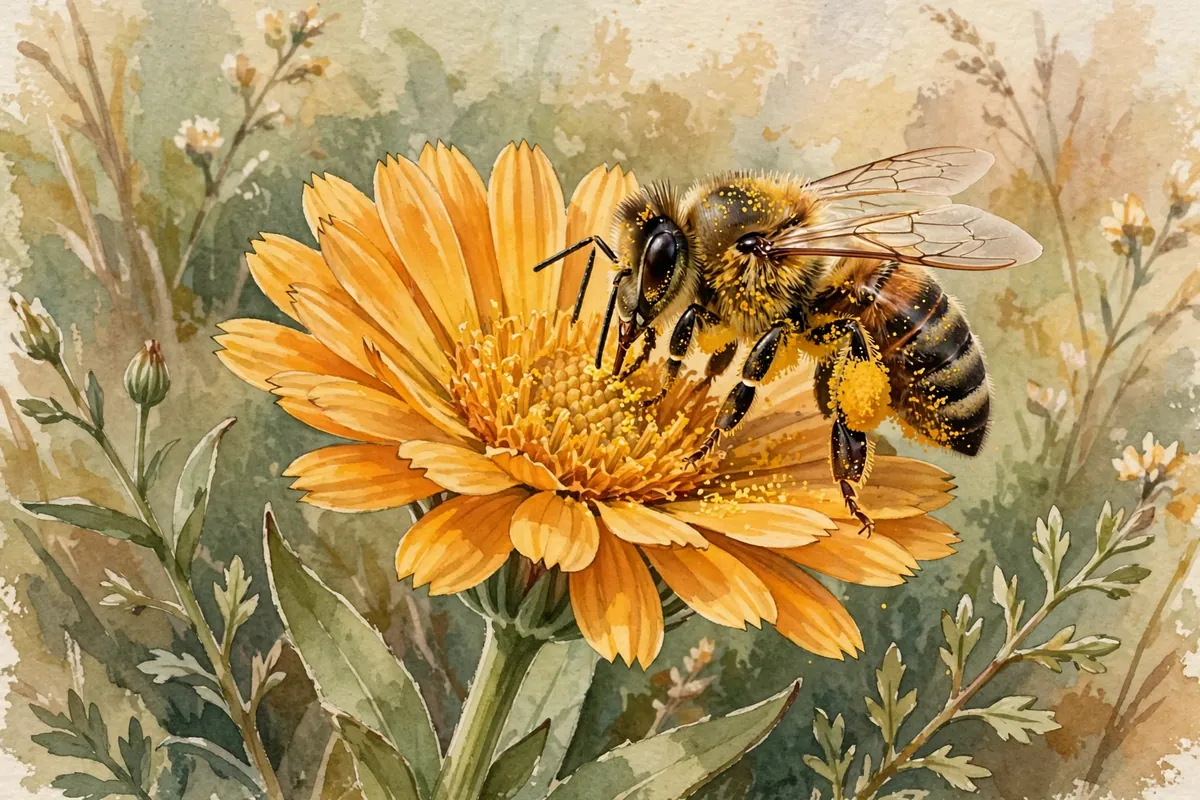
Drizzle a spoonful of honey on a warm biscuit and you're enjoying the work of thousands of tiny laborers. A single jar represents an astonishing number of flower visits and a lot of careful processing inside the hive. So how exactly does a bee turn a sip of flower juice into honey?
Here's the short answer. Bees collect nectar, which is mostly water, and store it in a special honey stomach. Enzymes from the bee start breaking down its sugars. Back at the hive, worker bees pass the nectar along, bubble it, and fan it with their wings until most of the water evaporates. When it's thick enough, they seal it in wax cells as finished honey.
Step One: The Flower Run
A foraging bee leaves the hive and gathers sugar-rich nectar from flowers, or sometimes the sweet honeydew left by aphids. Fresh nectar is about 70 to 80 percent water, far runnier than honey.
The bee stores it in its honey stomach, which holds about 40 milligrams of liquid. That's roughly half the weight of the bee itself. Filling it up can take visits to more than a thousand flowers, and even when nectar is plentiful, it can take more than an hour of nonstop work.
The chemistry begins right away. Enzymes from glands in the bee's head mix into the nectar and start splitting complex sugars like sucrose into simpler sugars, glucose and fructose.
Step Two: The Hive Relay
Back at the hive, the forager passes the nectar to younger hive bees. They take it into their own honey stomachs and then work in relay teams, repeatedly forming little bubbles of nectar between their jaws. Those bubbles expose more surface to the warm air, helping water evaporate.
This process of bubbling and passing can take up to 20 minutes before the nectar is ready for storage. Then it's placed in the six-sided wax cells of the honeycomb, left uncovered for now.
Step Three: Wing Power and Body Heat
At this stage, the honey is still watery enough that yeast could grow in it and spoil it. Bees fight back with a rare insect talent: they make their own body heat. They keep the honey-storage areas of the hive around 95°F and fan their wings to move air and carry moisture away.
The evaporation continues until the honey reaches a water content of about 15.5 to 18 percent. That leaves so much sugar in so little water that microbes can't survive in it. Finally, the bees cap each cell with wax, sealing in the finished honey.
Why Honey Lasts So Long
Thanks to all that work, honey can keep for a remarkably long time, as long as it doesn't absorb much moisture. Its high sugar and acidity stop most microbes. An enzyme from the bees also produces a little hydrogen peroxide, which helps hold bacteria back.
You may have heard that edible honey was found in ancient Egyptian tombs. That's a myth. Every such case has turned out to be another substance or only chemical traces. One caution: honey should never be given to babies under one year old because of a small risk of infant botulism. Talk to your doctor if you have questions.
An average hive makes about 65 pounds of honey a year. So the next time you stir some into your tea, remember the thousands of flower visits, the relay teams, and the buzzing wings that made it possible.