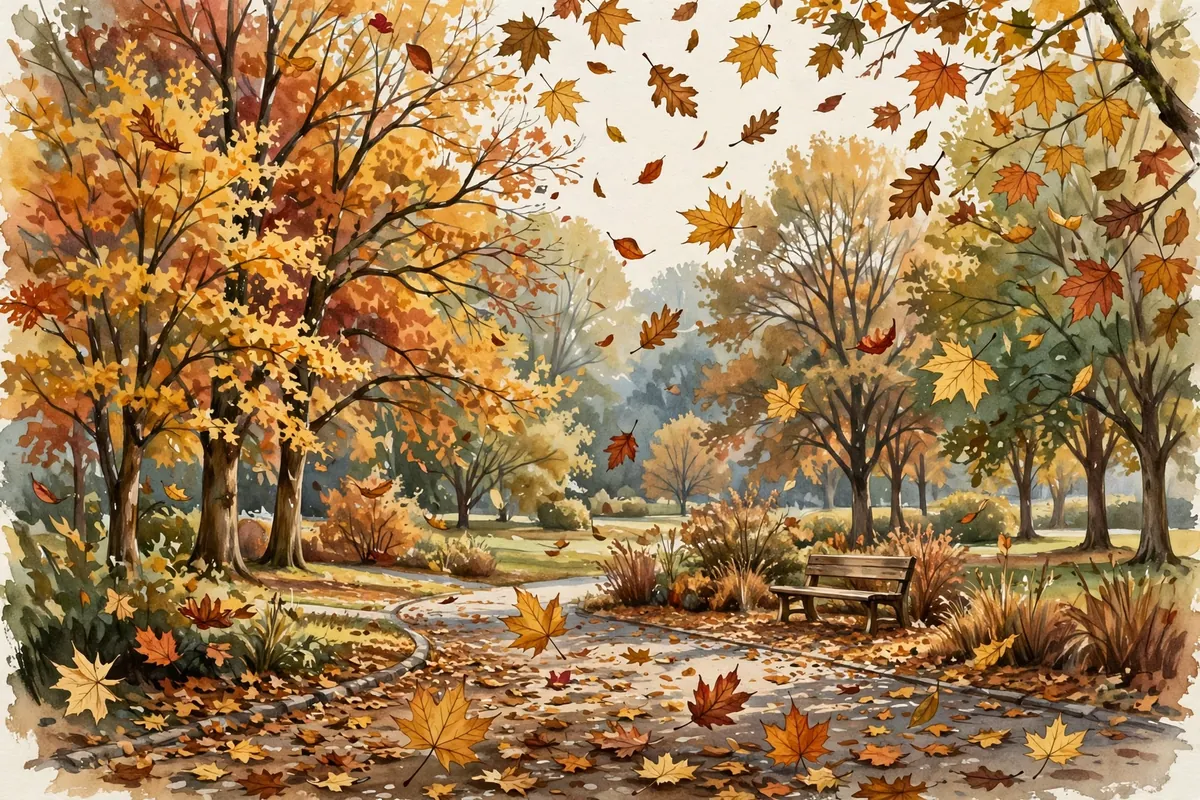
Each fall, the trees put on a show. Leaves turn gold, orange, and red, and then they come fluttering down onto lawns, sidewalks, and freshly washed cars. It's easy to assume they simply dry up and drop off. But there's much more to it than that.
Here's the short answer: trees shed their leaves on purpose. The process is called abscission. At the base of each leaf stem is a special layer of cells that can separate. When autumn arrives, the tree triggers that layer to break apart, the leaf falls, and a protective seal forms over the spot where it was attached. Many trees in cold climates do this to better survive winter.
A Cutting Line Built in Spring
Surprisingly, the tree prepares for autumn long before it arrives. The special separation layer, called the abscission layer, forms in spring while the leaf is still growing.
Those cells are sensitive to a plant hormone called auxin. As long as the leaf sends out auxin at a steady rate that matches the rest of the plant, the layer holds together. In autumn, or when the tree is under stress, the flow of auxin from the leaf slows or stops. Cells in the layer stretch out, the connection breaks, and the leaf comes loose.
In some plants, cells in that zone release enzymes that dissolve the glue holding cell walls together. In others, the cells soak up water, swell, and burst. Either way, a layer of cork-like cells forms underneath, creating a durable, waterproof seal so the plant doesn't lose sap.
Why Let Go at All?
Dropping leaves has real advantages. Bare trees suffer much less branch and trunk breakage in ice storms. Losing leaves also helps trees save water during cold winter days when liquid water is scarce.
It may also cut down on insect damage. For many trees, it can be cheaper to drop leaves and grow new ones than to keep repairing old ones. The tradeoff is that every spring, the tree has to spend resources growing a fresh set. Dropping leaves also reduces a kind of damage called cavitation in the tree's water-carrying vessels, which lets deciduous trees have wider vessels that move more water during the summer growing season.
Not every tree follows this schedule. Evergreens shed their leaves a few at a time all year, so they always look green. And in tropical or dry regions, some trees drop their leaves during the dry season rather than in winter.
Where the Colors Come From
Before they fall, many leaves change color. As the green pigment chlorophyll breaks down, yellow and orange pigments that were there all along finally show through. They had simply been hidden by the green all summer.
Reds work differently. Those come from pigments called anthocyanins, which many leaves actively produce in the fall. Brown leaves can come from green and red mixing early on, or from chemical changes as the leaf dies.
The Leaves That Hang On
You may have noticed some trees, especially young oaks and beeches, clinging to dry brown leaves all winter. This is called marcescence. It happens when the abscission layer doesn't fully develop, so the dead leaves stay put until wind and weather finally knock them loose.
So the next time you're raking up a pile of leaves, remember that the tree didn't just lose them. It let them go, carefully and on schedule, to get ready for the cold months ahead.