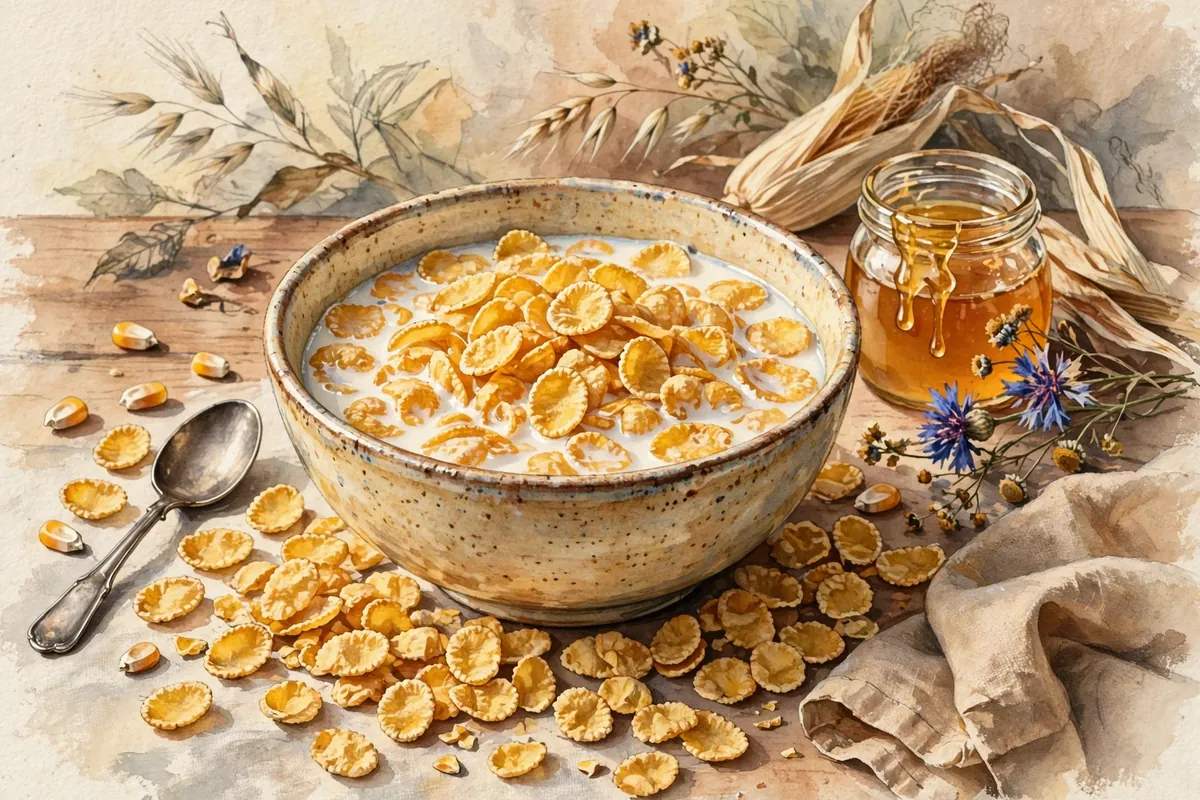
Corn flakes are so ordinary now that it's hard to imagine breakfast without them. But a crunchy, ready-to-eat flake was once a brand-new idea. And like many great inventions, it may have started with a mistake.
The flakes were created in 1894 at the Battle Creek Sanitarium in Michigan, a health resort run by Dr. John Harvey Kellogg, with his younger brother Will working alongside him. The generally agreed story is that John left a batch of wheat dough out overnight, then rolled it the next morning and was surprised to get thin, delicate flakes that could be baked. Will worked out how to repeat the process reliably.
It Started as Wheat
Here's a twist: the first flakes weren't made of corn at all. They were made from wheat and were meant as a healthy food for patients at the sanitarium. The Kelloggs called their flakes Granose, and patients loved them.
Dr. Kellogg believed in plain, bland food. He followed health reformers who thought simple diets helped people stay calm and well. The process the brothers stumbled on became known as tempering, and it turned into a basic technique of the whole flaked cereal industry.
Who Really Invented Them?
Even the family couldn't agree. John, his wife Ella, and Will all told different versions of the story. Some accounts say Ella suggested rolling the dough into thin sheets. Others say John got the idea in a dream and used equipment in his wife's kitchen.
Ella and Will often clashed, and each tended to play down the other's role. When the patent was issued in 1896, only John's name was on it. Will insisted for years afterward that he deserved more credit.
Sugar Splits the Brothers
The brothers kept experimenting with different grains, including corn. In 1906, Will decided the flakes could sell far beyond the sanitarium and started the Battle Creek Toasted Corn Flake Company.
To make the cereal appeal to a mass audience, Will added sugar. His brother didn't approve, and the decision caused a lasting rift between them. Meanwhile, a former patient named C. W. Post began making competing cereals of his own.
Will's marketing was creative. In 1907, his company offered a free box of cereal to any woman who winked at her grocer. In 1909, buyers of two boxes could get a picture booklet, a promotion that ran for 22 years. His next big hit, Rice Krispies, went on sale in 1928.
Why There's a Rooster on the Box
The first mascot on the box was a woman called the Sweetheart of the Corn. In 1957, Cornelius the Rooster, better known as Corny, took over. In early TV commercials, he spoke the catchphrase “Wake up, up, up to Kellogg's Corn Flakes!” Later, he stopped talking and simply crowed.
The rooster idea came from a family friend, a harpist from Wales named Nansi Richards. She pointed out that the Welsh word for rooster, ceiliog, sounds a lot like Kellogg's, even though the two aren't related.
Today, corn flakes are a staple far beyond Michigan. In the United Kingdom alone, more than 6 million households eat them. So the next time you pour a bowl, you can thank a forgotten batch of dough, a pair of rollers, and two stubborn brothers. Not bad for a breakfast that started out as health food.