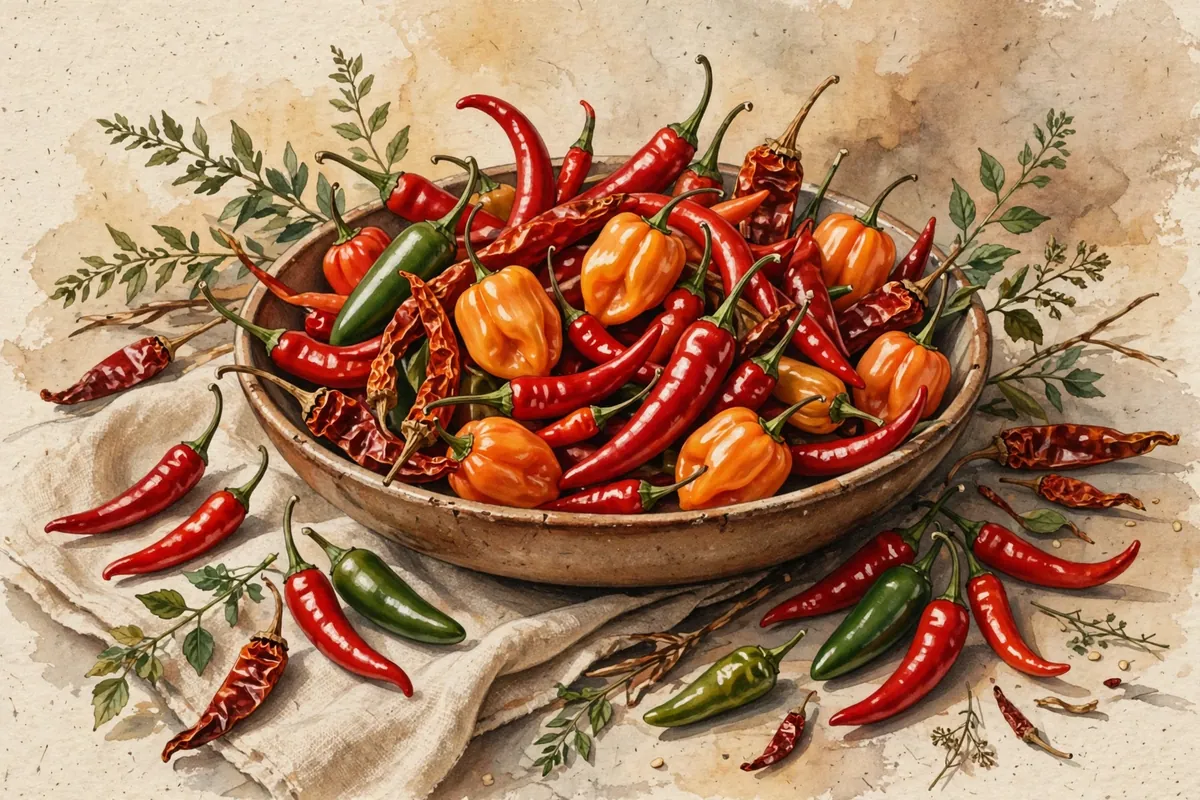
You take a bite of spicy salsa and it's delicious. A moment later your mouth is blazing, your eyes are watering, and your nose starts to drip. You didn't sniff the peppers. So why is your nose getting involved?
Here's the short answer: the heat in chili peppers comes from a chemical called capsaicin, which tricks your nerves into reacting as if they've touched something hot or harmful. Spicy food is a well-known trigger for a type of nonallergic runny nose. Scientists think triggers like this cause blood vessels in the lining of the nose to widen, which leads to swelling and drainage. Doctors even have a name for it: gustatory rhinitis.
The Pepper's Clever Trick
Capsaicin doesn't actually burn anything. Instead, it latches onto a receptor on certain nerve fibers called TRPV1. That same receptor normally responds to real heat and to physical damage. It can also be set off by acids and by rubbing or scraping.
When capsaicin switches it on, the nerve sends a message to the brain that feels like excess heat. The result is warming, tingling, stinging, or that familiar fiery sensation. Your body responds as though your mouth really were in danger, and that's why spicy food can set off sweating, watery eyes, and a runny nose all at once. In strong doses, capsaicin can sting skin and eyes too, which is a good reason to wash your hands after chopping hot peppers.
Why the Nose Joins In
Doctors group the spicy-food sniffles with other kinds of nonallergic rhinitis, meaning a runny or stuffy nose that isn't caused by allergies or a cold. Other triggers include changes in temperature or weather, strong odors, alcohol, and even exercise or strong emotions.
There's still a lot to learn about exactly how it works. The leading idea is that these triggers cause blood vessels in the nose to widen, so the lining swells and drains. If your nose runs often for no clear reason, talk to your doctor.
There's even a strange cousin of this reaction. Some people sneeze uncontrollably after a big meal, regardless of what they ate. It's been nicknamed snatiation, a mash-up of sneeze and satiation.
Why Peppers Are Hot in the First Place
Capsaicin may be a clever defense. Birds spread chili pepper seeds, and their version of the TRPV1 receptor doesn't react to capsaicin at all. Seeds pass through a bird unharmed and can sprout later. Mammals, on the other hand, chew seeds with their molars and destroy them. Natural selection may have favored hotter peppers because the heat discourages the wrong animals from eating them.
Capsaicin may also help protect wild chilies from a fungus that attacks their seeds.
Cooling the Fire
If you've overdone it, reach for cold milk. Proteins in milk called caseins may help relieve the burn, and milk can help carry the capsaicin away.
Not all heat comes from chilies, either. Black pepper gets its kick from piperine, while mustard, radishes, and wasabi get theirs from a compound called allyl isothiocyanate. That's why wasabi tends to hit your nose more than your tongue.
So keep a napkin handy the next time you dig into a plate of hot wings. That drippy nose isn't a sign anything's wrong. It's just your body falling, once again, for one of the oldest tricks in the plant world.