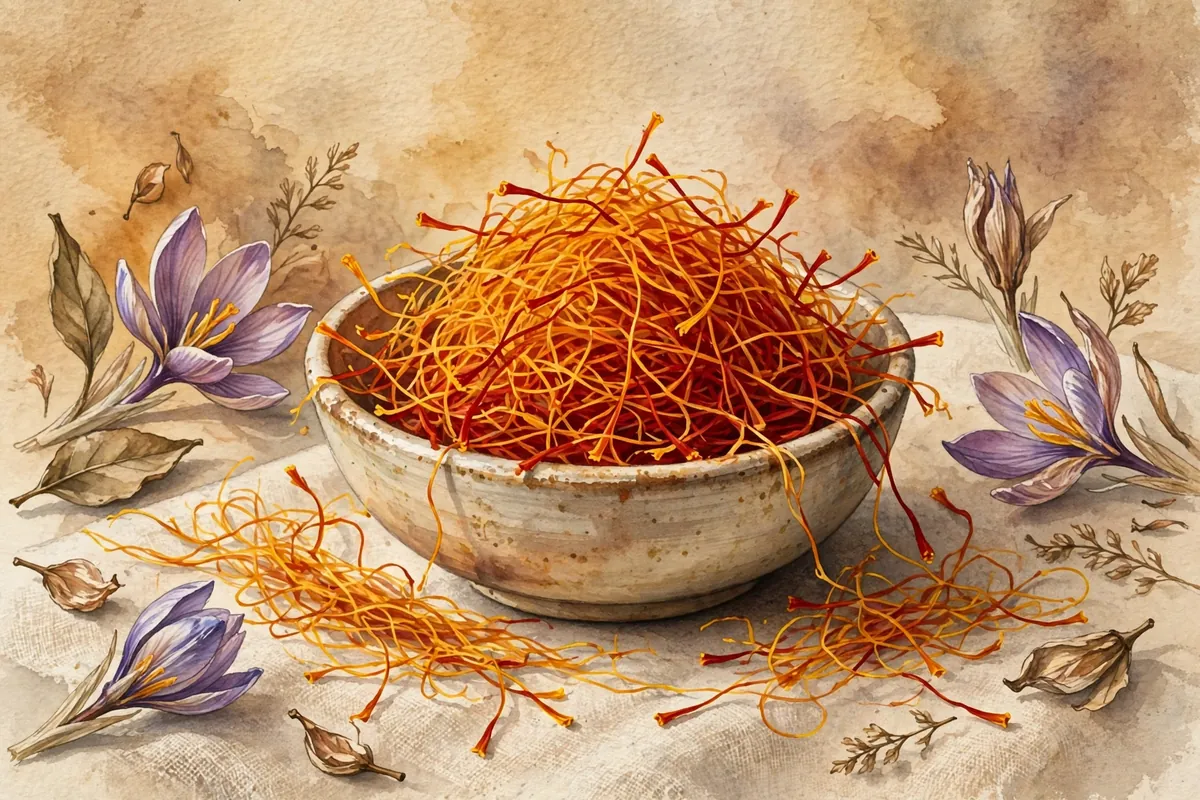
Walk down the spice aisle and you'll find most jars cost a few dollars. Then there's saffron, sold in tiny containers holding just a pinch of red threads, often for a surprising price. It's often called the most expensive spice in the world. So what makes a few threads so precious?
The short answer is labor. Saffron comes from the saffron crocus, and every thread is a tiny part of the flower that must be picked by hand. It takes around 150,000 flowers, and about 440,000 hand-picked threads, to make one kilogram, which is about 2.2 pounds. Premium saffron regularly sells for more than $5,000 a kilogram.
A Race Against the Clock
The saffron crocus is a small autumn flower. The red threads are its stigmas and styles, the parts of the flower that catch pollen. Workers pluck them out, then dry them quickly and seal them away.
Timing is tough. The flowers bloom at dawn and quickly wilt as the day goes on, and all the plants in a field bloom within a window of just one or two weeks. Picking 150,000 flowers takes about 40 hours of work, and that's before anyone pulls out a single thread.
A Flower That Can't Make Seeds
Here's an odd fact. The saffron crocus doesn't exist in the wild, and it can't produce seeds. It's a genetic clone, spread over thousands of years by people who dug up and replanted its bulb-like corms. It probably descends from a wild crocus of the eastern Mediterranean. The corms rest through the summer, send up narrow leaves in early autumn, and only flower in mid-autumn.
Saffron is thought to have originated in Iran and has been traded for more than 3,500 years. It's an essential ingredient in Persian cooking and in dishes around the world. Its golden color comes from a pigment called crocin, and its hay-like aroma comes from a compound called safranal.
A Spice Worth Faking
Anything this valuable attracts cheaters. Saffron fraud goes back at least to the Middle Ages. In the German city of Nuremberg, people caught selling fake or diluted saffron were executed.
Even today, cheap saffron may be mixed with beet fibers, red-dyed silk, or the flower's own tasteless yellow parts. Some sellers soak it in honey or oil to make it weigh more. Powdered saffron is especially easy to stretch with turmeric or paprika. The best saffron has a high share of deep red threads, and its quality is measured by an international lab standard. In Iran, the strongest grade, called sargol, contains only the red tips.
An American Saffron Story
Saffron has a surprising American connection. Members of a church group called the Schwenkfelders brought saffron corms from Europe in a trunk, and by 1730 the Pennsylvania Dutch were growing it throughout eastern Pennsylvania. Pennsylvania Dutch saffron, known for its earthy notes, is still grown in small amounts today.
Saffron has worn many hats over the centuries, from dye to perfume to medicine. In ancient Egypt, Cleopatra is said to have added it to her baths.
The good news for home cooks is that a little goes a very long way. A few threads can turn a pot of rice golden and fragrant. And now, every time you use them, you'll know there were patient hands and thousands of dawn-blooming flowers behind that tiny pinch.