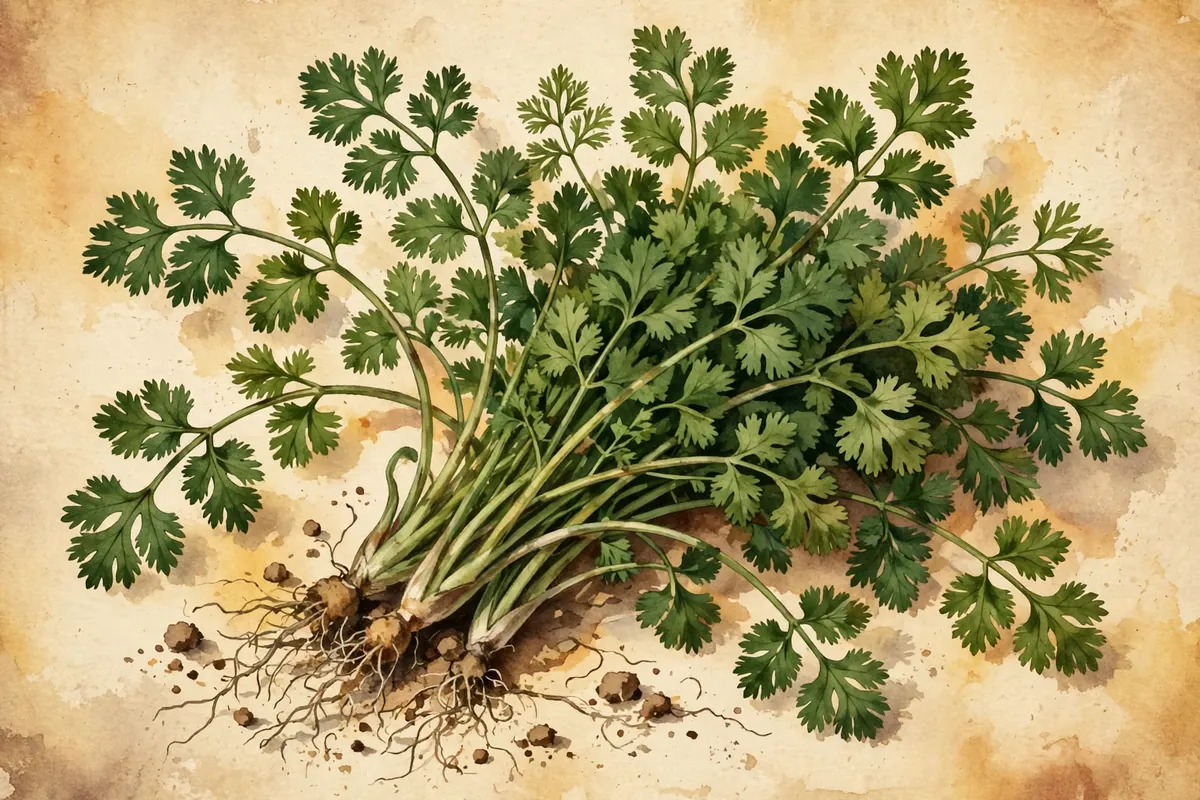
Few foods split a dinner table quite like cilantro. Some people chop it into salsa by the handful and can't get enough. Others take one bite and push the plate away, insisting it tastes like a bar of soap. So who's right?
In a sense, both are. Most people taste cilantro leaves as fresh and slightly citrusy. But some people perceive the flavor as soapy or even rotten, and part of that difference comes from genetics. Variations in a gene called OR6A2, which helps us detect certain smells, appear to play a role in how people experience this herb.
It's Really About Smell
Cilantro's distinctive aroma comes from about a half-dozen natural chemicals, and most of them belong to a family called aldehydes. The OR6A2 gene sits among a cluster of genes for smell receptors, and it makes a receptor that is highly sensitive to aldehydes.
People who dislike cilantro seem to be sensitive to certain unsaturated aldehydes in the leaves. At the same time, they may be unable to detect the pleasant-smelling chemicals that others enjoy. So instead of a bright, lemony herb, they get a blast of something unpleasant.
Why Soap, of All Things?
The soap comparison isn't just a figure of speech. Some of the aldehydes found in cilantro, such as decanal and a couple of close chemical cousins, can also be found in soaps and detergents. People who are sensitive to them may be picking up on that shared chemistry.
Some people describe the taste even less kindly, comparing it to stinkbugs. Oddly enough, some of those same aldehydes are part of the secretions of several kinds of stinkbugs too.
What Twins and DNA Reveal
Some of the strongest evidence comes from twins. About 80 percent of identical twins shared the same feelings about cilantro, while fraternal twins agreed only about half the time. That strongly suggests our genes play a part.
A genetic survey of nearly 30,000 people found two genetic variants linked to how cilantro is perceived. The more common one involved a gene for sensing smells. Researchers have also found links to several other genes, including one for a bitter taste receptor. So it's probably not just one gene, but a few working together.
Culture seems to matter too. In one set of studies, 21 percent of East Asians, 17 percent of Europeans, and 14 percent of people of African descent said they disliked cilantro. Among groups where the herb is a common part of the cooking, the numbers were much lower: 7 percent of South Asians, 4 percent of Hispanics, and 3 percent of Middle Eastern participants.
An Herb With Ancient Roots
Love it or hate it, this plant has been with us a long time. In the United States, the leaves are called cilantro, while the plant itself is known as coriander. The dried seeds taste completely different from the leaves, with warm, citrusy notes.
About 17 fluid ounces of coriander seeds were found in the tomb of the Egyptian king Tutankhamun. Since the plant doesn't grow wild in Egypt, that may be evidence that ancient Egyptians grew it on purpose.
So if you're on team soap, you're not being fussy. Your nose may simply be wired a little differently. And if you love cilantro, enjoy the extra helping your friend just passed your way.